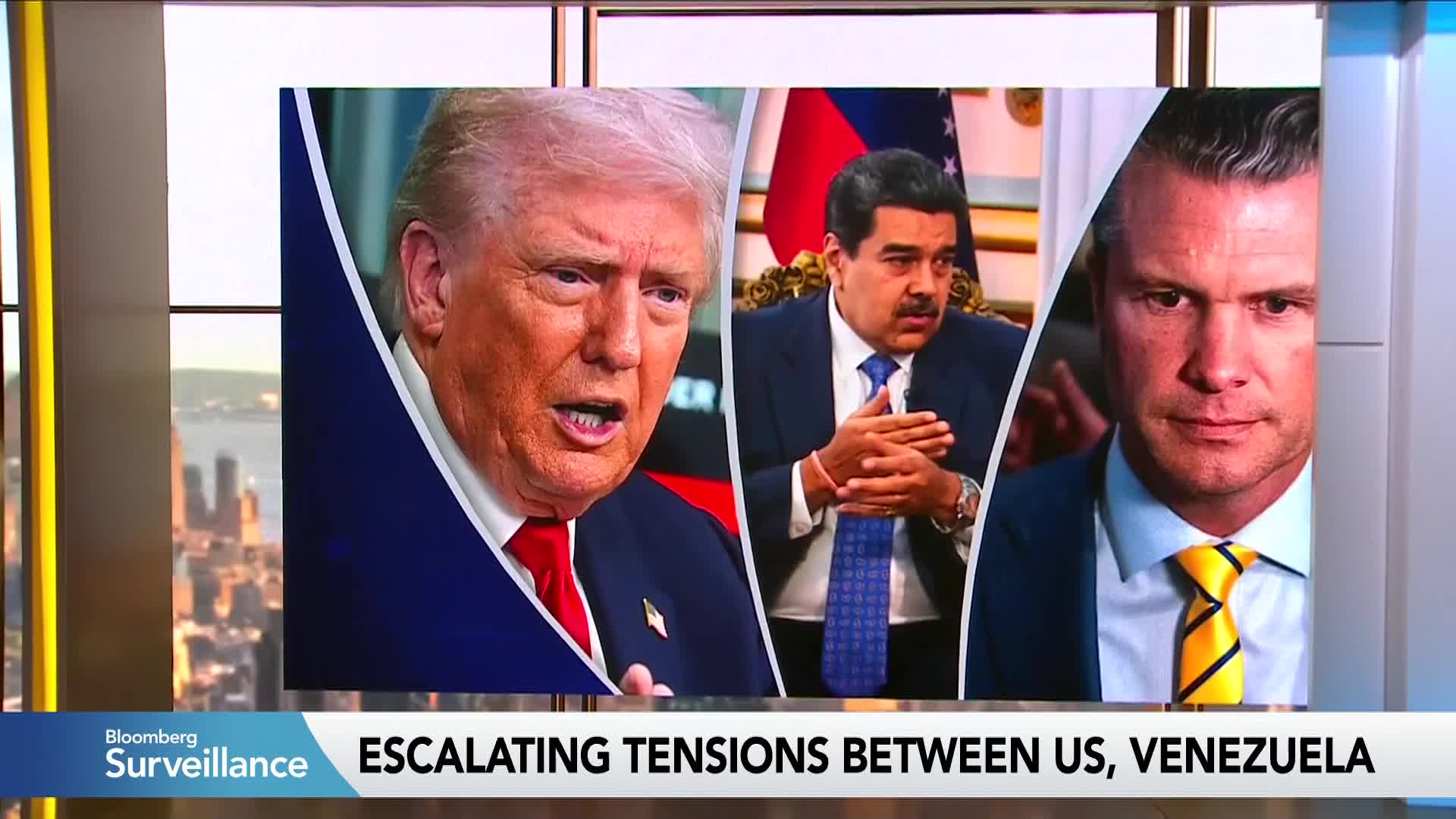
President Trump confirmed a call with Venezuelan President Nicolás Maduro as questions mount over recent U.S. airstrikes off Venezuela in the Caribbean; the administration has been vague about the operations and their legal basis. Republican lawmakers, including top members of the Senate Armed Services Committee, are seeking clarity on the legality and next steps, creating geopolitical uncertainty that could prompt risk-off positioning for regional assets and increase scrutiny of U.S. defense and foreign policy actions.
Market structure: Short-term winners are US defense primes (LMT, RTX, GD) and security services that capture incremental defense spending and contractor rerouting; losers are Venezuelan assets, Caribbean tourism/airlines, and EM FX (VEF proxies, ILF) due to capital flight. Energy markets may see a risk premium — a 5–12% move in Brent/WTI is plausible within 2–6 weeks if strikes widen or shipping routes are disrupted, but Venezuela alone cannot sustain a multi-quarter supply shock.
Risk assessment: Tail risks include a broader regional escalation (low probability, <15% in 3 months) that could lift oil >$15/bbl and spike global risk premia, and legal/political constraints that could cap US kinetic action (Congress litigation, stop orders). Immediate (days) effects: volatility spikes in energy and defense; short-term (weeks/months): re-rating of defense contractor order books; long-term (quarters/years): sustained sanctions and migration pressures that affect sovereign credit and remittances.
Trade implications: Expect modest safe‑haven flows into Treasuries, USD, and gold; options implied vol for energy/defense will jump 20–60% intraday on news. Tactical plays should be size‑controlled and conditional on objective triggers (price, DXY moves, congressional actions) to avoid paying up for transient premiums. Use paired long-defense / short-EM constructs and volatility-conditioned energy exposures rather than outright directional leverage.
Contrarian angles: The market may overpay for a prolonged energy shock — history (2019/2020 limited skirmishes) shows spikes last 2–8 weeks absent Gulf involvement. Conversely, defense names already discount some upside; a 10–15% move is realistic but stretched if Congress blocks sustained action. Hidden risk: escalating migrant flows and secondary sanctions could pressure European banks and insurers with LatAm exposure, creating cross-sector contagion.
AI-powered research, real-time alerts, and portfolio analytics for institutional investors.
Request DemoOverall Sentiment
moderately negative
Sentiment Score
-0.40
