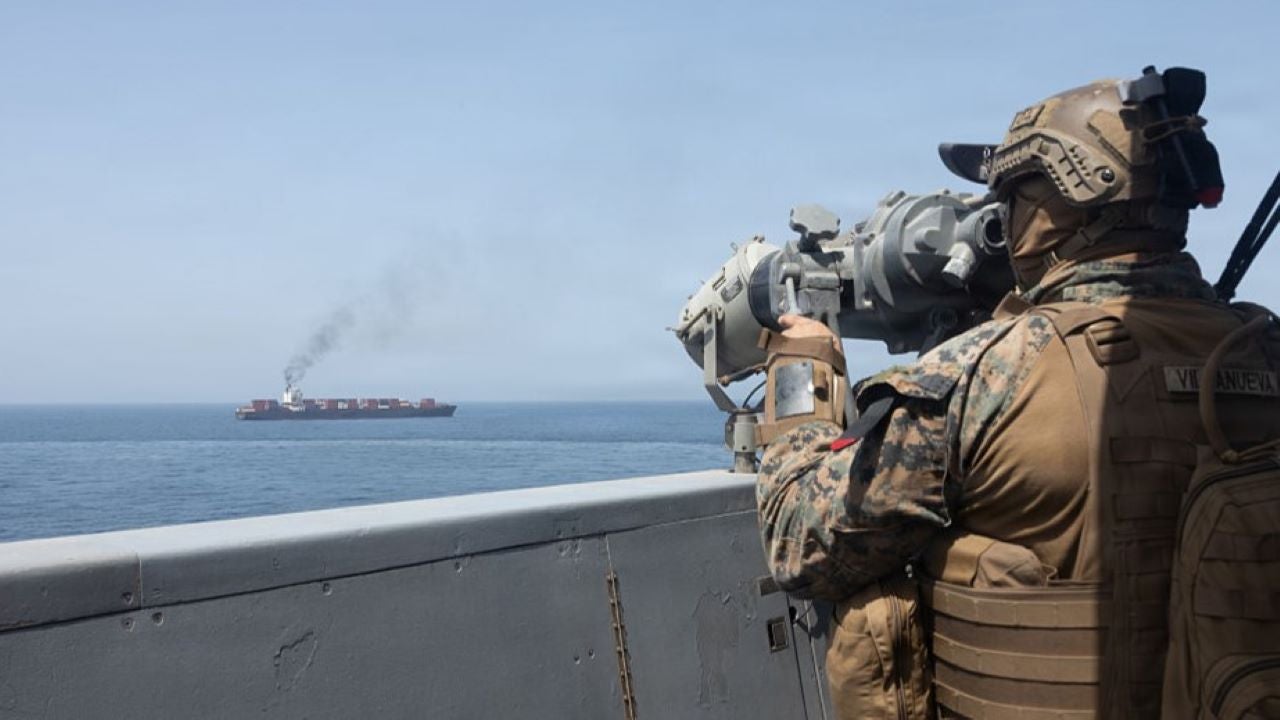
The article centers on escalating U.S.-Iran tensions in the Strait of Hormuz, where Iran threatened to attack U.S. forces and the UAE said its air defenses intercepted 4 missiles. CENTCOM said 2 U.S.-flagged vessels successfully transited the strait under 'Project Freedom,' with 15,000 service members supporting the effort and more than 100 aircraft and destroyers involved. The situation poses a major risk to global energy and shipping flows, with reported vessel seizures, blockade activity, and heightened volatility across the Middle East.
This is a classic choke-point repricing event: the market is not just pricing higher tanker disruption, it is repricing the probability of enforced routing, inspection, and/or kinetic escalation in one of the few places where a modest operational interruption can create outsized freight and insurance shocks. The immediate winners are not broad energy equities so much as the “picks and shovels” of constrained trade: marine insurers, defense contractors with missile-defense and C4ISR exposure, and eventually non-Middle East crude exporters whose marginal barrels gain pricing power if Asian buyers have to source around the Gulf. The second-order effect is more interesting than headline crude: a prolonged escort regime effectively taxes global shipping capacity. Even without a full closure, higher transit risk lifts time-charter rates, war-risk premia, and idle days, which can pressure downstream margins for refiners, chemicals, and import-dependent Asian industrials. That creates a lagged inflation impulse that is more acute for Europe and Asia than for the U.S., because U.S. domestic energy and defense supply chains are less directly dependent on Hormuz throughput. The biggest non-linear risk is political: if either side needs a face-saving de-escalation, the market will quickly unwind part of the move, but if there is a confirmed hit on a U.S.-flagged or escorted commercial vessel, the response regime shifts from deterrence to retaliation and the duration of elevated risk extends from days to months. The overhang is also self-reinforcing: every additional escort or seizure normalizes a higher baseline of friction, which can persist even after a ceasefire headline because shipowners and insurers re-underwrite only slowly. Consensus is likely underestimating how much of the stress migrates from crude prices into freight, insurance, and regional equity beta before it shows up in headline inflation. The more durable trade is not “long oil” in isolation, but long entities with geopolitical optionality and short rate-sensitive transport/import names that absorb the cost of uncertainty without immediate pass-through.
AI-powered research, real-time alerts, and portfolio analytics for institutional investors.
Request DemoOverall Sentiment
strongly negative
Sentiment Score
-0.78
