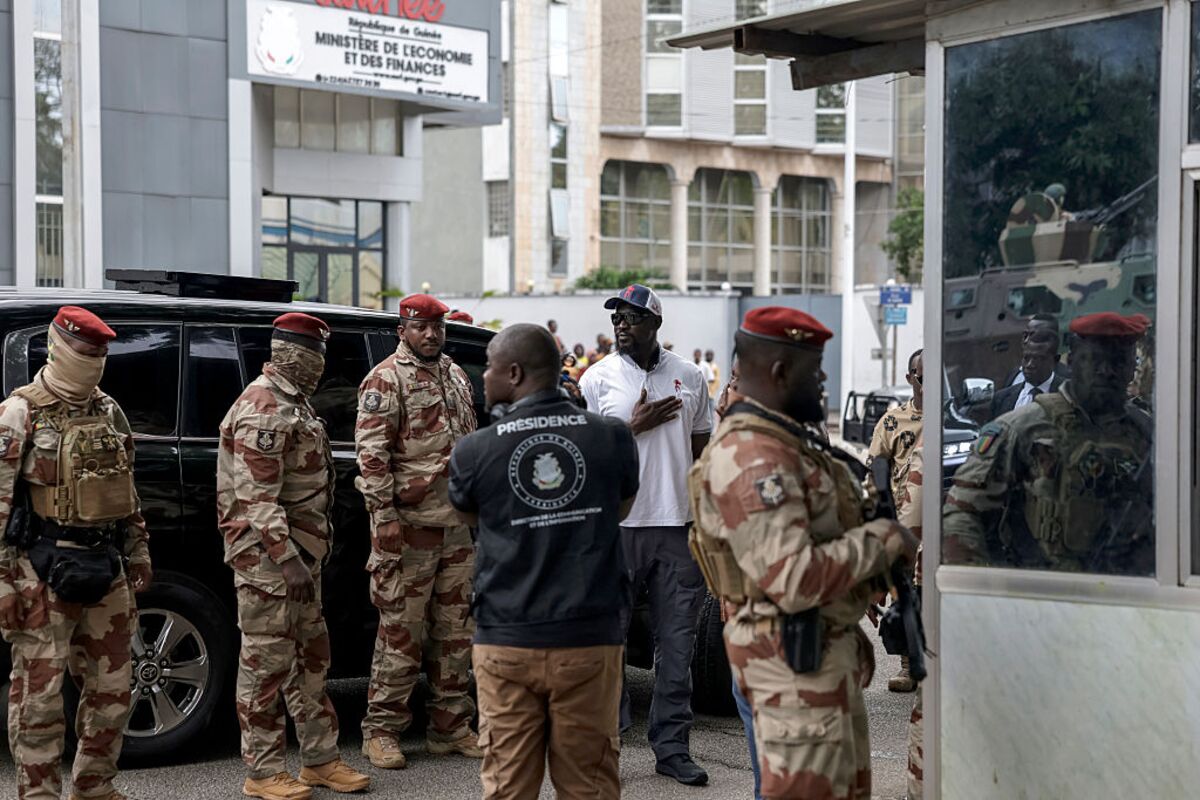
Guinea held a referendum on a new constitution aimed at restoring democracy after four years of military rule. While the proposed supreme law introduces a two seven-year term limit for presidents, it notably does not preclude General Mamadi Doumbouya, the coup leader, from contesting the upcoming presidential election, suggesting a potentially controlled transition rather than a complete democratic overhaul.
Guinea is undergoing a constitutional referendum designed to transition the nation back to democracy following a military coup four years prior. The proposed constitution introduces a limit of two seven-year presidential terms, a standard feature of democratic governance. However, a critical provision allows the coup leader, General Mamadi Doumbouya, to stand for election, introducing significant uncertainty into the political outlook. This suggests the transition may be a 'controlled' process intended to legitimize the current military leadership under a new legal framework, rather than a full transfer of power to civilian rule. The situation presents a mixed signal for investors: while the establishment of a constitution is a nominal step towards stability, the potential for the incumbent military ruler to retain power casts doubt on the authenticity of the democratic transition and raises concerns about long-term political risk and policy predictability. The low market impact score indicates this is primarily a localized event, affecting investors with direct exposure to Guinean sovereign risk or assets, rather than broader markets.
AI-powered research, real-time alerts, and portfolio analytics for institutional investors.
Request DemoOverall Sentiment
mixed
Sentiment Score
0.00
