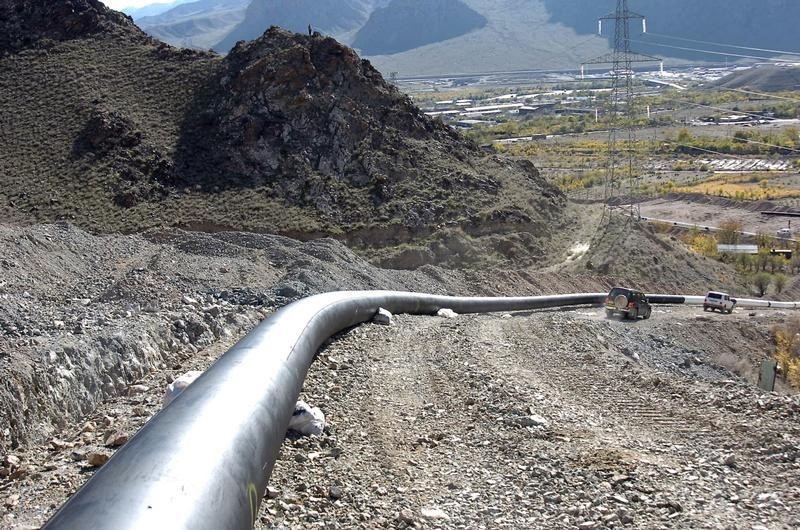
CNOOC expects to raise domestic crude oil production to 65–70 million metric tons/year by 2030 from about 61 million tons now, and boost domestic natural gas output to more than 40 billion cubic meters/year by 2030 from roughly 30 bcm currently. Guidance was provided by SVP Yan Hongtao at a results briefing; the company is still finalizing its 2026–2030 output plan. The update is a constructive long-term supply outlook for CNOOC and China's hydrocarbon production but is unlikely to move markets materially in the near term.
The strategic pivot toward greater domestic hydrocarbon self-sufficiency will shift physical flows and the transport economics that underlie several liquid energy sub-sectors. Reduced reliance on seaborne barrels and spot LNG imports compresses tanker utilization and spot freight and can shave 20–50% off VLCC/AFRA earnings if sustained over 6–18 months; that transmission is faster than upstream capex cycles and therefore disproportionately hurts owner-equity returns before production curves fully adjust.
Second-order winners are capital-light onshore service providers and coastal refining/petrochemical complexes that gain feedstock optionality and margin stability; winners should be those with low cash opex and flexible feedstock intake that can arbitrage weaker international feedstock prices. Conversely, large-export-focused producers and LNG sellers face margin pressure and routing risk — a persistent imbalance could force cargo rerouting to lower-price markets or accelerate spot cargo destocking, compressing FCF across exporters within 12–36 months.
Key catalysts to watch are idiosyncratic supply shocks (Gulf/Russia), OPEC+ policy responses, and a Chinese seasonal demand re-acceleration. Near term (0–6 months) the market will be dominated by freight and storage signals; medium term (6–24 months) by inventory adjustments and refinery/petrochemical throughput changes; long-term impact depends on incremental domestic capex execution and regulatory support. The highest tail risk is a geopolitical outage that re-prices seaborne deficit quickly and reverses freight and spot curves within weeks, making option hedges attractive for directional exposure.
AI-powered research, real-time alerts, and portfolio analytics for institutional investors.
Overall Sentiment
neutral
Sentiment Score
0.10
Ticker Sentiment
