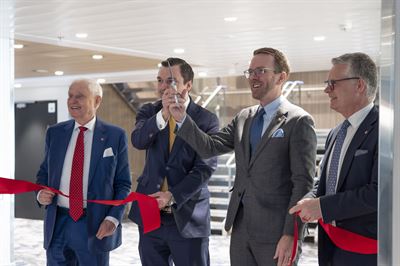
Stena Line has completed its acquisition of NLC Ferry Oy/Wasaline (announced 4 November 2025) and will integrate the Vaasa–Umeå ferry operation into its European network while retaining the Wasaline brand. The Aurora Botnia will remain owned by Kvarken Link and continue 20–26 weekly departures on a hybrid biogas-and-battery propulsion system—the first international Green Shipping Corridor—while Stena Line adds the route to its ~20-route/40-vessel footprint; the company reports ~6,550 employees and annual turnover of SEK 19.6 billion. Regulatory and city council approvals are in place, and management signals continuity with growth and operational stability under Stena ownership.
Market structure: The takeover strengthens consolidation in short-sea passenger+freight on the northern Baltic — winners include large, integrated ferry/logistics players and marine OEMs (electrification/biogas suppliers), losers are small independent regional operators and marginal leisure-only ferry operators. Expect modest pricing power uplift on niche routes (5–15% yield improvement potential over 12–24 months) as route rationalization and network feeds lift freight load factors.
Risk assessment: Immediate market impact is limited (news largely priced), short-term (3–12 months) risks are integration friction, labor/port rights disputes, and contingent capex or lease liabilities from Kvarken Link; long-term (2–5 years) tail risks include regulatory pushback on consolidation or failure of biogas supply chains. Hidden dependency: Kvarken Link retaining ship ownership creates asymmetric capex and liability exposure that could surface as one-time charges >€10–30m.
Trade implications: Favor public analogues and suppliers over passenger-only names. Tactical plays: favor DFDS (Copenhagen: DFDS.CO) and marine electrification suppliers (e.g., Wärtsilä WRT1V.HE, ABB ABBN) for 6–18 month horizons; avoid/short pure passenger operators (e.g., Tallink TAL1T) where margin dilution is likelier. Use capped option structures (12-month call spreads) to express upside while limiting cash outlay and tail loss.
Contrarian angles: Consensus underrates positive spillovers to port operators and OEMs because vessel ownership remains municipal, reducing Stena’s near-term capex — implying faster accretion to EBITDA than modeled. Conversely, consolidation can trigger local subsidy fights or antitrust queries; historical parallels (DFDS acquisitions) show 15–40% equity re-rating within 12 months when integration works, but reversals are swift if liabilities emerge.
AI-powered research, real-time alerts, and portfolio analytics for institutional investors.
Request DemoOverall Sentiment
mildly positive
Sentiment Score
0.32
