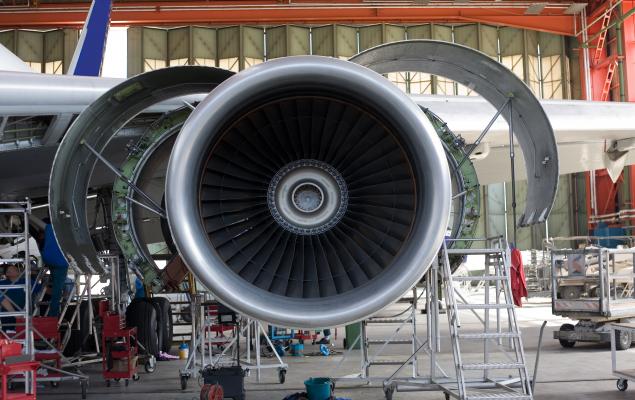
Howmet Aerospace’s defense aerospace business drove robust Q3 2025 performance, with defense revenues rising 24% year-over-year to represent 17% of total sales and its Engineered Structures segment up 14% YoY, supported by strong orders for F-35 engine spares and legacy-fighter parts. The July 2025 House passage of the FY26 Defense Appropriations Act (a $831.5 billion discretionary allocation) and a healthy military-program pipeline bolster prospects for continued contract wins and top-line growth. Shares have risen 13.7% over three months, HWM trades at a forward P/E of 46.06x versus an industry 28.56x, and Zacks consensus 2025 earnings estimates have ticked up 2.8% in the past 30 days, suggesting the market is pricing in defense-driven upside but at a premium valuation.
Market structure: Rising U.S. defense appropriations ($831.5bn FY26 House level) and 24% YoY growth in Howmet’s defense sales (17% of revenue) shift value toward aftermarket spares, engine-structure specialists and materials (titanium/aluminum). Winners: HWM, GE (F110 program), niche suppliers with long lead-time capacity; losers: pure commercial aero OEMs and low-margin subcontractors. Higher spare-parts demand implies stronger pricing power in aftermarket (+5–10% margin tailwind potential) and tighter lead times over 6–18 months.
Risk assessment: Tail risks include Senate/Government rollback of appropriations (>~$30bn cut), substantial FMS timing slips, or a single large contract performance failure causing 5–10% revenue hit; regulatory export controls could curtail FMS flows. Immediate reaction window is days–weeks (news-driven), short term 3–9 months (order conversion), long term 1–3 years (market share and margin normalization). Hidden dependencies: concentration on F-35/F-15/F-16 spares and supplier capacity; FX on exports and raw-material inflation are second-order margin drivers.
Trade implications: Direct — establish a modest 2–3% long HWM tactical position targeting +12–18% in 6–12 months, stop-loss at -10% and trim at +15%. Pair — long HWM / short TXT equal-dollar (1–2% each) to isolate aftermarket vs platform risk. Options — buy 6–9 month HWM call spreads (buy ATM, sell 10–15% OTM) sized at 0.5–1% notional to cap premium; buy protective 3–6 month put spreads if volatility spikes >40%.
Contrarian angles: Consensus overlooks valuation risk — HWM trades at ~46x forward P/E vs industry 28x; growth must persist to justify premium. Momentum (13.7% 3-month gain) may be front-loaded by near-term FMS awards; if HWM growth slips below +10% YoY or forward P/E stays >40, expect 15–25% multiple compression as in prior post-ramp defense cycles. Watch for cost inflation from rapid program ramps that can erode gross margins despite revenue growth.
AI-powered research, real-time alerts, and portfolio analytics for institutional investors.
Request DemoOverall Sentiment
moderately positive
Sentiment Score
0.45
Ticker Sentiment
