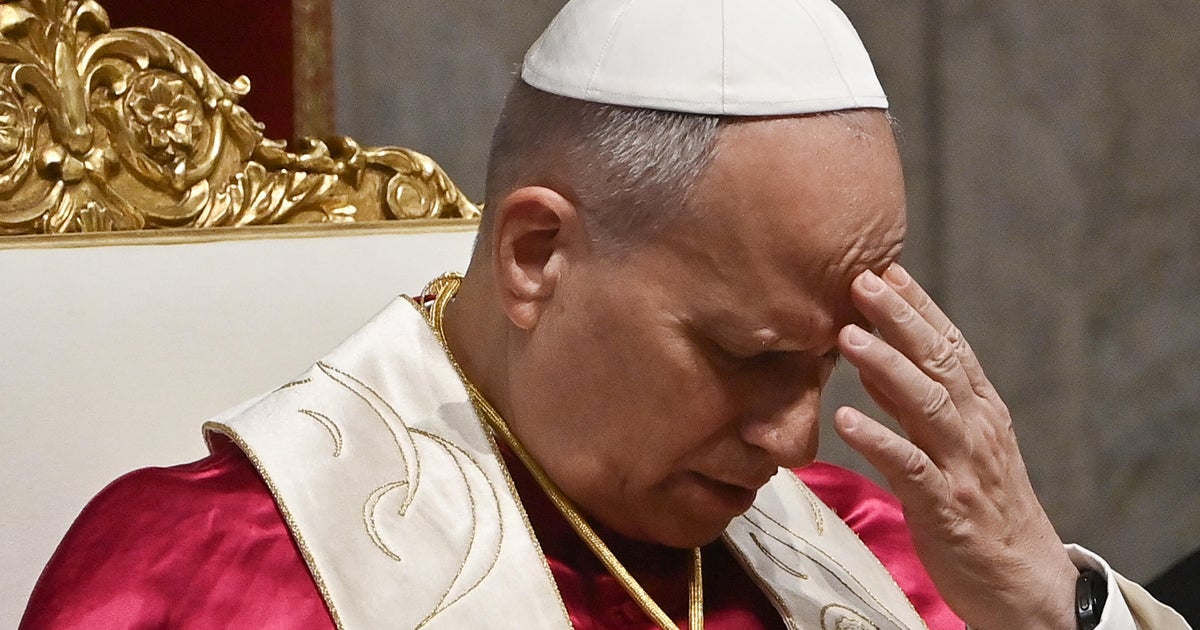
Pope Leo XIV issued a forceful rebuke of the Iran conflict, saying "Enough with war" and urging leaders to choose dialogue over rearmament amid a tense U.S.-Israel-Iran ceasefire. The article also highlights President Trump's claims that Iran's military has been "completely destroyed" and that compliance with ceasefire terms is required to avoid further U.S. attacks. The tone is broadly risk-off because renewed escalation in the Middle East can quickly spill into energy, defense, and broader market risk sentiment.
The immediate market read is not on theology; it is on the probability that the current ceasefire/negotiation framework frays at the margins. Public moral condemnation from the Vatican raises the reputational cost of escalation for U.S. policymakers, but more importantly it increases the odds of a “soft” de-escalation path where rhetoric stays hot while kinetic activity cools. That combination tends to compress headline risk in the first 24-72 hours, but it does not remove tail risk for energy, defense, or rates if talks break down.
The second-order winner is less obvious: Europe’s political center. A sharper moral split between U.S. domestic hawks and global institutions strengthens anti-war parties and complicates coalition discipline, which can slow European fiscal coordination on defense and energy security. In markets, that often means underperformance in Europe-centric cyclicals relative to U.S. assets if investors start pricing higher defense spend without cleaner growth visibility.
The contrarian miss is that the pope’s criticism may actually reduce escalation odds, not raise them. When public pressure becomes broad-based and nonpartisan, it can create cover for both sides to accept a narrow ceasefire extension; that would unwind a lot of the risk premium quickly. So the right lens is not ‘more war’ immediately, but a wider dispersion of outcomes over the next 1-4 weeks: if talks progress, risk assets can rebound sharply; if they stall, the market will reprice energy and defense almost overnight.
From a positioning standpoint, the best asymmetry is in options, not cash equity, because the event path is binary and headlines can reverse quickly. Defense should hold up on any relapse in tensions, but energy is the cleaner short-duration expression of a failed truce. Conversely, a successful mediation headline likely hurts both spaces, especially crowded long defense and long oil trades that have already embedded some geopolitical premium.
AI-powered research, real-time alerts, and portfolio analytics for institutional investors.
Request DemoOverall Sentiment
moderately negative
Sentiment Score
-0.30
