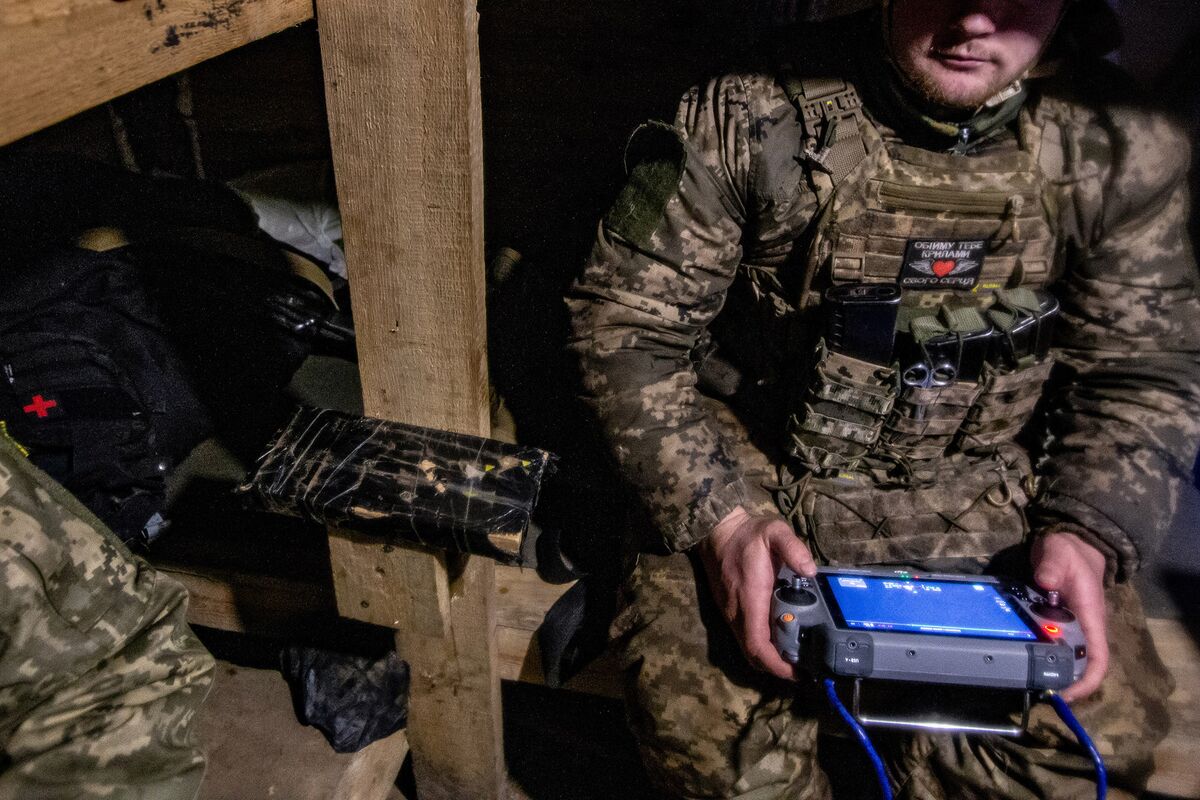
Rheinmetall issued a statement on X expressing 'utmost respect' for Ukrainians' defense efforts after its CEO appeared to belittle the use of drones. The release is a reputational clarification to distance the company from the CEO's comments and is unlikely to have material financial impact.
The public friction between corporate leadership and frontline technology users is a microcosm of a larger procurement pivot: inexpensive, commercially-driven UAS and loitering munitions are rapidly becoming force multipliers that outsource a growing portion of tactical innovation to small Ukrainian firms and niche suppliers. Expect budgets and orders to move away from single-platform large capital programs toward modular payloads, sensors, and swarm-enabling software — a shift that plays out over 6–24 months as field-proven concepts are formalized into supply contracts.
Second-order supply-chain winners are specialized component and subsystems providers (EO/IR sensors, high-discharge batteries, brushless motors, COTS compute and datalinks) rather than prime integrators who rely on long lead, high-fixed-cost production lines. Conversely, primes that fail to adapt commercial-fast procurement or that carry reputational/governance risk face contract delays and lost subcontract share; expect subcontract award fragmentation and faster vendor churn in the next 12 months.
Catalysts and downside: visible contract announcements from western aid packages and Ukrainian modularization standards will accelerate adoption within 3–9 months; conversely, a coordinated countermeasure (mass jamming or affordable counter-UAS proliferation) or a political cut to aid could materially compress demand within 60–120 days. Management missteps that signal misalignment with field users create short-term headline volatility, but the structural trend toward dispersed, low-cost kinetic and electronic payloads is unlikely to reverse within 1–3 years.
AI-powered research, real-time alerts, and portfolio analytics for institutional investors.
Request DemoOverall Sentiment
neutral
Sentiment Score
0.00
