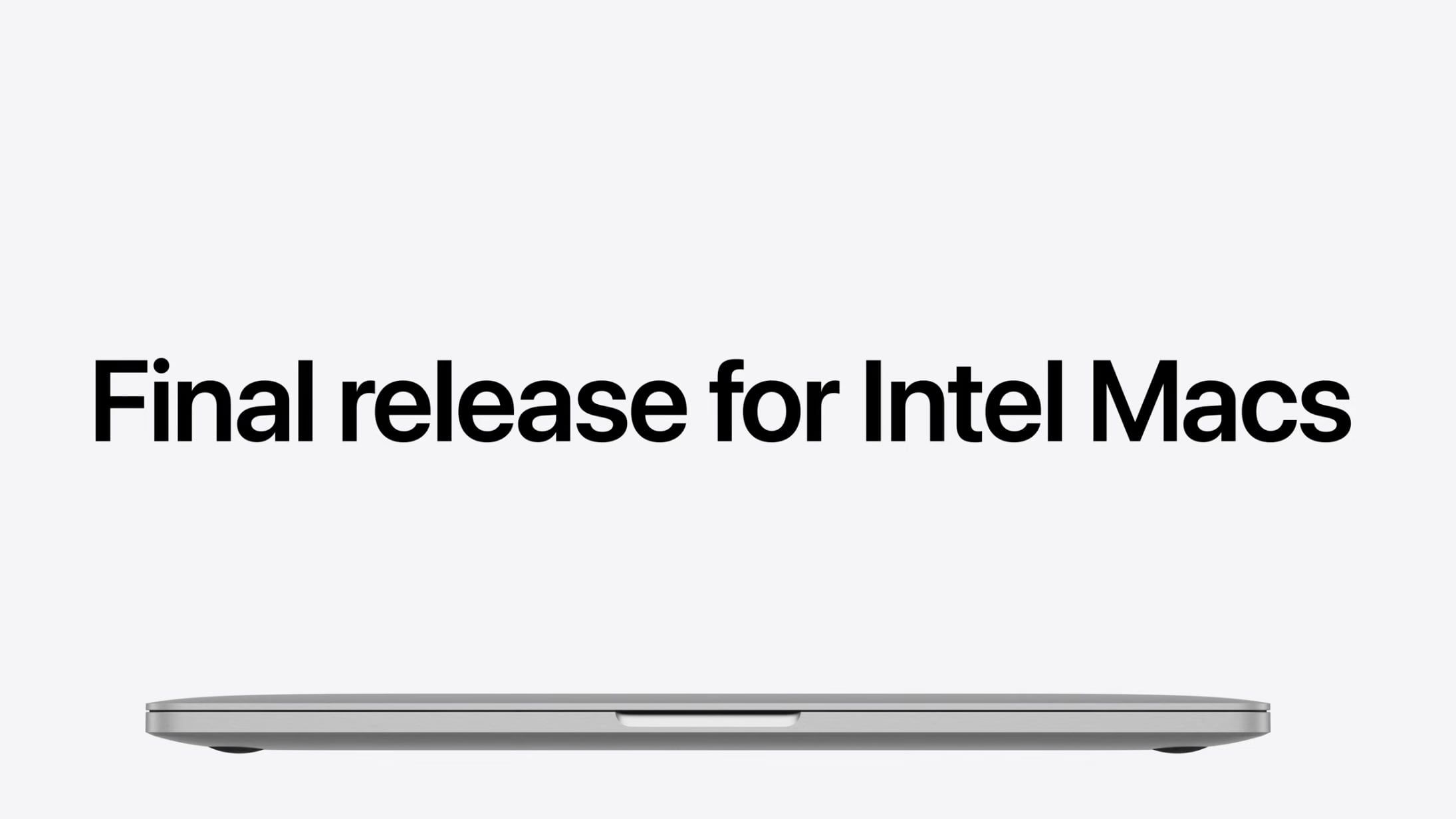
Apple will phase out Rosetta 2 support after macOS 27, and beginning with macOS Tahoe 26.4 users launching Intel-based/translated apps will receive pop-up warnings that those apps will stop working once Rosetta 2 support ends; macOS 27 is scheduled to ship in September 2026. Apple said it will continue limited support for older gaming titles and Intel binaries in Linux VMs and may provide future security fixes, underscoring a continued but narrowing accommodation for legacy Intel software as the company completes its Apple silicon transition.
Market structure: Apple (AAPL) is the clear winner — ending Rosetta 2 signals accelerating forced upgrades to Apple silicon over 12–24 months, improving pricing power on Mac hardware and services (expect ASP lift of low-single-digit % over two years). Intel (INTC) is a peripheral loser: direct revenue impact is modest but reputational and investor sentiment risks could pressure shares by ~10–20% on negative narrative over 6–12 months. Supply/demand: tighter near-term demand for M-series parts risks bottlenecks at foundries (TSMC capacity), pushing capex-led supplier beneficiaries higher and creating short-term supply-driven price volatility in semiconductors.
Risk assessment: Tail risks include regulatory antitrust enforcement or US/China export controls that could disrupt Apple’s silicon supply chain or developer access — low probability but high impact (move shares ±15–25%). Immediate (days) risk: March 4 Apple event could reprice AAPL by ±3–6%; short-term (months) risk: developer backlash or compatibility losses could slow Mac upgrades; long-term (12–36 months) risk: weaker Intel serviceable market share and legacy software entrenchment. Hidden dependency: enterprise virtualization and legacy gaming support (Apple’s promise to extend some Rosetta protections) may mask longer-term app bottlenecks and slow migration.
Trade implications: Direct plays — establish a 1.5–3% long AAPL equity position into March–April to capture product-cycle and upgrade narrative, using 3–6 month call spreads to cap cost; consider a 0.5–1% tactical short INTC over 6–12 months via put spreads if sentiment deteriorates. Pair trade — long AAPL / short INTC (ratio 2:1) to express asymmetric capture of upgrade demand while hedging macro risk. Options — buy AAPL 3–6 month call spreads around March 4 (target +6–12% move) and sell OTM covered calls into rallies; use INTC 6–12 month put spreads to limit premium outlay.
Contrarian angles: Consensus underrates Apple’s ability to monetize forced upgrades via services and higher ASPs — the market may be underpricing a 3–5% incremental EBITDA margin lift over 12–24 months. Conversely, the market may overreact to Intel’s headline loss of Mac relevance; Intel’s core data-center business could offset this, so avoid oversized shorts (>1% portfolio). Historical parallel: Apple’s PPC→Intel shift ultimately increased demand and ecosystem control — a repeat could mean AAPL upside is underappreciated. Unintended consequence: accelerated secondary-market supply could temporarily depress trade-in/refurbisher margins (opportunity: short small cap refurbisher exposure for 3–6 months).
AI-powered research, real-time alerts, and portfolio analytics for institutional investors.
Request DemoOverall Sentiment
neutral
Sentiment Score
0.00
Ticker Sentiment
