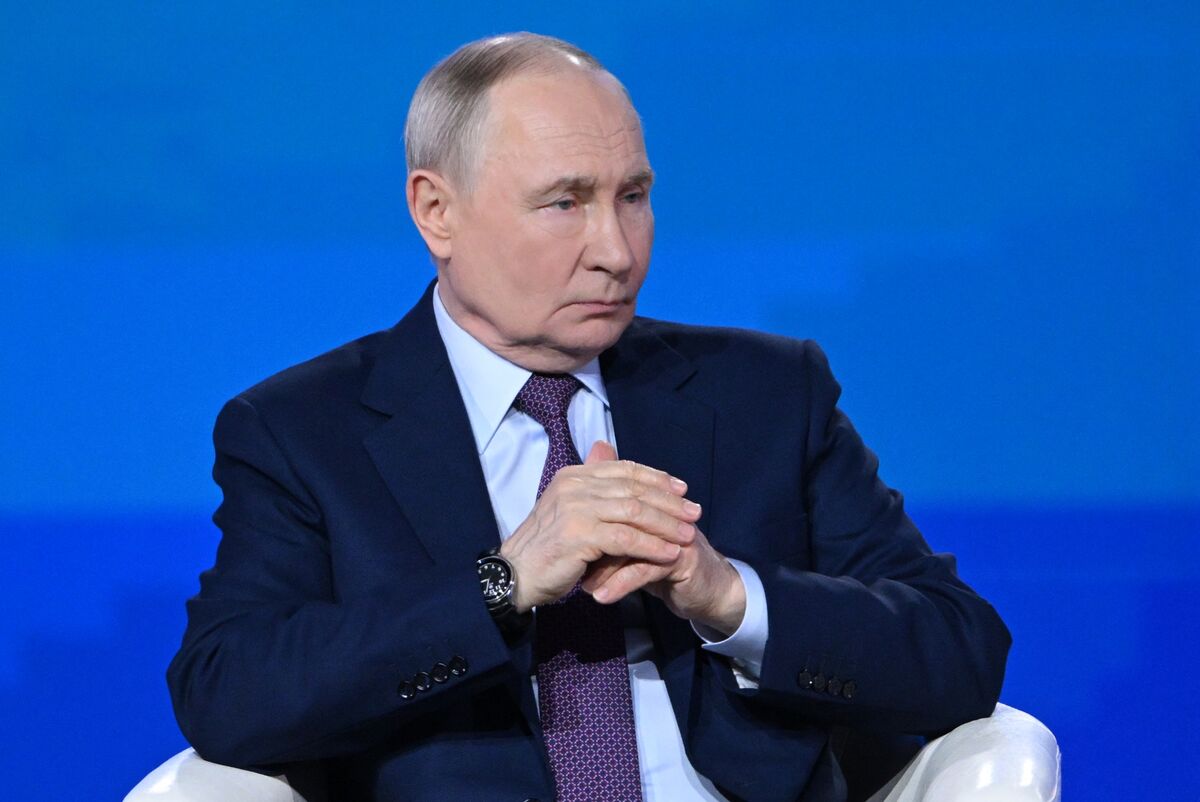
Pro-Kremlin activist Ilya Remeslo says he spent 30 days in a psychiatric hospital in St. Petersburg after publicly criticizing Vladimir Putin, and has now resurfaced with more criticism of the Kremlin. He described the facility conditions as worse than a penal colony and warned that harsh criticism of senior officials comes at a price. The piece is politically sensitive but has limited direct market relevance.
This is less a one-off personality story than a signal on regime durability: the Kremlin appears comfortable tolerating, or at least not fully suppressing, controlled dissent inside its own informational ecosystem. That matters because internal elite messaging channels are increasingly the first place stress shows up when growth slows, war fatigue rises, or succession anxiety increases. The near-term market impact is small, but the second-order effect is a modest rise in policy unpredictability, especially around domestic security, media control, and legal enforcement. The main beneficiaries are hard-security institutions and opaque state-linked actors that gain leverage whenever intimidation and censorship intensify. The losers are the small class of domestic entrepreneurs, regional officials, and quasi-independent commentators who depend on predictable rules and private signaling; in Russia, those groups often transmit stress into capital flight, higher precautionary cash balances, and lower willingness to invest. Over months, that tends to reinforce a lower-growth equilibrium rather than trigger an immediate macro shock. The contrarian read is that this is not necessarily evidence of widening political fracture; it may be an example of selective pressure-release, where the regime allows a loyal critic back in order to preserve the appearance of pluralism while setting a behavioral boundary. If so, the correct market takeaway is not imminent instability but persistent tail risk: periodic spikes in repression headlines, incremental sanctions risk, and a higher probability of abrupt personnel or legal actions against domestically visible figures. The catalyst window is weeks to months, not days, unless the story gets amplified by a broader elite purge or a new crackdown wave. For cross-asset positioning, the better expression is through optionality and relative value rather than outright Russia beta. The event increases the odds of headline-driven volatility in EM Russia proxies and in European assets with residual Russia exposure, but the trade needs to be sized as a convexity bet because the fundamental linkage is indirect and timing is noisy.
AI-powered research, real-time alerts, and portfolio analytics for institutional investors.
Request DemoOverall Sentiment
mildly negative
Sentiment Score
-0.20
