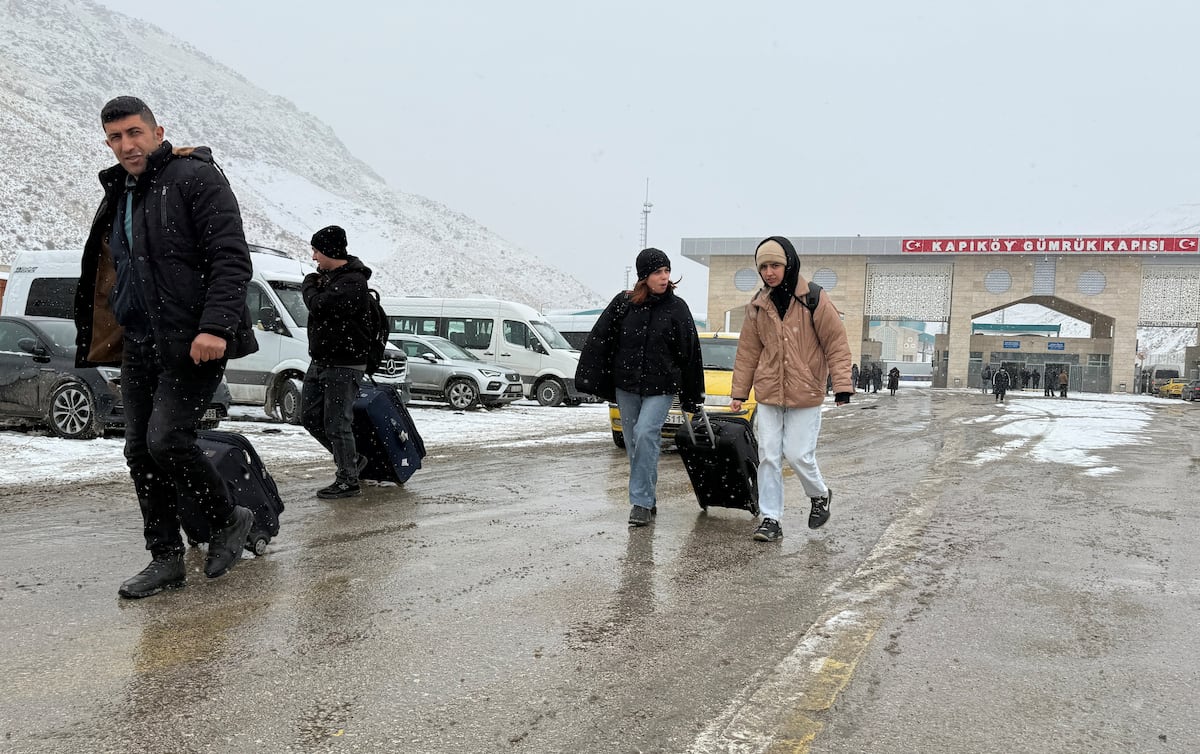
Widespread protests in Iran have been brutally suppressed with an internet blackout and heavy security deployments after mass demonstrations in early January; Oslo-based Iran Human Rights documents at least 3,428 killed while some groups put casualties above 10,000. Refugees and dissidents in neighboring Turkey report fear of reprisals, divisions in opposition leadership, and skepticism about external intervention after the US signaled it would not intervene, heightening regional political risk and potential implications for sanction dynamics and investor sentiment toward Iran and related emerging-market exposures.
Market structure: Immediate winners are defence contractors (Lockheed LMT, Northrop NOC, Raytheon RTX), oil producers (XOM, CVX, XLE/Brent exposure) and safe-havens (GLD, TLT, USD via UUP) as investors price heightened geopolitical risk and potential Iranian export disruptions of an incremental ~0.2–0.5 mbpd. Losers are EM equities and regional banks (EEM, MXEF) and Turkish assets that host refugees and face political risk; flow dynamics will favor bonds and dollar liquidity temporarily, compressing regional FX and credit spreads.
Risk assessment: Tail scenarios include limited strikes that push Brent +$10–30/bbl within 1–3 months, or a wider Gulf conflict that materially disrupts shipping and insurance (BPD spikes >0.5 mbpd). Near term (days) expect volatility spikes (VIX +5–10 pts) and oil moves ±5–10%; short-term (weeks–months) pricing re-rates energy and defence by +10–25% if attacks occur; long-term (quarters+) outcome depends on Saudi spare capacity and China’s willingness to buy Iranian oil. Hidden dependencies: China’s informal purchase agreements, Turkey’s diplomatic posture, and covert satellite communications (demand for IRDM/VSAT) could blunt or amplify shocks.
Trade implications: Tactical plays should be asymmetric and time-boxed: buy protection and optionality rather than large directional bets. Use 3–6 month option structures to capture spikes (XLE/Brent calls, EEM puts) and establish small directional capital in LMT/NOC for a 6–12 month horizon. Pair trades (long defence, short EM) hedge macro exposure while monetizing relative re-rating.
Contrarian angles: Consensus may overprice a sustained oil shock because Saudi/UAE spare capacity and China barter channels can cap upside—this makes deep EM dislocations potentially overdone and creates mean-reversion opportunities if Brent fails to stay >$85 for 60 days. Historical parallels (2011 MENA unrest vs 1979 Iran) show domestic regime change is neither linear nor guaranteed; unintended consequence: Western military involvement would politically re-legitimate hardliners, lengthening the conflict and boosting long-dated defence and energy premiums.
AI-powered research, real-time alerts, and portfolio analytics for institutional investors.
Request DemoOverall Sentiment
moderately negative
Sentiment Score
-0.50
