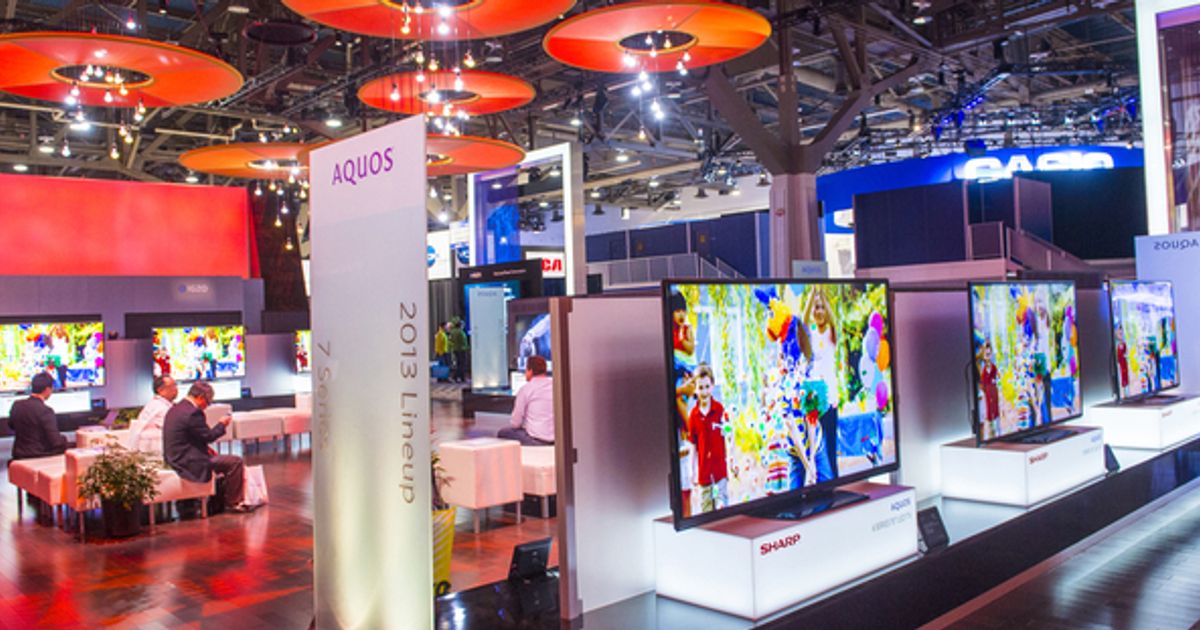
Wedbush positions CES as the opening salvo of a decisive AI spending cycle, forecasting $3–$4 trillion of AI capital expenditure over the next three years and expecting Nvidia CEO Jensen Huang’s Jan. 5 keynote to outline strategic moves in data centres, robotics and Nvidia’s Cosmos foundation model. The broker reiterates bullish ratings and targets — Nvidia outperform, PT $230 (recent $190.53) and AMD outperform, PT $290 (recent $214.99) — and flags a fast-approaching consumer AI phase in 2026 across robotics, wearables, digital health and smart homes, while noting strong supply-chain demand in Asia and rising visibility of Chinese robotics and smart-vehicle players.
Market structure: The Wedbush $3–4 trillion 3‑year AI capex (≈$1.0–1.33T/yr) reallocates pricing power toward GPU/accelerator vendors (NVDA, AMD), foundries and semiconductor equipment (ASML, AMAT) and data‑centre infra (AMZN, MSFT). Winners: NVDA and AMD for compute; cloud hyperscalers for demand aggregation; power/cooling and copper markets for physical AI; losers: legacy x86 server vendors with weak accelerator roadmaps and smaller OEMs facing supply competition.
Risk assessment: Near‑term tail risks include tightening US export controls or China countermeasures (30–180 day impact), hyperscaler CAPEX pullbacks if AI ROI misses (probability medium), and wafer‑fab capacity bottlenecks that could push lead times >40 weeks. Immediate (days): CES/keynote volatility; short (weeks–months): orderflow and IV swings; long (quarters–years): structural demand vs. supply buildout and unit economics of “physical AI”.
Trade implications: Tactical setups favor convex exposure to NVDA/AMD around CES: buy defined‑risk call spreads to capture upside while limiting IV decay. Relative trades: long NVDA vs short INTC or legacy server names to capture GPU share gains. Rotate portfolio into semiconductor equipment and data‑centre infra over 3–18 months, trimming consumer hardware exposure.
Contrarian angles: Consensus ignores power/cooling and real estate constraints — datacenter scale requires capex beyond chips (site, power) which could extend payback >24 months and dampen uptake. NVDA may already price in a large share of the $1T/yr wave (risk of multiple compression if adoption misses); AMD could be underpriced relative to potential Ryzen/datacenter catalysts, making it a higher‑beta pick.
AI-powered research, real-time alerts, and portfolio analytics for institutional investors.
Request DemoOverall Sentiment
moderately positive
Sentiment Score
0.65
Ticker Sentiment
