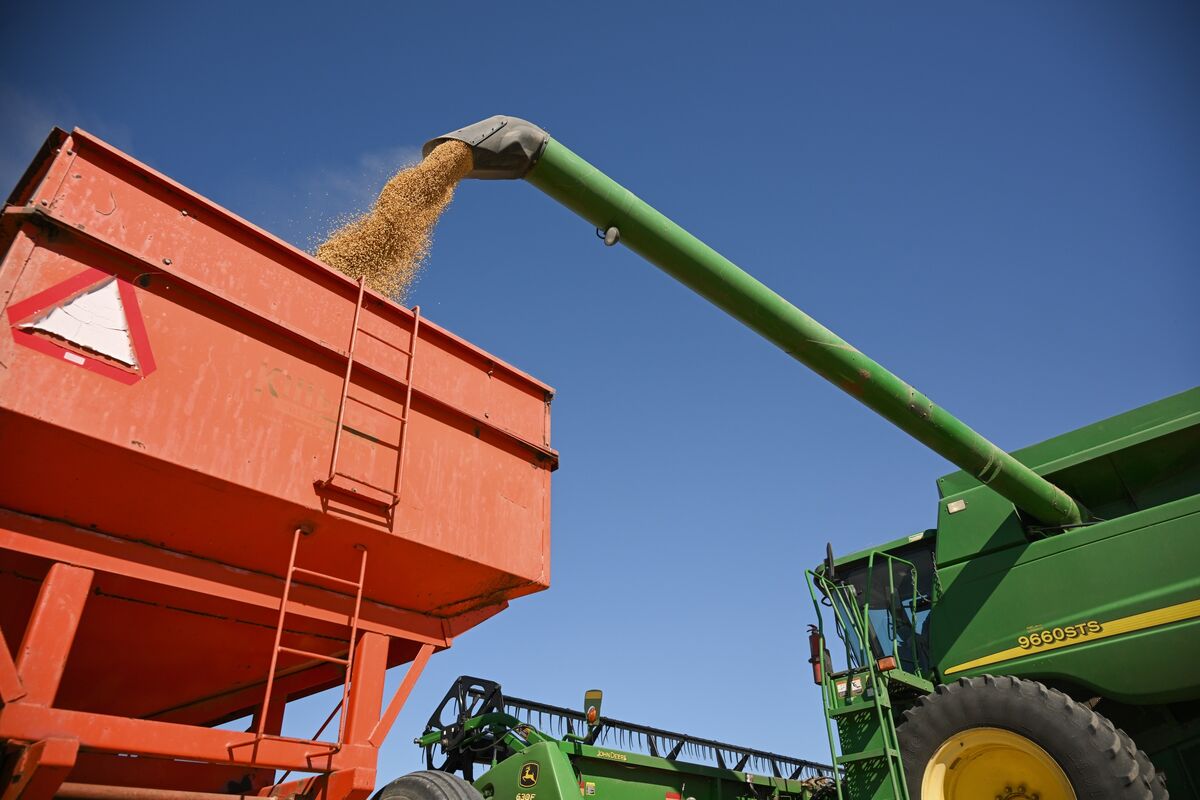
Six US ships are scheduled to load at Gulf Port terminals over the next several weeks carrying at least 320,000 tons of soybeans destined for China after a trade pact and purchases booked following a late‑October meeting between Presidents Trump and Xi. The resumption of shipments signals ramped‑up US export activity to China, supporting demand for soybeans, port throughput and potentially underpinning nearby soybean futures prices.
Market structure: Rapid resumption of China buys (six Gulf loadings, ~320k tonnes over weeks) shifts near‑term export flow to US Gulf terminals, benefiting US crushers/handlers (ADM, Bunge) and barge/rail operators while pressuring Brazilian exporters and freight rates on Brazil→China routes. Expect a 1–3% downward bias in nearby CBOT soybean (ZS) cash/futures over the next 4–8 weeks if additional bookings follow, while crush spreads in the US could widen 3–7% as crushers arbitrage increased soy availability. Freight (Panamax/Pelagic) spot rates should reroute, tightening US export logistics and lifting terminal utilization/margins for 1–3 quarters.
Risk assessment: Tail risks include a trade-policy reversal (re-imposition of tariffs), Chinese demand shock from ASF/swine herd changes, or Gulf terminal congestion causing delays and demurrage—each could flip price moves within days to months. Hidden dependencies: basis risk (Gulf vs interior Illinois/Eastern Cornbelt) and shipping bottlenecks that can localize price dislocations; monitor barge freight and Gulf crush margins as early indicators. Key catalysts: further Trump–Xi follow-ups, weekly USDA export inspections and China customs release of monthly import data; any miss vs expectation in the next 30–60 days will reprice futures.
Trade implications: Direct plays: establish modest long positions in ADM (ADM) and Bunge (BG) 2–3% NAV each for 3–12 months to capture higher export handling and crush margin expansion; offset with a 1–2% notional short in nearby CBOT soybean futures (ZS) for 3–6 months (target 5–8% downside, stop +6%). Use options: buy 3‑6 month ZS put spreads (e.g., buy puts Δ≈0.25, sell lower strike to fund) to express bearish near‑term view with defined risk. FX/credit: consider 1–2% long USD/BRL (sell BRL) for 1–3 months anticipating Brazil export displacement and pressure on Brazilian agrarian credits.
Contrarian angles: Consensus underestimates logistics capacity risk—if US Gulf terminals hit bottlenecks, onshore basis may rally, making a straight soybean short crowded and dangerous; consider pair trades to capture relative moves (long ADM/BG vs short ZS) rather than outright commodity shorts. Historical parallels (2018 trade deal bursts) show initial spikes in flows can reverse; therefore size options exposure conservatively and set objective profit targets (10–20% on equities, 5–8% on futures). Unintended consequence: stronger US crush margins could accelerate US farmer selling, increasing local supply and prolonging price pressure beyond the initial shipments.
AI-powered research, real-time alerts, and portfolio analytics for institutional investors.
Request DemoOverall Sentiment
mildly positive
Sentiment Score
0.35
