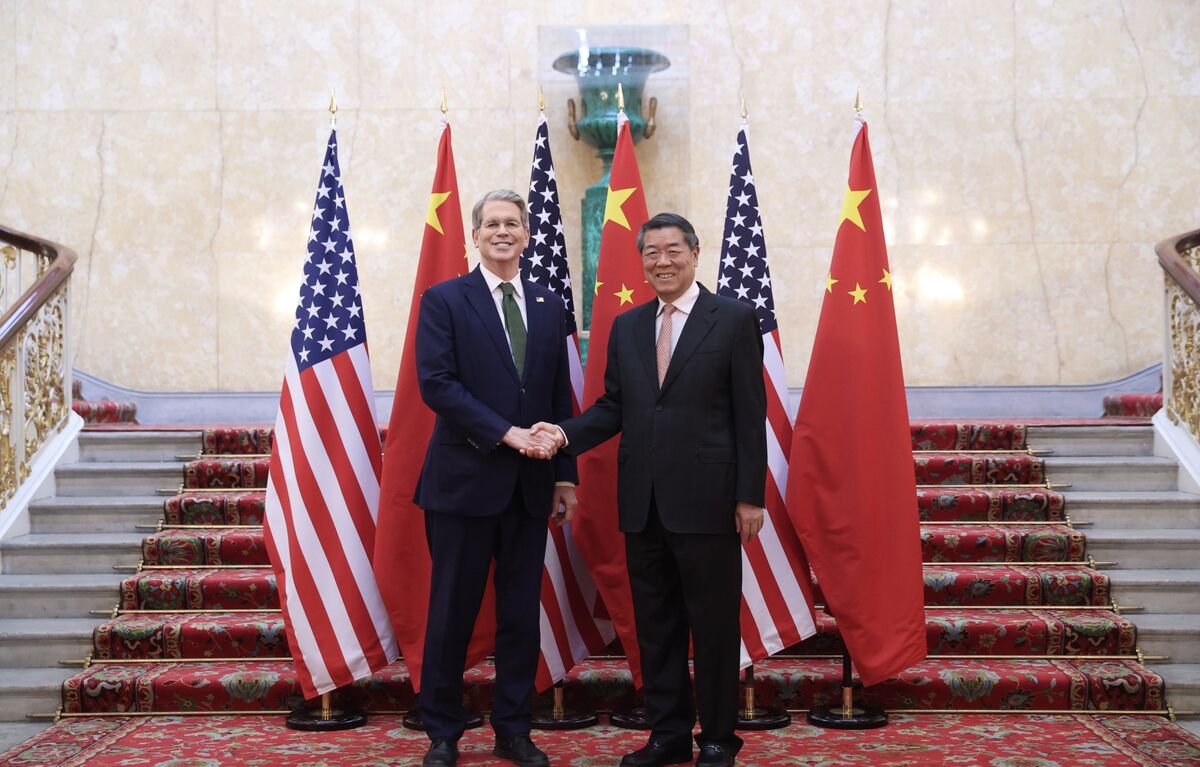
US and Chinese officials, led by Chinese Vice Premier He Lifeng and US Treasury Secretary Scott Bessent, are meeting in Stockholm to extend their tariff truce beyond the mid-August deadline. This third high-level engagement in under three months also addresses US levies on fentanyl trafficking and Chinese purchases of sanctioned Russian and Iranian oil, signaling ongoing efforts to de-escalate bilateral trade tensions.
High-level negotiations between the US and China are underway in Stockholm, marking the third such meeting in under three months and signaling a sustained effort to de-escalate trade tensions. The primary agenda item is the extension of a tariff truce set to expire in mid-August, a development the market views with moderate optimism, as reflected by a sentiment score of 0.45. The talks, led by Chinese Vice Premier He Lifeng and US Treasury Secretary Scott Bessent, also encompass more complex geopolitical issues, including US levies tied to fentanyl and Chinese oil purchases from sanctioned states like Russia and Iran. The moderate-to-high market impact score of 0.6 underscores the significance of these discussions for global supply chains and economic stability, suggesting that while the continued dialogue is a positive sign, the multifaceted nature of the disputes presents significant hurdles to a comprehensive resolution.
AI-powered research, real-time alerts, and portfolio analytics for institutional investors.
Request DemoOverall Sentiment
moderately positive
Sentiment Score
0.45
