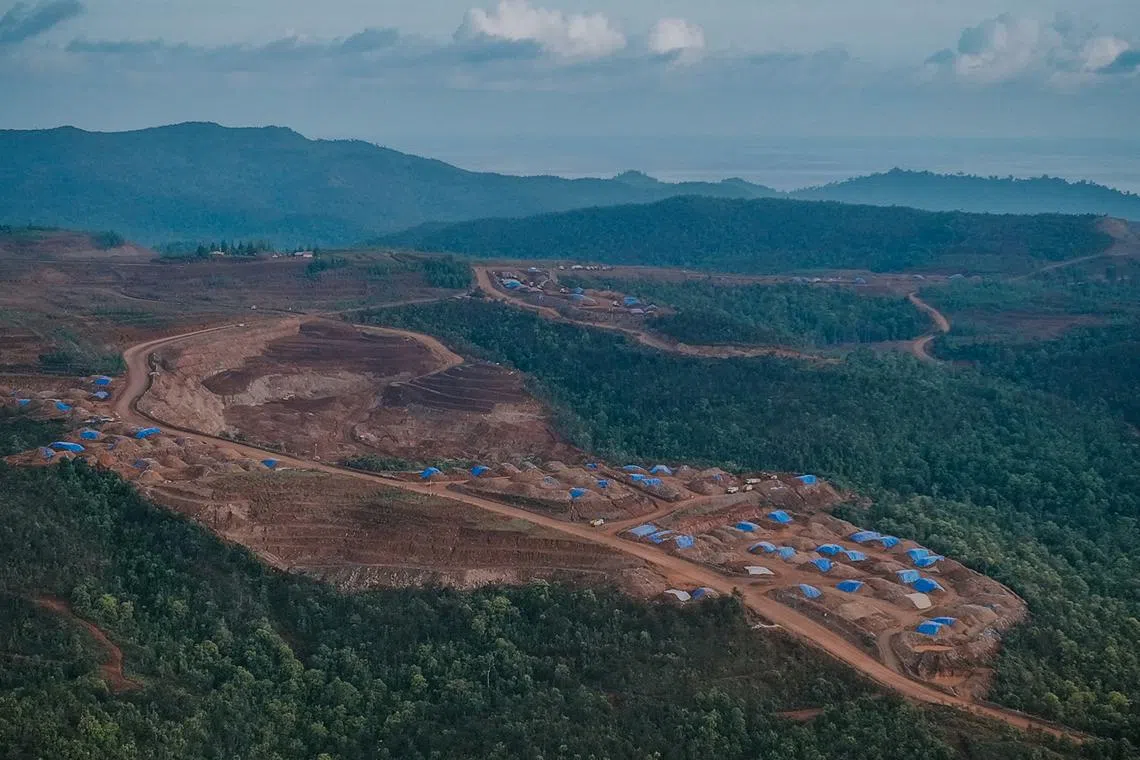
The Indonesian government revoked the licenses of four nickel mining companies in Raja Ampat, a UNESCO site, for violating forest use permits following the discovery of illegal mining activities. While environmental groups are pushing for a complete mining ban to protect the area's biodiversity, the government is allowing a fifth company, PT Gag Nikel (a subsidiary of state-controlled Aneka Tambang), to continue operations under strict monitoring, citing consultations with local stakeholders and the importance of jobs; however, environmental experts warn that any continued extractive activities could lead to ecological damage and the potential loss of Raja Ampat's UNESCO Global Geopark status.
The Indonesian government's revocation of business licences for four nickel mining companies in the exploration phase within the UNESCO-listed Raja Ampat site, due to breaches of Forest Area Utilisation Approvals (PPKH permits), signals heightened regulatory scrutiny in a critical nickel producing region. Specific violations included operating without environmental management systems, mining beyond permitted areas, and lacking necessary PPKH permits. Conversely, a fifth company, PT Gag Nikel, a producing subsidiary of state-controlled Aneka Tambang, has been allowed to resume operations under "strict monitoring" after a temporary halt, a decision Minister Bahlil Lahadalia attributed to stakeholder consultations and local job preservation. This governmental action occurs amidst strong international and local environmental advocacy for a complete mining ban in Raja Ampat, which is a global marine biodiversity hotspot within the Coral Triangle, hosting over 500 coral and 1,400 fish species. Environmental experts and groups like Greenpeace have highlighted existing damage, including over 500 hectares of forest destruction and coastal sedimentation, warning that any continued mining could lead to irreversible ecological harm and jeopardize Raja Ampat's UNESCO Global Geopark status. The minister's assertion that mining activities are distant from key tourist spots and have no visible impact is contested by experts who note pollution can spread and significant impacts may have already occurred, given some permits date back to 2013. The moderately negative sentiment surrounding this issue reflects the substantial ESG risks, public outcry evidenced by #saverajaampat, and the inherent conflict between resource extraction and conservation.
AI-powered research, real-time alerts, and portfolio analytics for institutional investors.
Request DemoOverall Sentiment
moderately negative
Sentiment Score
-0.40
