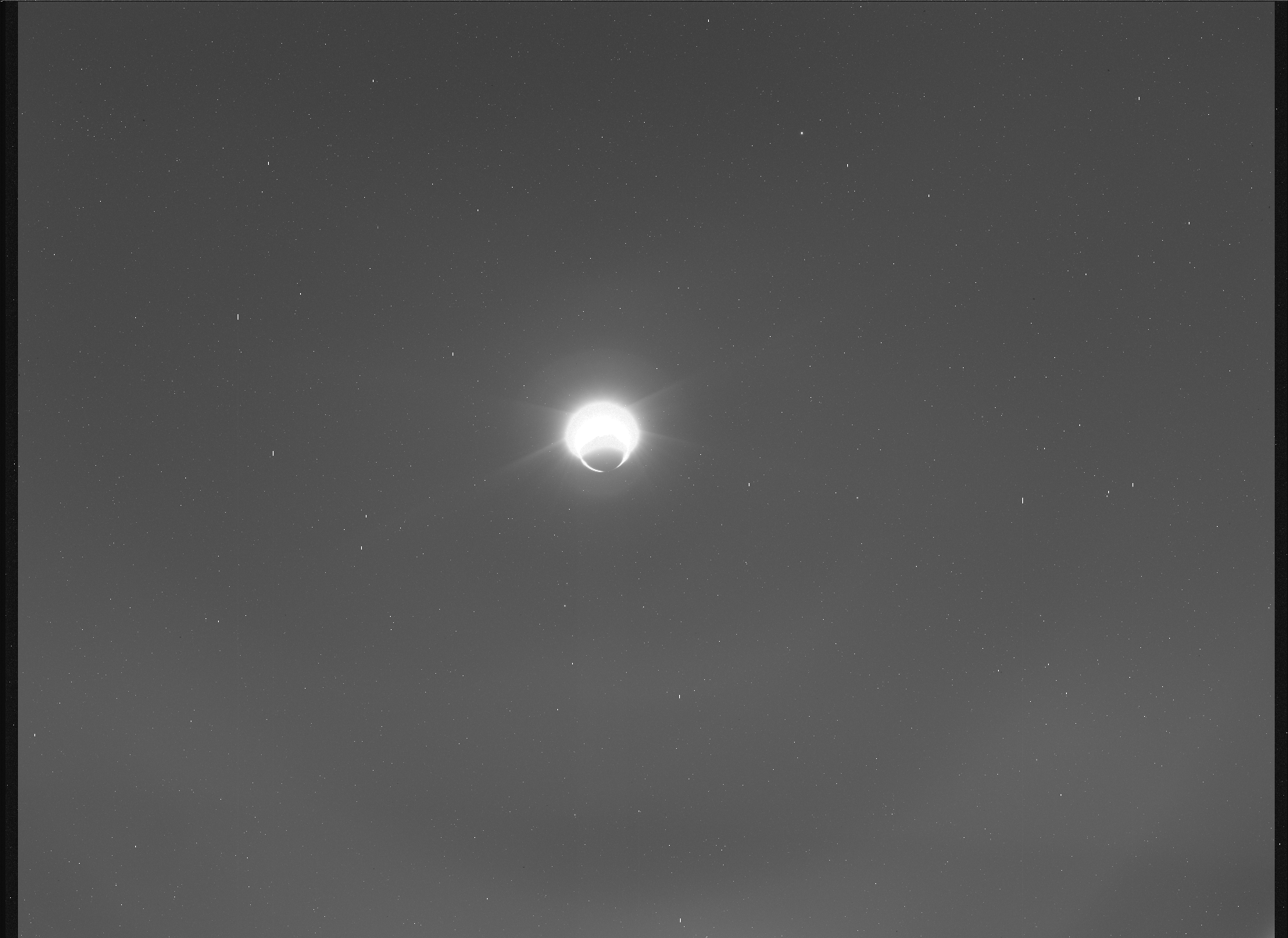
NASA’s Psyche mission will make a close Mars flyby on May 15 at just 4,500 kilometers (2,800 miles), using the pass to calibrate instruments and gain a free gravitational assist toward asteroid 16 Psyche. The spacecraft remains on track for arrival at 16 Psyche in August 2029, with additional testing planned for imaging, magnetometry, and possible dust-ring observations. The article is largely mission-update and exploratory in nature, with limited direct market relevance.
This is a small but useful signal for the space supply chain: the mission is validating deep-space cruise, optical comms, and autonomous navigation in the same package, which incrementally de-risks future NASA/JAXA/DoD procurement of higher-bandwidth comms and longer-duration electric propulsion. The second-order beneficiary is not the mission prime itself so much as the ecosystem around flight avionics, star trackers, radiation-tolerant compute, optical terminals, and ground-network software. If DSOC-style links keep maturing, the long-term prize is lower dependence on expensive RF relay architecture, which could compress margins for legacy deep-space comms incumbents while expanding the addressable market for optical payload suppliers. The near-term commercial read-through is modest, but the strategic relevance is higher than the headline suggests. A successful flyby and instrument calibration increases confidence in multi-year autonomous operations, which matters for future asteroid defense, lunar logistics, and Mars relay missions where schedule slips are driven more by software reliability than propulsion performance. The hidden risk is execution drift: any anomaly in xenon feed, pointing, or thermal control would reinforce the market’s bias that deep-space tech is still fragile, pushing out procurement decisions by 12-24 months. Contrarian view: the market may overrate “space exploration” as a thematic basket trade and underweight the fact that the biggest monetization is likely in adjacent infrastructure, not launch providers. If this mission continues to validate optical comms, the more durable winners are firms tied to photonics, secure networking, and radiation-hardened components, while pure launch exposure remains event-driven and episodic. The broader catalyst window is 2026-2029: multiple Mars and asteroid programs create a rolling set of de-risking milestones that can re-rate suppliers with recurring NASA content, but only after each mission proves operational reliability in space, not just on paper.
AI-powered research, real-time alerts, and portfolio analytics for institutional investors.
Request DemoOverall Sentiment
neutral
Sentiment Score
0.15
