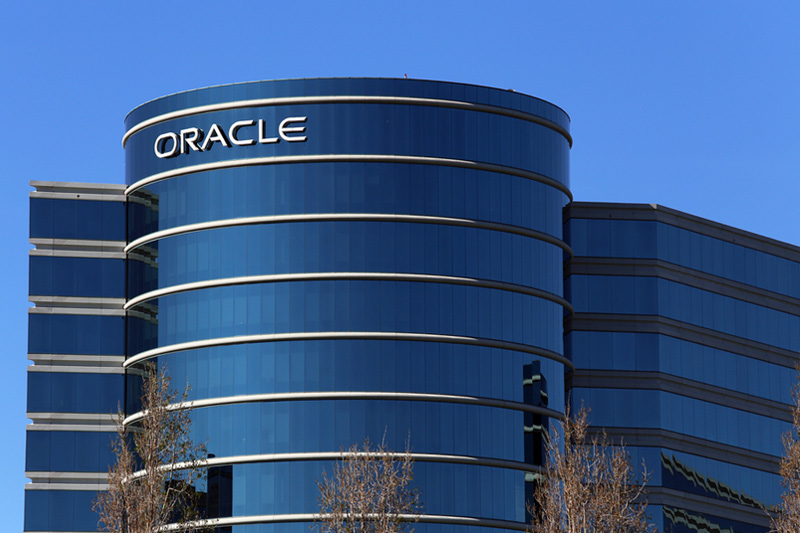
Mizuho reiterated an Outperform and $320 price target on Oracle after the appointment of Hilary Maxson as CFO. Oracle shares have fallen nearly 50% over the past six months and trade below InvestingPro fair value, even as 16 analysts have raised earnings estimates and Mizuho confirms no change to guidance. The company plans roughly $50 billion in FY2026 capex as it scales data centers for AI, launched an AI Data Platform for U.S. federal agencies, and had its Cloud Federal Financials added to the U.S. Treasury marketplace. Oracle has also implemented global layoffs (headcount impact unspecified), a negative offset to the positive strategic and leadership developments.
Oracle’s aggressive buildout of owned compute and go-to-market into federal accounts creates a clear ecosystem of second-order winners: power and microgrid providers that can offer firm, on-demand capacity to new data centers, and server/GPU OEMs whose order books will front-load revenue for quarters before utilization monetizes. AES sits squarely in that supplier sweet spot — expect near-term contract flow and higher utilization of industrial-scale battery and generation capacity as data-center operators prioritize reliability over marginal energy cost.
The CFO change reduces headline governance uncertainty but does not meaningfully shorten the path to constructive free cash flow from new data center investments; the real variable is utilization (and pricing) — if AI workloads don’t ramp to targets within 6–18 months, return-on-capex will be impaired and multiple compression likely. Key catalysts to watch are sequential cloud consumption metrics, the cadence of federal awards, and any disclosed capital-spend cadence shifts; conversely, easing GPU shortages or steeper-than-expected price competition from hyperscalers would compress Oracle’s prospective margins.
From a competitive-dynamics perspective, Oracle’s vertical integration (stack + infra) can buy margin durability if it drives differentiated performance for proprietary models, but it also raises execution complexity versus pure-play cloud vendors — that asymmetry is where optionality and risk live. In short-term windows (days–weeks) expect event-driven volatility around earnings and contract news; in the medium term (6–18 months) the market will reprice on realized utilization and incremental margin capture.
The consensus narrative is bifurcated: participants either extrapolate a near-term AI revenue step-change or dismiss the strategy as expensive infrastructure theatre. Both are over-simplifications — the trade is about execution of complex capex monetization and contracting cadence, not binary product wins. Monitor utilization, federal contract milestones, and capex guidance revisions as the three high-signal datapoints that will resolve the debate.
AI-powered research, real-time alerts, and portfolio analytics for institutional investors.
Request DemoOverall Sentiment
mildly positive
Sentiment Score
0.20
Ticker Sentiment
