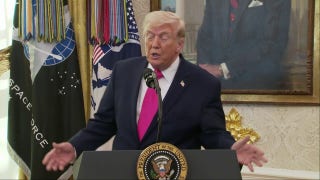
The 38-day partial DHS shutdown continues; TSA agents have missed a second full pay period and more than 400 agents have quit since Feb. 14, producing hours-long security lines during spring break. Rep. Ashley Hinson introduced the End Special Treatment for Congress at Airports Act (House companion to a Senate bill passed by unanimous consent) to ban taxpayer-funded expedited screening for lawmakers. The measure is likely to gain House support but timing for a floor vote is unclear; travel disruptions may persist if the funding stalemate continues.
The immediate market-level friction from airport understaffing is not just a travel inconvenience — it imposes measurable operational cost on airlines and airports via increased turn-time, higher crew opex, and disrupted schedule recovery. Even a modest, sustained rise in average security wait (30–60 minutes) pushes up block-hour costs and forces incremental aircraft reassignments that magnify through hub networks over 1–3 weeks, favoring carriers with simpler point-to-point networks and excess liquidity to hire temporary capacity.
Politically, the Hinson/Cornyn measure is primarily symbolic but raises asymmetric tail outcomes: either it adds public pressure that materially shortens the shutdown (days–weeks), which is bullish for travel equities, or it hardens partisan signaling that lengthens the funding lapse (months), which compounds staffing attrition and drives airlines to ration capacity or pay outsized overtime/contractor rates. Expect procurement and outsourcing levers to be pulled if the standoff persists — DHS will prefer contractors and automation to stabilize throughput, creating a 3–12 month procurement window for screening tech and private security vendors.
Key risks are non-linear: a security incident tied to understaffing would force immediate, costly regulatory changes (stricter screening, slower boarding) and likely reprice equities across travel, defense/surveillance, and airport services; conversely, a fast political resolution is a near-term positive catalyst. Monitor TSA staffing attrition and House floor scheduling as binary near-term indicators; track DHS emergency contract awards as the 3–12 month signal for winners in screening tech and private security services.
AI-powered research, real-time alerts, and portfolio analytics for institutional investors.
Request DemoOverall Sentiment
mildly negative
Sentiment Score
-0.25
