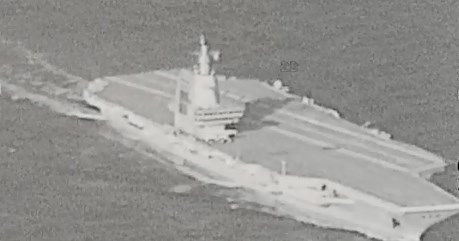
Taiwan's Ministry of National Defense released the first surveillance photo of China's new domestically designed aircraft carrier Fujian transiting the Taiwan Strait since its November commissioning, noting the flight deck had no aircraft and that the carrier may be returning to Shanghai's Changxing Island for fixes. The Fujian is Beijing's third carrier and first with catapult-assisted launch capability, underscoring PLA capability growth amid sustained pressure on Taiwan—PLA sorties near Taiwan totaled 4,935 through November, and 3,467 crossings of the median line in 2025 to date. Concurrently, the U.S. Congress has advanced a National Defense Authorization Act authorizing up to $1 billion for Taiwan-related security cooperation including a joint drone program, a development that reinforces U.S. support and has potential implications for defense-sector demand and regional risk premia.
Market structure: The Fujian transit plus the NDAA’s $1B Taiwan authorization crystallizes demand for naval shipbuilding, missile systems, electronic warfare and drones—benefitting large primes (LMT, NOC, RTX, HII) and niche UAV names (AVAV). Taiwan exporters (semiconductor assemblers, consumer exporters) and regional carriers/ports face revenue and insurance-cost pressure if sorties and drills continue; expect higher defense capex and elevated shipping premiums for 6–24 months.
Risk assessment: Tail risks include a localized blockade or large-scale drills that disrupt TSMC supply lines (low-probability within 6 months, high-impact for global chips and shipping insurance) and accelerated US-China military confrontation increasing sanctions, which would hit regional equity indices by >15% in a shock. Hidden dependencies: chip foundry concentration (TSM) and commercial shipping chokepoints; monitor PLA sortie cadence — a sustained annualized >6,000 sorties or median-line breaches >4,500 would be a regime change. Catalysts: upcoming large-scale PLA drills (weeks), US Senate NDAA enactment (immediate), and bilateral diplomacy (3–6 months).
Trade implications: Tactical allocations favor defensives and hedges: overweight US defense primes and shipbuilders for 3–12 months, buy 3–6 month call spreads on LMT/NOC to capture budget upside, hedge Asia exposure via short EWT or Taiwan 1–3 month puts sized to 1–2% of portfolio. Cross-asset: long-duration Treasuries (TLT) and gold (GLD) as 1% tail hedges, and increase cash/volatility buffer; energy could spike 5–10% on shipping disruption so consider short-dated exposures to oil (2–6 weeks).
Contrarian angles: Markets may underprice multi-year defense procurement financed by US/Taiwan cooperation—defense primes could see 10–25% incremental revenue visibility over 12–36 months, while a near-term selloff in Taiwan equities could be overdone (buyable if EWT falls >12% from today). Historical parallel: 2014 Crimea led to multi-year outperformance for defense and persistent EM risk premia; unintended consequence—higher Taiwanese defense spending could crowd out technology capex, creating selective long opportunities in US suppliers rather than Taiwan fabs.
AI-powered research, real-time alerts, and portfolio analytics for institutional investors.
Request DemoOverall Sentiment
moderately negative
Sentiment Score
-0.35
