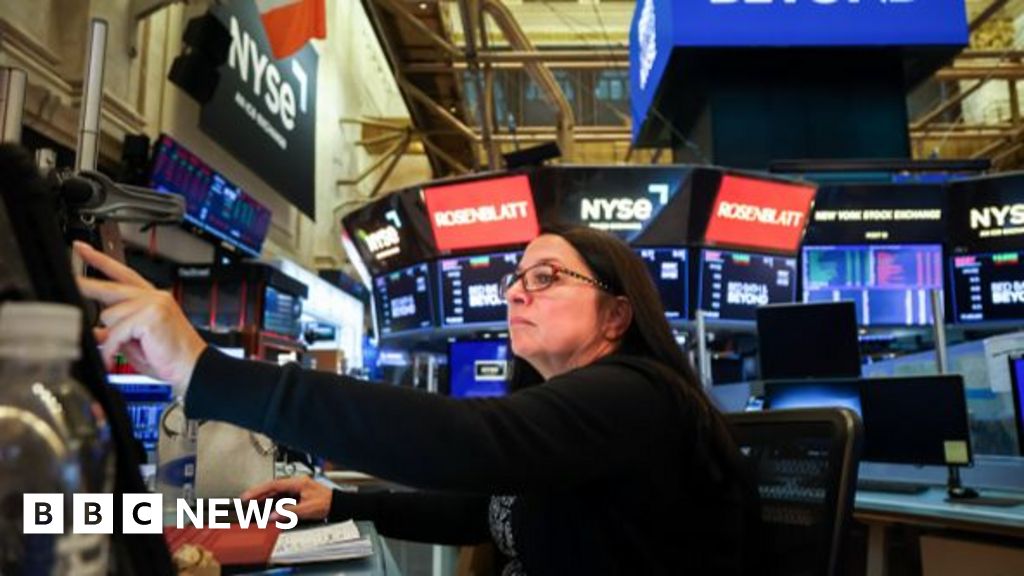
US equity benchmarks closed 2025 strongly with the S&P 500 up roughly 17%, the Nasdaq Composite about +21% and the Russell 2000 ~+12%, driven by strong corporate earnings and heavy investor enthusiasm for AI-related tech where the top five names account for nearly 30% of the S&P. Markets recovered from a spring tariff shock that briefly pushed major indices toward bear territory, while gold surged (~+70% YTD) and bitcoin finished slightly lower; GDP accelerated to an annualized 4.3% in the quarter to September and unemployment rose to 4.6% in November. Analysts note earnings growth is broadening beyond big tech but warn of overvaluation risks, policy uncertainty from tariffs and an upcoming Fed chair appointment that could inject volatility into 2026.
Market structure is bifurcating: the Big Five (NVDA, AAPL, MSFT, AMZN, GOOGL) are direct winners from AI-driven capex and account for ~30% of S&P weight, concentrating pricing power in semiconductors, cloud and platform services. Exporters, supply-chain sensitive industrials and smaller global-cap growers are the clear losers if tariffs re-escalate; small caps (Russell) have outperformed but remain more tariff- and rate-sensitive. Strong AI chip demand suggests tight supply/demand for advanced semiconductors through 2026, supporting NVDA pricing power, while broadening corporate earnings outside tech reduces single-point fragility for the market.
Tail risks include: (1) renewed Trump tariff shock that could shave >3–5% off GDP growth trajectories and corporate margins within 3–6 months; (2) a Fed-chair-driven policy pivot (announcement window: weeks) producing sharp moves in rates and risk premia; and (3) an AI regulation or capex pullback that could cause >30% drawdowns in highly levered AI plays. Near-term volatility catalysts cluster around the Fed chair pick (weeks), monthly payroll/CPI prints (days-weeks) and Q4 earnings (1–2 months). Hidden dependencies: China revenue mix for mega-cap earnings and semiconductor equipment bottlenecks.
Trade implications: favor asymmetric, hedged exposure to AI — small long positions in NVDA/MSFT/AAPL via call spreads (9–12 months) sized 1–3% each, paired with tail protection (short-dated put spreads on QQQ/SPY) around the Fed chair announcement. Increase real-assets exposure: 2–4% allocation to gold miners (GDX) or GLD given strong inflows; add duration only after chair signals easing — consider 3–5% TLT if Fed signals cuts within 6–12 months. Rotate 2–4% from mega-cap concentration into cyclicals (IYT/XLI) and select small-cap exposure (IWM) on weakness.
Contrarian read: consensus fears an AI bubble, but earnings breadth is real—if non-tech earnings maintain 5–8% YoY growth into H1 2026, a tech pullback may be contained and create value buys in beaten-down cyclicals. The market may be over-penalizing tariff risk; persistent negotiations could instead accelerate onshoring, boosting domestic semiconductor and machinery winners. Historical parallel to late-1990s tech shows valuation contraction can be sector-specific; avoid blanket de-risking of equities. Unintended consequence: aggressive dovish Fed pick could spike reflation and steepen yield curve, hurting long-duration growth names while helping cyclicals and commodities.
AI-powered research, real-time alerts, and portfolio analytics for institutional investors.
Request DemoOverall Sentiment
moderately positive
Sentiment Score
0.45
Ticker Sentiment
