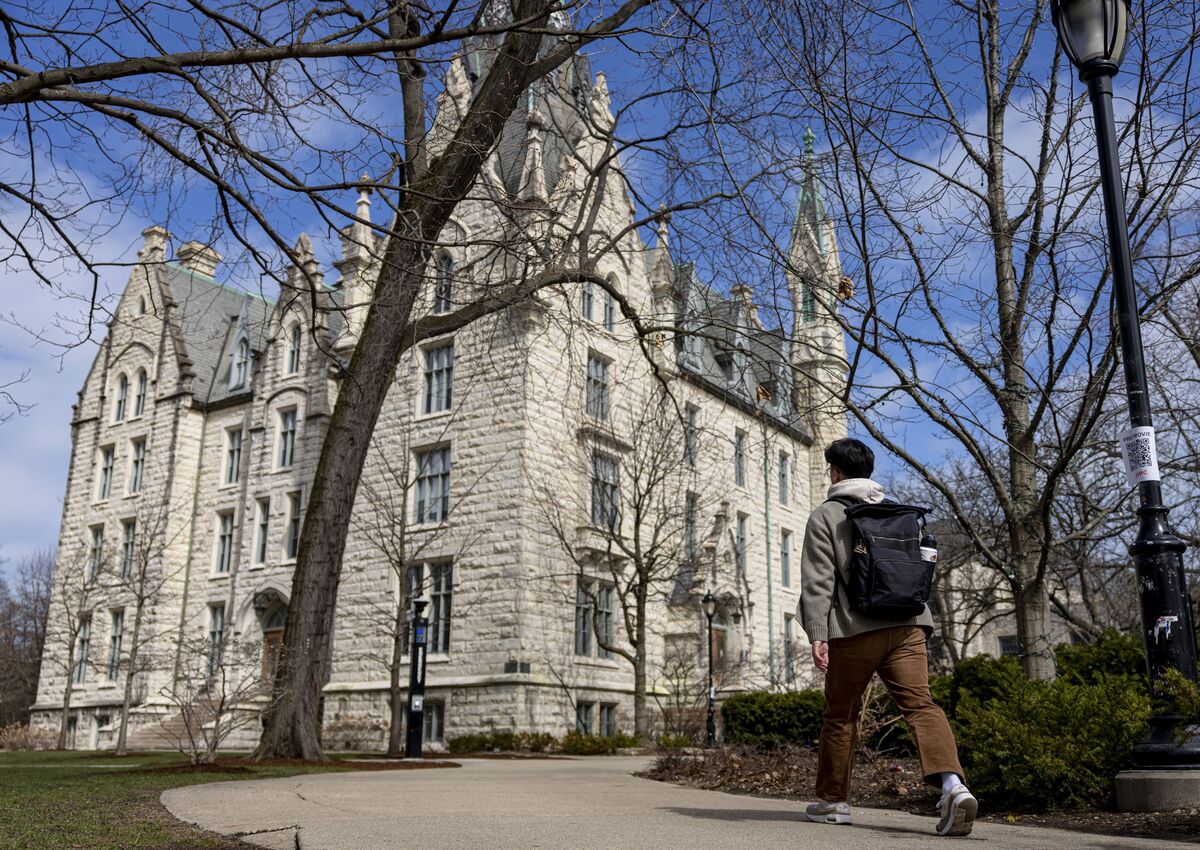
Northwestern University reached a settlement with the Trump administration to pay $75 million over three years in exchange for restoration of hundreds of millions of dollars in research funding, closure of all pending federal investigations, lifting of stop-work orders on terminated federal awards, and reinstatement of eligibility for future federal grants and contracts. The agreement resolves the dispute and clears the way for resumed federally funded research at Northwestern, while imposing a defined near-term cash outlay but limiting broader market or fiscal consequences.
Market structure: The settlement ($75M over 3 years) removes an immediate cash-flow/pause risk and restores “hundreds of millions” in federal research funding (estimate $200M–$500M) to Northwestern and its subcontractors, which should boost demand for lab consumables, instruments and research services over the next 3–12 months. Direct beneficiaries are lab-equipment and life‑science tools suppliers (Thermo Fisher TMO, Danaher DHR, Agilent A, Illumina ILMN) and small biotech spinouts that depend on university grants; losers are short‑term cash providers and any insurers/underwriters who absorbed legal risk. Market pricing impact is small but sectoral: expect 1–3% incremental revenue tailwinds for exposed suppliers versus peers over two fiscal quarters.
Risk assessment: Tail risks include a political reversal or additional conditions that claw back funds (low probability, high impact), and reputational/donor flow hits to Northwestern that could force asset sales (medium probability). Immediate (days) effect is confidence restoration; short term (weeks–months) is procurement restart and subcontracts feeding vendors; long term (quarters–years) is precedent for other universities negotiating settlements which could normalize grant-risk premia. Hidden dependencies: downstream startups and local vendors reliant on grant timing; failure to see actual award paperwork in 30–90 days is a key reversal catalyst.
Trade implications: Tactical longs: lab-equipment suppliers and research‑services names (TMO, DHR, A, ILMN) with 1–2% portfolio positions and 3–6 month horizons; use buy‑call spreads to cap cost. Pair trade: long TMO (1%) vs short industrial cyclical exposure like CAT (0.5%) to isolate research demand upside. Sector rotation: overweight Healthcare Equipment & Supplies (XLV overweight by 1–2%) funded by modest underweight in Consumer Discretionary (XLY -1%).
Contrarian angles: Consensus underestimates concentration—if a large chunk of restored funding is defense/AI classified, defense primes (LMT, NOC) could see subcontract upside; consider small 0.5–1% exposure and reassess on award notices. Risk of overreaction: market may already price trivial benefit; look for concrete grant listings in next 30–90 days—if awards exceed $250M to programs tied to commercializable tech, materially scale long positions; if not, trim within 60 days.
AI-powered research, real-time alerts, and portfolio analytics for institutional investors.
Request DemoOverall Sentiment
neutral
Sentiment Score
0.10
