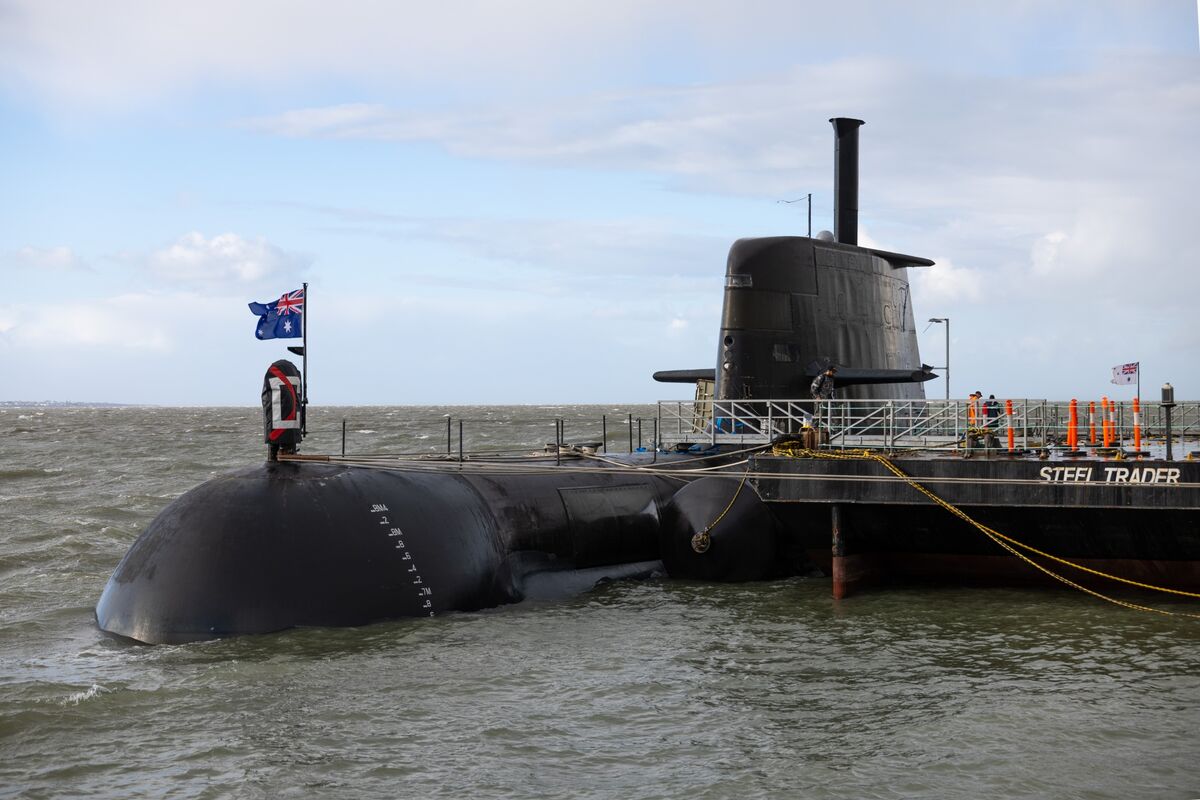
Australia will extend the life of the 30-year-old HMAS Farncomb, with refurbishment starting at the end of May and expected to take about two years, adding roughly 10 years of operational life. The move is a bridge to the anticipated arrival of US-built nuclear submarines under AUKUS sometime next decade. The announcement is strategically important for defense readiness but is unlikely to have a broad near-term market impact.
This is less a one-off maintenance story than an explicit signal that Australia is forced into a two-track undersea strategy: pay now to keep legacy platforms viable, while funding a much more expensive future nuclear fleet whose delivery is still highly uncertain. The second-order effect is budget crowd-out: every year of life-extension spending reduces fiscal flexibility for munitions, sensors, shipyard capacity, and crew retention, which are the real bottlenecks in undersea deterrence before the new boats arrive.
The operational risk is not the refurbishment itself, but the gap it is trying to bridge. If the nuclear-submarine timeline slips by even 12-24 months, the Collins extension stops being a bridge and becomes a crutch, raising the probability of availability shortfalls, deferred maintenance cascades, and a more expensive end-state recapitalization. That tends to favor firms exposed to sustainment, depot-level overhaul, propulsion-adjacent systems, and Australian industrial participation more than prime contractors whose revenue depends on clean greenfield program execution.
The contrarian angle is that markets may overvalue the headline AUKUS build-out and undervalue the interim sustainment cycle. The next 2-3 years are likely to monetize through maintenance, parts, training, and shipyard throughput rather than submarine deliveries, which means the near-term winners are lower on the value chain and more tied to existing fleet readiness. If Canberra gets tighter on fiscal priorities, the largest losers are discretionary naval modernization projects that compete for the same dollars, not the submarine program itself.
AI-powered research, real-time alerts, and portfolio analytics for institutional investors.
Request DemoOverall Sentiment
neutral
Sentiment Score
0.08
