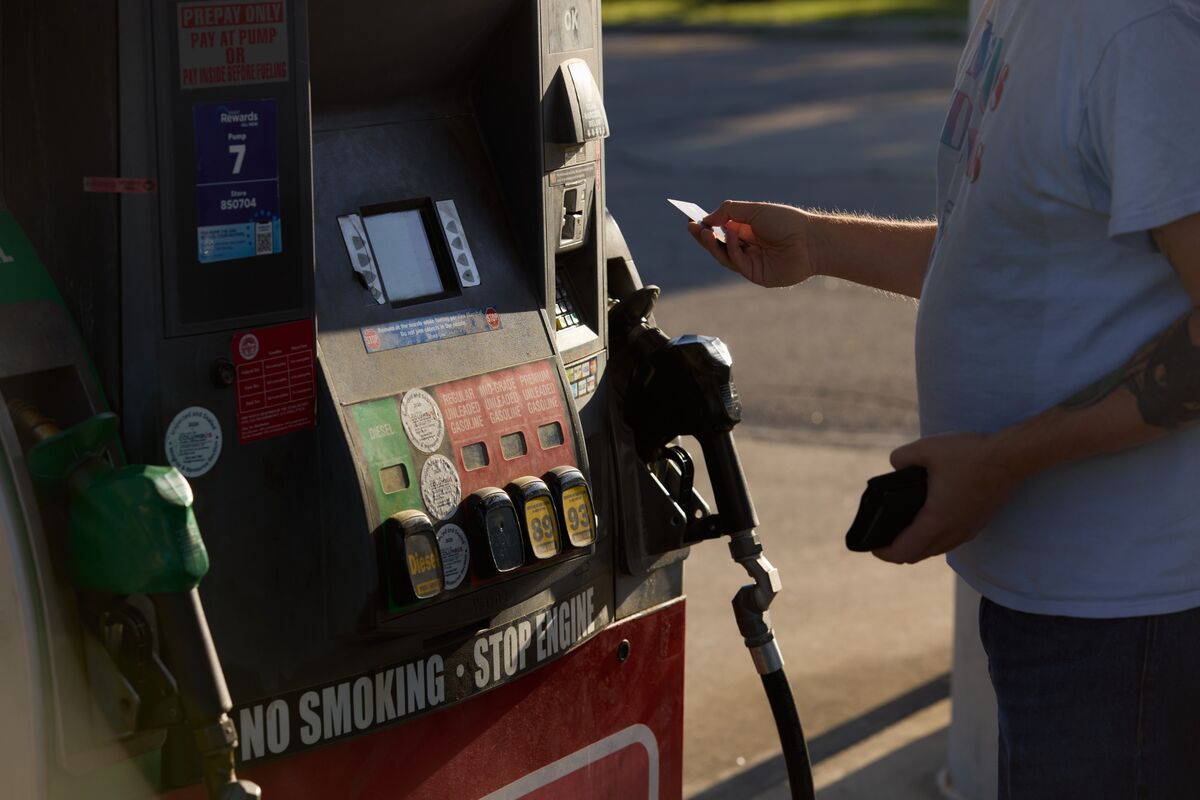
Trump said he would support a temporary pause on the federal gasoline tax, currently 18.4 cents per gallon, to ease pump prices as oil costs rise amid the war with Iran. The move is framed as a consumer relief measure, but it is unclear how much of any tax cut would be passed through to drivers. The headline is relevant to fuel markets and fiscal policy, but near-term market impact is likely limited unless policy action advances.
A temporary federal gas-tax holiday is a blunt political signal, but the market impact is asymmetric because retail fuel pricing is already being driven by crude, refining margins, and distribution bottlenecks, not just taxes. The biggest second-order effect is on inflation expectations: even a modest pass-through to consumers can shave a few tenths off headline CPI over 1-2 months, which matters more for rate-sensitive assets than for the energy complex itself.
The immediate losers are not oil producers so much as downstream margin holders and any asset priced off a softer inflation path. Retailers and consumer discretionary names with heavy transportation exposure should benefit at the margin if households perceive cheaper gasoline, but the pass-through is likely uneven; that creates a gap between political optics and realized demand stimulus. If consumers only see a partial reduction, the policy may fail to lift driving demand enough to offset the headline impact.
The key risk is that this becomes a short-lived political gesture that does not alter supply, meaning energy equities could retrace if crude is already discounting geopolitical risk. The real catalyst set is binary: escalation in the conflict keeps fuel prices elevated for months, while any de-escalation or supply normalization would overwhelm the tax effect quickly. In that sense, the move is more relevant for inflation breakevens and consumer sentiment than for structural energy pricing.
Contrarian view: the market may be overestimating how much a gas-tax holiday helps consumers and underestimating the fiscal-political noise it creates. If the policy is not paired with supply relief, it can actually reinforce the narrative that policymakers are reactive and behind the curve, which supports long-duration hedges even if pump prices dip briefly.
AI-powered research, real-time alerts, and portfolio analytics for institutional investors.
Request DemoOverall Sentiment
neutral
Sentiment Score
-0.10
