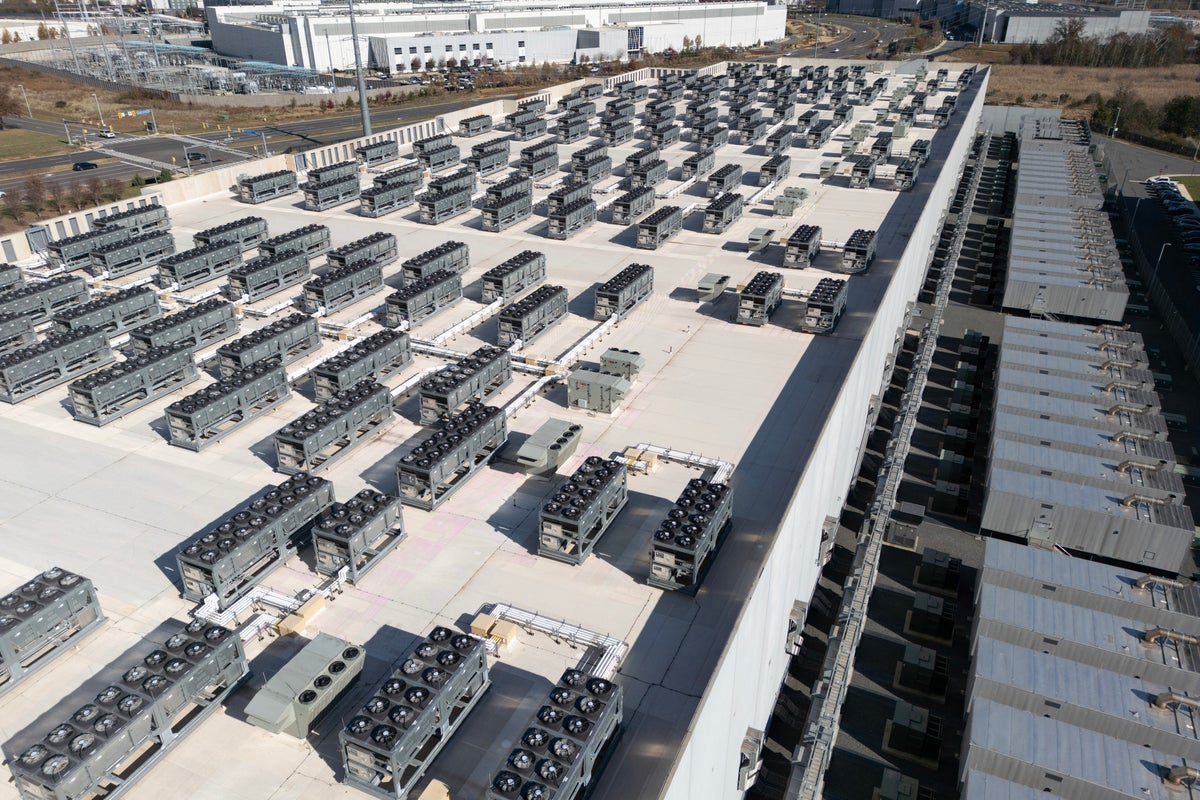
PJM issued a low-level emergency as East Coast temperatures hit the 90s to 100F, with D.C. expected to reach 100F and New York City 95F, boosting electricity demand and straining the grid. The U.S. Energy Department authorized PJM to deploy backup generation at data centers and other facilities to help prevent blackouts. Power prices in PJM's region have already risen nearly 76% year over year, with wholesale costs climbing to $136.53/MWh in Q1 2026 from $77.78 a year earlier, largely due to data center demand.
This is not just a weather-driven spike; it is a demand elasticity test for a grid already operating closer to its structural ceiling because of data-center load growth. The key second-order effect is that peak pricing is becoming less about marginal household cooling demand and more about the ability of industrial-scale, inflexible loads to curtail when stressed. That shifts pricing power toward generators with dispatchable capacity, while increasing the probability that utility regulators face pressure to cap pass-throughs or accelerate capacity-market reform.
The market is likely underestimating how sticky this problem is over the next 6-18 months. Heatwaves create immediate scarcity, but the larger earnings impact comes from persistent basis volatility, higher ancillary-service costs, and forced reserve margins that will likely keep wholesale power elevated even after temperatures normalize. Data-center buildout also creates a feedback loop: higher load growth forces more generation and transmission capex, which can support utility and grid-equipment spending but is negative for regions dependent on politically constrained rate hikes.
The contrarian angle is that the headline risk is probably more bullish for power producers than for utilities with regulated lag. Investors may focus on blackout risk, but the more durable trade is margin expansion for merchant generators and natural-gas-linked power names, because supply cannot be added quickly enough to offset load growth. If the emergency actions meaningfully reduce curtailment risk, near-term volatility could ease, but that would likely preserve elevated prices rather than mean-revert them.
From a portfolio construction standpoint, this is a good setup to own assets with dispatch optionality and short names exposed to power-cost compression or politically delayed rate recovery. The tighter the grid gets, the more valuable flexible generation, storage, and gas transport become versus fixed-price consumers of electricity. The main tail risk is regulatory intervention that forces load shedding at data centers or caps spot-price upside, which would blunt the most asymmetric part of the trade but still leave the medium-term capacity story intact.
AI-powered research, real-time alerts, and portfolio analytics for institutional investors.
Request DemoOverall Sentiment
mildly negative
Sentiment Score
-0.35
