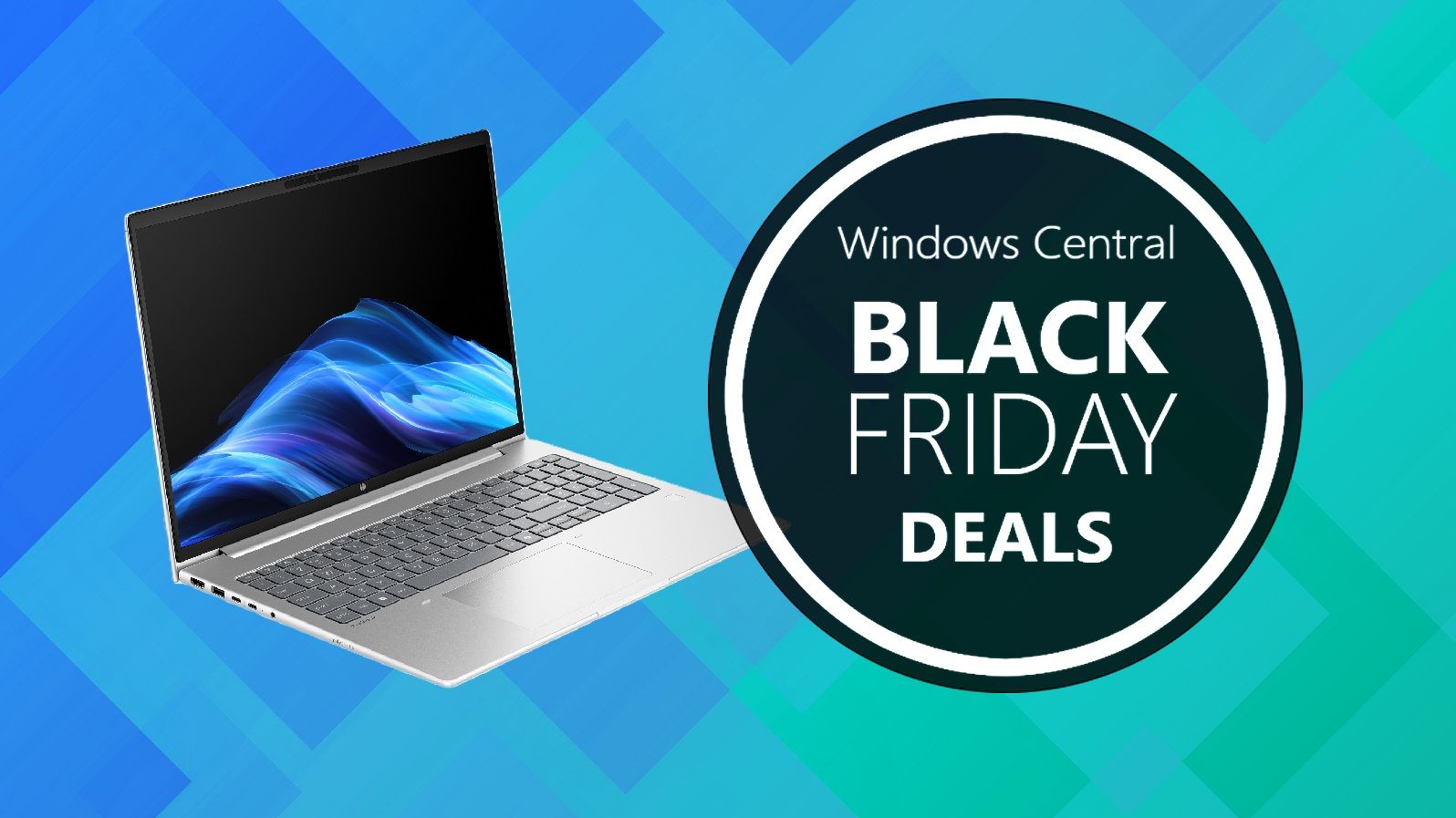
HP is offering its ProBook 4 G1i — normally a $4,000 professional-grade 16-inch laptop — for $1,199 in a Black Friday 2025 promotion (a $2,849 discount) as of an update on November 28. The spec'd configuration includes an Intel Core Ultra 7 255H (16 cores/16 threads), 32GB DDR5 (upgradeable via two SODIMM slots), 1TB SSD, NVIDIA RTX 3050 GPU, Windows 11 Pro and a full complement of ports. The steep, time-limited markdown could stimulate seasonal unit demand and put short-term pricing pressure on competing premium laptop SKUs, but it is a tactical retail promotion with minimal direct market-moving implications for investors beyond potential incremental Q4 sales for HP and channel partners.
Market structure: A deep Black Friday discount on HP ProBook signals OEMs and channel partners are prioritizing unit turns over ASPs to hit holiday targets — winners are cash-flow-rich retailers (WMT) and volume-driven OEMs (HPQ) while mid-tier retailers with higher service margins (BBY) face margin compression. Intel (INTC) gains product-story PR as Core Ultra 7 ships in premium SKUs, but GPU suppliers (NVDA) see only marginal lift from RTX 3050 inclusion; competitive pricing pressure likely forces near-term ASP declines of ~5–15% in premium Windows laptops over 1–2 quarters.
Risk assessment: Tail risk includes a prolonged channel glut that forces a multi-quarter price war (high-impact, <20% probability) and a corporate IT spending pull-forward that leaves a trough in FY26 orders. Immediate (days–weeks) volatility will be driven by holiday sell-through and inventory disclosures; medium-term (1–3 months) by Q4 earnings and guidance; long-term (4+ quarters) by structural PC demand shifts and refresh cycles. Hidden dependencies: corporate procurement timing, Windows/driver certification lags, and GPU inventory allocations can amplify margins unpredictably.
Trade implications: Tactical longs: selective HPQ exposure to capture share gains and services attach if you size 1–3% of portfolio and plan to hold 1–3 quarters; tactical shorts: BBY (1%) or a BBY put spread to hedge margin compression into Q4 results. Pair trade: long HPQ, short DELL to isolate pricing/margin dispersion; options: sell 3-month HPQ cash-secured puts 10% OTM for income or buy 6–12 week BBY bear put spreads keyed to earnings volatility. Rotate modestly into staples/defensive retail (WMT +1–2%) to capture traffic flow without margin risk.
AI-powered research, real-time alerts, and portfolio analytics for institutional investors.
Request DemoOverall Sentiment
moderately positive
Sentiment Score
0.40
Ticker Sentiment
Contrarian angles: Consensus treats the move as a pure consumer promo; underappreciated is HP using aggressive pricing to accelerate enterprise refreshes and services attach — this could lift HPQ EBITDA margin 100–200bps 2–3 quarters out if attach rates rise. Conversely, reaction may be underdone on channel-stuffing risk: if sell-through misses by >5–7% vs. consensus, expect swift downgrades for BBY/DELL. Historical parallel: 2019 pre-COVID clearance led to a shallow rebound after inventory digestion; monitor weekly sell-through and channel days-of-inventory as leading indicators.
