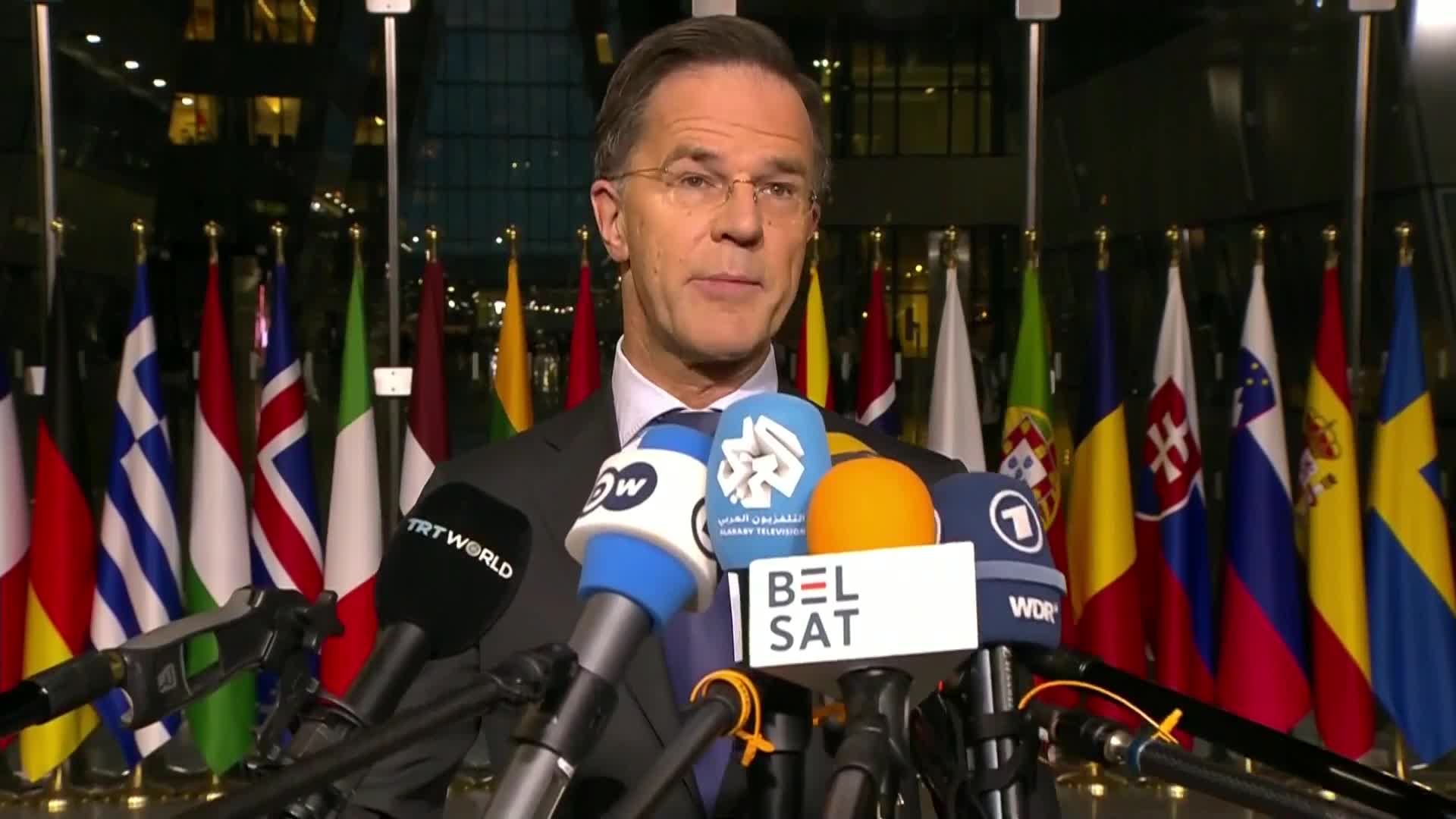
NATO and European officials emphasized sustained military and financial support for Ukraine, reporting roughly $4 billion committed to date and targeting approximately $1 billion per month to reach about $5 billion for the year, with similar monthly funding expected next year. The statement highlights continued U.S., European and Canadian deliveries of offensive and defensive equipment, coordination on sanctions to pressure Russia, and ongoing EU deliberations over use of frozen Russian assets to help finance aid — supportive for defense suppliers and sanction-sensitive sectors but lacking a single market-moving policy announcement.
Market structure: The clear winners are defense prime contractors (Lockheed LMT, Raytheon RTX, General Dynamics GD, Boeing BA) and ammunition/munitions suppliers (Olin OLN, Rheinmetall RHM.DE) due to pledges for sustained monthly flows (~$1bn+/month) and initiatives to rebuild Ukraine’s defense industrial base. Losers include exporters to Russia and financials with frozen-asset exposures; energy markets will remain sensitive to escalation risk, supporting oil/gas producers near-term. Supply/demand: ammunition and air-defense interceptors face multi-quarter production lead times; expect order books to extend and input-cost pass-through through 2025, tightening tactical supply and supporting pricing power for specialised suppliers.
Risk assessment: Tail risks include rapid escalation (direct NATO involvement) or US/EU funding pauses—either could spike commodity and defense volatility; probability low (<15%) but impact high (double-digit moves). Time horizons: immediate (days) — knee-jerk FX/risk-off flows; short-term (weeks–months) — contract awards, EU frozen-asset legislation; long-term (quarters–years) — sustained defense budgets raising secular revenue visibility for primes. Hidden dependencies: EU political unanimity and US congressional appropriations are gating factors; industrial bottlenecks (castings, propellants, semiconductors) could constrain revenue even if funding exists.
Trade implications: Favor a 2–3% portfolio overweight in a defense basket (LMT/RTX/GD equal-weight) for 6–12 months, targeting 12–25% upside as order visibility improves; add 1–2% tactical exposure to OLN for ammunition demand with 6–9 month horizon. Use relative-value: long defense basket vs short XLI (industrial ETF) to isolate defense-specific rerating. Options: buy 6-month call spreads (10–15% OTM) on LMT/RTX to cap premium; buy OLN 6-month calls outright where implied vol remains moderate.
Contrarian angles: Consensus assumes linear funding; downside is bottle-necked delivery — names with limited manufacturing capacity (some small-cap European suppliers) may not convert orders into revenue, so avoid small-cap contractors without scale. Reaction could be underdone in ammo suppliers (OLN) and overdone in primes already up >20% YTD — prefer balanced basket not single-name concentrated bets. Historical parallel: 2014–2016 Ukraine cycle showed multi-year procurement tail; expect similar multi-quarter order flow rather than instant revenue, so stage entries over 3–6 months.
AI-powered research, real-time alerts, and portfolio analytics for institutional investors.
Request DemoOverall Sentiment
mildly positive
Sentiment Score
0.25
