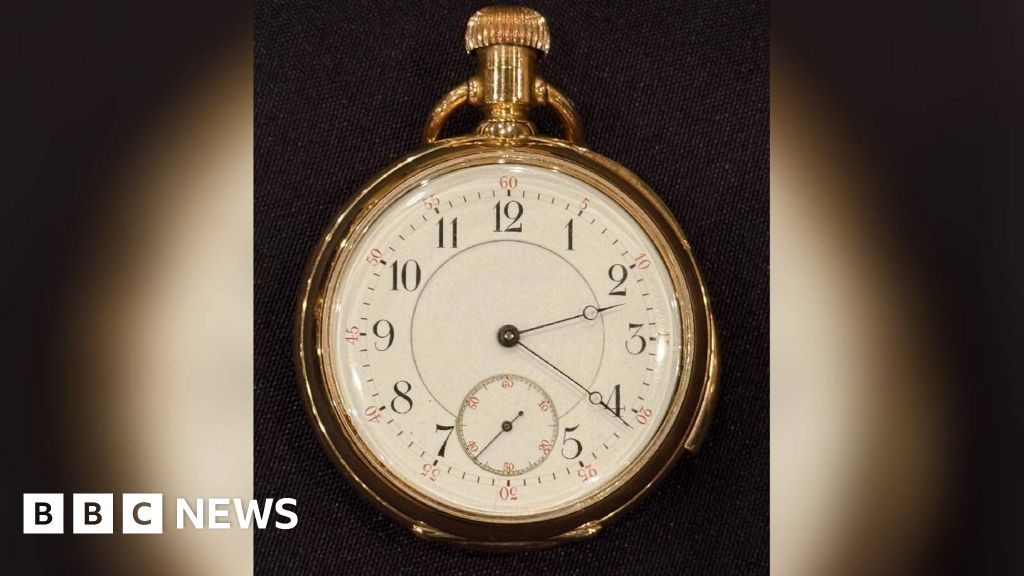
A gold Jules Jurgensen pocket watch recovered from Isidor Straus after the 1912 Titanic sinking sold for a record-breaking £1.78m at Henry Aldridge and Son, contributing to a total of roughly £3m in Titanic-related memorabilia sales; other lots included a letter (£100,000), a passenger list (£104,000) and a Carpathia crew medal (£86,000). The outcome underscores strong collector demand and price resilience for rare historical maritime artifacts, supporting upside for specialist auction houses and the high-end collectibles market rather than broad financial markets.
Market structure: High-ticket provenance items meaningfully reprice scarcity — expect specialist auction houses and branded luxury marketplaces to capture disproportionate margin expansion as headline sales push bid liquidity into top-tier lots. Supply is effectively inelastic (finite historic artifacts), so prices for museum-quality pieces can move 2–3x above baseline comparables when provenance is irrefutable, creating outsized revenue volatility for auction operators and dealers. Cross-asset: negligible direct impact on sovereign bonds or FX, small positive idiosyncratic lift to bullion demand (GLD/IAU) and incremental implied-volatility in listed auction/luxury equities.
Risk assessment: Tail risks include provenance litigation, repatriation/regulatory seizures or fraud revelations that could erase 30–70% of headline premiums and force markdowns across portfolios of collectibles. Immediate (days) risk is reputational headlines; short-term (weeks–months) is bid liquidity drying up after a marquee sale; long-term (quarters–years) is cyclical wealth concentration and taxation changes that can compress resale values. Hidden dependencies: private wealth flows, insurance underwriting capacity and museum acquisitions — a pullback in any can cascade; catalysts to watch: blockbuster anniversaries, major museum purchases/sales, and tax code changes in next 6–12 months.
Trade implications: Favor concentrated, hedged exposure to public auction platforms and luxury houses: express via 3–12 month call spreads on BID (Sotheby’s) and selective long positions in LVMUY/CFRUY sized 1–3% of liquid portfolio to capture pricing power while capping downside. Hedge with a 0.5–1% allocation to GLD/IAU as insurance vs collectible-premium shocks; consider selling short-dated covered calls or buying puts as insurance if bid liquidity indicators decline by >25%. Avoid direct illiquid lot acquisitions unless you have guaranteed buyback/consignment terms and independent provenance escrow.
Contrarian angles: Consensus underestimates liquidity risk — headline sales attract marginal capital but not a broad, sustainable buyer base; this can make small-market lots illiquid and gaps between estimates and realizations widen. Reaction may be overdone in public equities tied to collectibles: if even one major litigation/regulatory event occurs, re-rating could be swift; historical parallels (Civil War memorabilia booms/busts) show a 40–60% unwind in secondary values post-frenzy. Unintended consequence: rising headline prices can trigger tighter insurance and escrow requirements, raising transaction costs and reducing effective returns.
AI-powered research, real-time alerts, and portfolio analytics for institutional investors.
Request DemoOverall Sentiment
mildly positive
Sentiment Score
0.25
