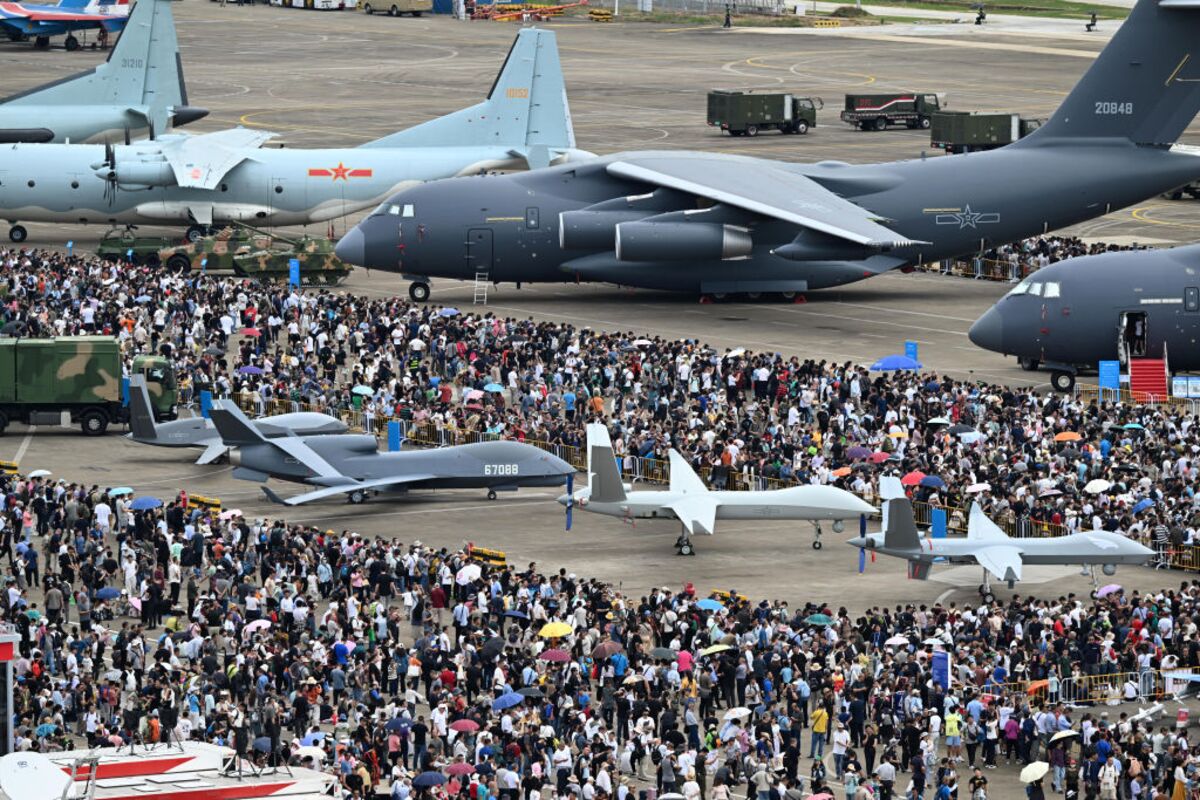
Chinese authorities have barred Japanese journalists and revoked at least one accreditation to the Aero Asia event at the Zhuhai International Airshow Center, part of a broader ban on registered guests from Japan as diplomatic tensions with Tokyo worsen. The four-day exhibition, starting Nov. 27, is expected to draw about 60,000 visitors; the exclusion of Japanese media and guests signals heightened geopolitical risk that could impede defence and aerospace engagement and complicate commercial ties between Chinese and Japanese firms.
Market structure: The exclusion of Japanese media from Zhuhai is a signal of rising China–Japan political friction that benefits defense and domestic Chinese aerospace suppliers while hurting Japanese exhibitors, show organizers and bilateral dealflows. Expect a modest reallocation of near-term order wins (0–10% of regional OEM contracts at risk) from Japanese integrators (e.g., Mitsubishi Heavy 7011.T) to Chinese OEMs and partners; pricing power shifts favor suppliers protected by national security screening. Cross-asset: anticipate a risk-premium move in regional equities (-1% to -3% on headline days), JPY bid/flight-to-quality moves of 1–2%, CNH pressure (-0.5%–1%), and a small oil/metal knee-jerk uptick (+1%–3%) if escalation persists.
Risk assessment: Tail risks include a military incident or sanctions that trigger broad decoupling—low probability in 0–3 months but high impact (multi-year supply-chain reconfiguration, +20–40% Japanese defense spending). Immediate (days) risk: headline-driven volatility and rehypothecation of trade-show orders; short-term (weeks–months): order deferrals and contractual disputes reducing supplier revenue by low-single-digits; long-term (quarters–years): structural re-shoring and increasing domestic defense capex. Hidden dependencies: JV licensing, insurance coverages for cancelled deals, and bank financing for cross-border orders.
Trade implications: Tactical trades include long high-quality defense primes (LMT, RTX, NOC) as a 12–18 month thematic (target +15–30% upside if budgets rise), hedge Asia exposure with 30–90 day put spreads on China/Asia ETFs (EWH/EWJ), and selectively reduce exposure to Japan exporters with >20% China revenue (e.g., 7203.T) for 1–3 months. Options: buy 3-month EWH puts to cap downside and 9–12 month calls on LMT/RTX for convexity into budget increases. Entry within 2 weeks; reassess at 30/90 days on policy headlines.
AI-powered research, real-time alerts, and portfolio analytics for institutional investors.
Request DemoOverall Sentiment
moderately negative
Sentiment Score
-0.30
Contrarian angles: Markets may under-react to the multi-year policy response—past incidents (2012 Senkaku tensions) produced prolonged commercial shifts but no kinetic war; defensive names are not uniformly cheap (check LMT P/E vs. consensus). Mispricings: short-term sell-offs in Chinese exhibitors/airframe suppliers could be overdone (<10% fundamental impact) creating buying opportunities if no further escalation within 60–90 days. Trigger-based adjustment: if Japan announces >20% defense budget increase or a military incident occurs, increase defense allocation materially (to 3–5% portfolio).
