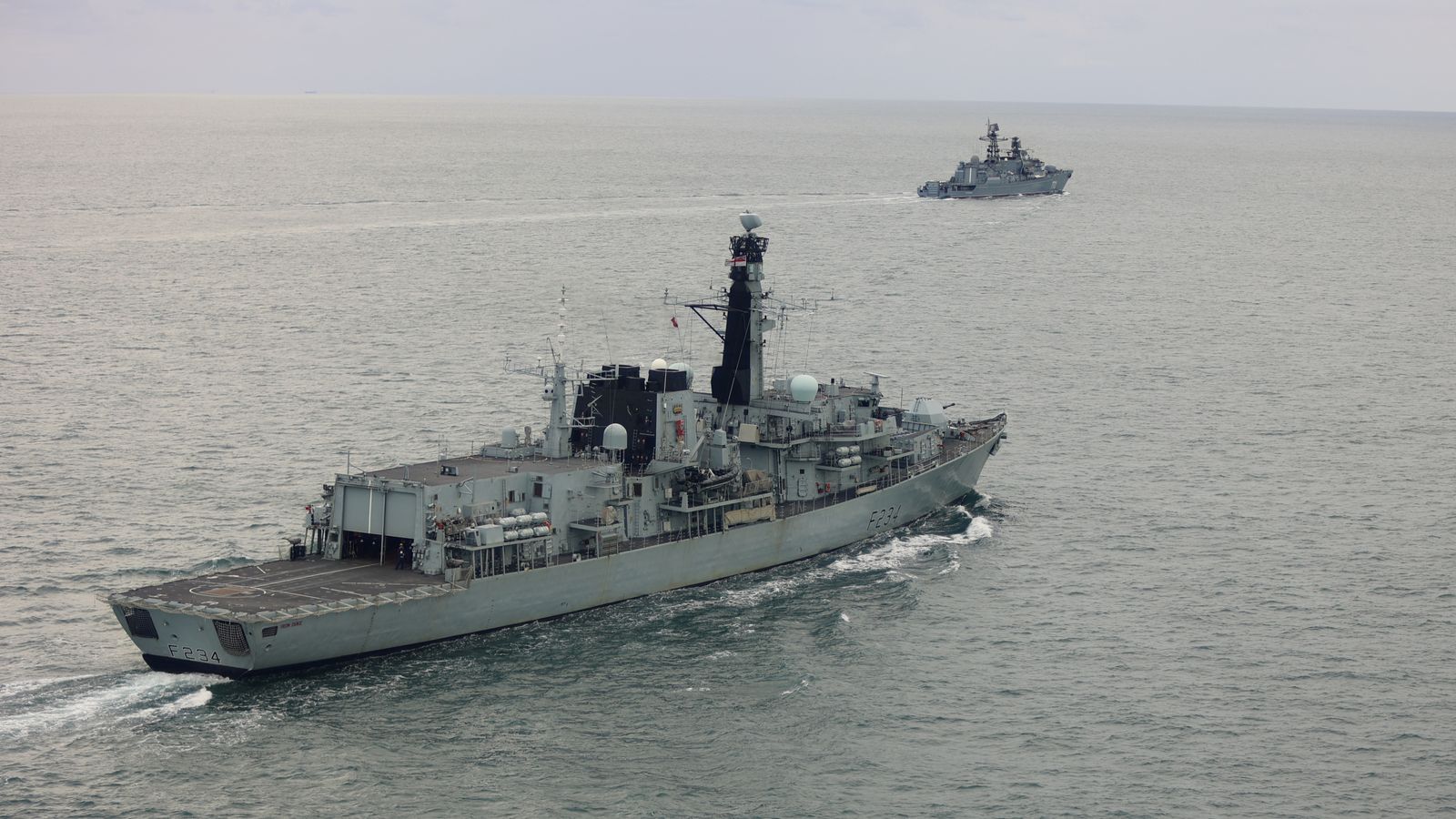
Royal Navy First Sea Lord General Sir Gwyn Jenkins warned the UK must “step up” defence funding or risk losing decades-long Atlantic superiority to a Russia that is still investing billions in its Northern Fleet, citing a 30% rise in Russian incursions in the North Atlantic over two years and incidents such as the Yantar spy ship shining a laser at an RAF plane. Jenkins said the navy is under strain—many ships and submarines are alongside or unavailable, there are shortages of sailors and submariners, and decades of cuts plus procurement failures have left capability gaps—so either billions more must be found quickly or plans to modernise the force will need to be scaled back. He outlined a plan for a “hybrid navy” of manned and unmanned vessels to be ready by about 2029, while warning the vulnerability extends beneath the waves to undersea cables and pipelines, underscoring near‑term budget and industrial implications for defence suppliers and allied security commitments.
Royal Navy First Sea Lord General Sir Gwyn Jenkins publicly warned that the UK must "step up" defence funding or risk losing post‑WWII superiority in the Atlantic to a Russia that has increased activity, citing a 30% rise in incursions in the North Atlantic over the past two years and incidents such as the Yantar spy ship shining a laser at an RAF reconnaissance plane. He framed the risk as acute beneath the surface, where undersea cables and pipelines critical to UK infrastructure are vulnerable, and said adversaries are still investing "billions" in their Northern Fleet even while at war in Ukraine.
Jenkins described the service as strained: many ships and submarines are alongside or unavailable, there are shortages of sailors and submariners, and decades of cuts plus repeated procurement failures have produced delayed, costly and too‑small fleets. He warned that either "billions of additional pounds must be found more quickly" or modernisation ambitions will need to be curtailed.
His outlined remedy is a "hybrid navy" of manned and unmanned platforms aiming for readiness around 2029, a timeline he acknowledged may be too slow if the threat escalates. The combination of capability shortfalls and observable increased Russian activity elevates near‑term operational risk to NATO sea lanes.
Market and policy signals show a moderately negative sentiment (score -0.6) but a modest positive market impact score (0.35), implying that credible increases in UK defence spending would be a material positive for defence and undersea‑technology suppliers, while procurement execution risk and budget timing remain the principal downside catalysts for investors.
AI-powered research, real-time alerts, and portfolio analytics for institutional investors.
Request DemoOverall Sentiment
moderately negative
Sentiment Score
-0.60
