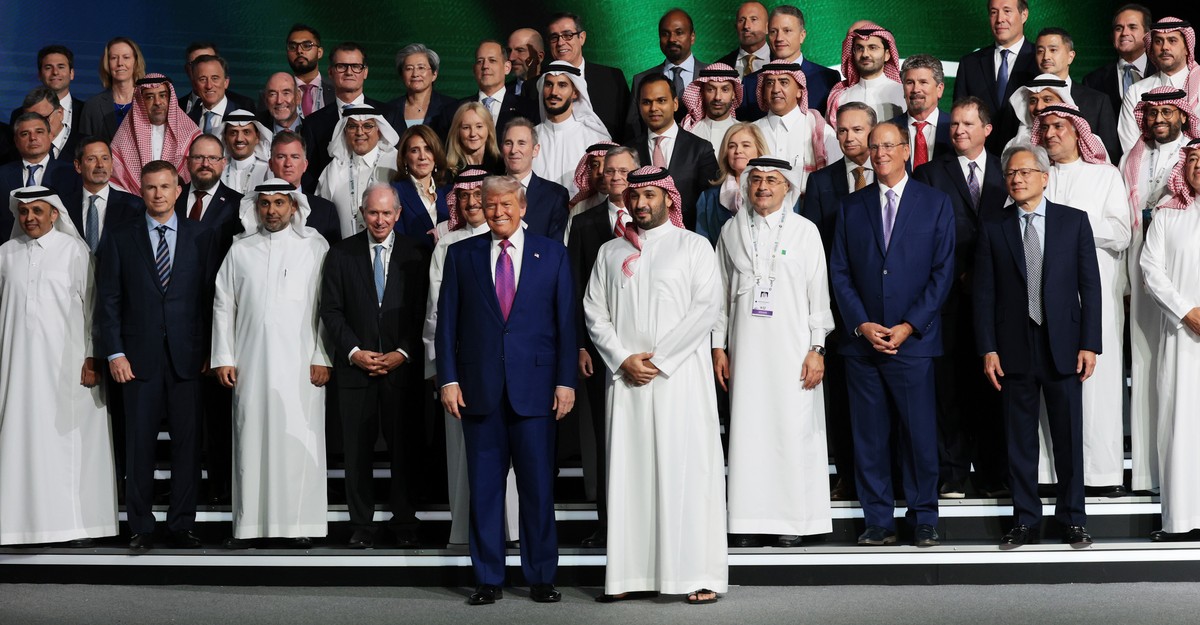
The article argues that Donald Trump's recent Middle East trip was successful due to his focus on business and investment opportunities for American companies, positioning the U.S. as a commercial partner for Gulf states seeking economic diversification. Trump secured potential investments worth hundreds of billions of dollars while also navigating Middle East politics in ways unconstrained by domestic concerns, such as engaging with Iran and Syria, actions that previous administrations avoided due to political considerations. However, the author cautions that Trump's approach requires balancing business interests with other priorities and maintaining the conditions that make the U.S. an attractive investment destination.
Donald Trump's recent Middle East engagement is portrayed as a success rooted in prioritizing business interests, positioning the U.S. as a commercial and strategic partner for Gulf states aiming to diversify their economies beyond petroleum. This approach reportedly aims to secure hundreds of billions of dollars in new investment for American technology and infrastructure, potentially creating jobs and enriching Americans, though the immediate market impact is assessed as low (market impact score 0.3). Concurrently, Trump has demonstrated a willingness to navigate complex regional politics, such as negotiating with Iran and Syria and announcing a cease-fire with the Houthis, in a manner less constrained by traditional domestic political considerations. While this strategy is viewed with some optimism (sentiment score 0.3), the article underscores critical caveats: the necessity of balancing business with broader U.S. interests, ensuring tangible follow-through on announced deals, and, crucially, preserving the conditions—such as the rule of law, anti-corruption measures, and independent regulatory bodies—that underpin America's investability, which the author suggests are currently being weakened.
AI-powered research, real-time alerts, and portfolio analytics for institutional investors.
Request DemoOverall Sentiment
Positive
Sentiment Score
0.30
