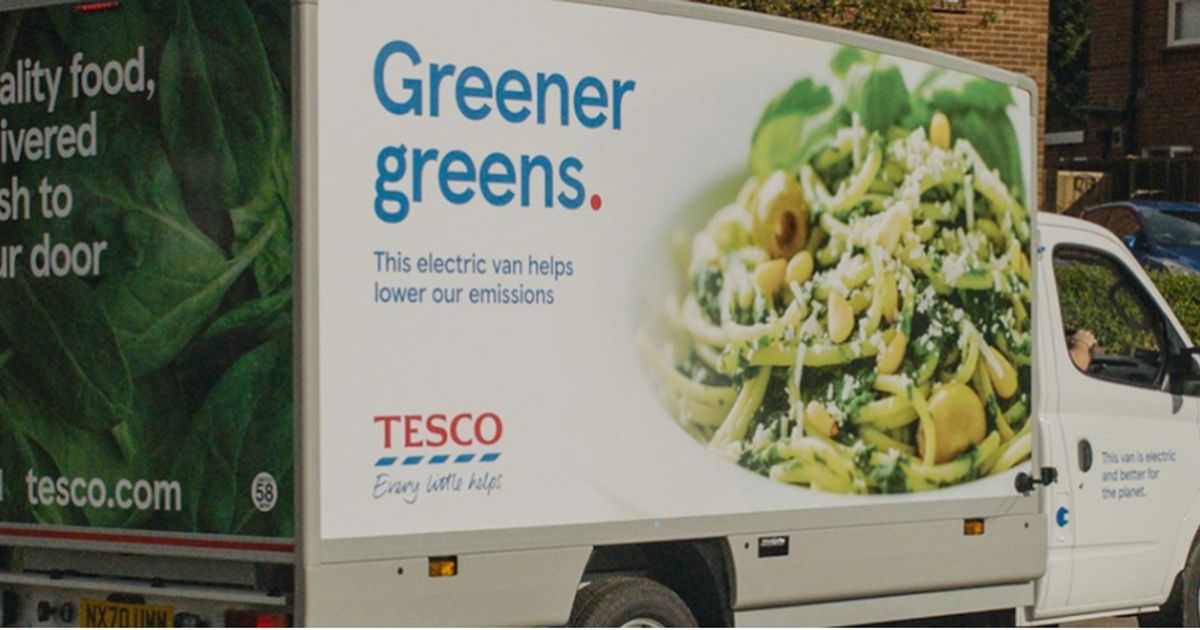
Tesco shares fell 5% to 430.42p despite a robust trading update as elevated market expectations pressured the stock. Like-for-like sales rose 3.1% in the quarter and 2.4% over Christmas, with premium Finest sales up 13%, online sales +11% and Whoosh rapid delivery +47% (adding ~250,000 customers). Management maintained a cautious stance but reiterated adjusted operating profit should be at the upper end of the £2.9bn–£3.1bn range, while rising costs from recent Budget measures and intense retail competition remain headwinds.
Market structure: Tesco’s update reinforces scale as the primary winner — Tesco (TSCO.L) gains pricing flexibility (Aldi Price Match, Clubcard) and digital/Whoosh adoption (Whoosh +47%, ~250k new customers) while smaller grocers and specialist discounters face margin squeeze. Booker’s weaker contribution signals wholesale customers are more price-sensitive, shifting share to vertically integrated chains; expect Sainsbury (SBRY.L) and independents to lose share if Tesco maintains Everyday Low Prices. Cross-asset: incremental market-share gains are mildly disinflationary for UK food CPI (small downward impulse on GBP-sensitive inflation expectations), modestly positive for UK real yields and negative for subordinated retail credit (smaller grocers’ spreads widen).
Risk assessment: Tail risks include aggressive regulatory intervention (price-fixing/competition probes) or a sharper-than-expected rise in labour/NIC costs that turns Tesco’s price cuts into margin erosion—both >5% downside scenarios for TSCO within 6–12 months. Short-term (days/weeks): sentiment-driven volatility around guidance; medium (3–12 months): margins and Booker recovery trajectory matter; long-term (1–3 years): network effects from Clubcard/Whoosh and cost savings should sustain ROIC if scale persists. Hidden dependencies: Tesco’s cost-out cadence funds price cuts — any disruption to EBIT savings cadence (e.g., supply shocks, transport fuel spike) would amplify margin pressure.
Trade implications: Direct play — establish 2–3% long in TSCO.L on dips ≤440p, target ~520p in 12 months, stop 400p; pair trade — long TSCO.L / short SBRY.L sized 1:0.75 for 3–6 months to capture scale differential. Options — buy a 6-month TSCO call spread (long 470p, short 600p) sized 0.5–1% portfolio OR sell 3-month 380p puts to accumulate if assigned (max risk = strike*shares); reduce exposure to high-beta grocery tech names (OCDO.L) by 50% over 3 months. Sector rotation: overweight UK staples (e.g., ULVR.L) by 2–4% vs cyclical retail.
Contrarian angles: Market is pricing disappointment vs. Tesco’s own high bar — the 5% dip looks reactionary given guidance to the upper end of £2.9–3.1bn EBIT and outsized online/rapid-delivery growth; this suggests a buying window if Booker stabilises. Conversely, consensus underestimates a protracted margin squeeze if wage/NIC rises accelerate beyond current forecasts — a 6–9 month stress test on EBIT margins should be watched. Historical parallel: Tesco’s 2015-2017 rebuild shows scale-driven recoveries can be multi-year; beware short-term euphoria turning into patience risk for value realization.
AI-powered research, real-time alerts, and portfolio analytics for institutional investors.
Request DemoOverall Sentiment
neutral
Sentiment Score
0.00
