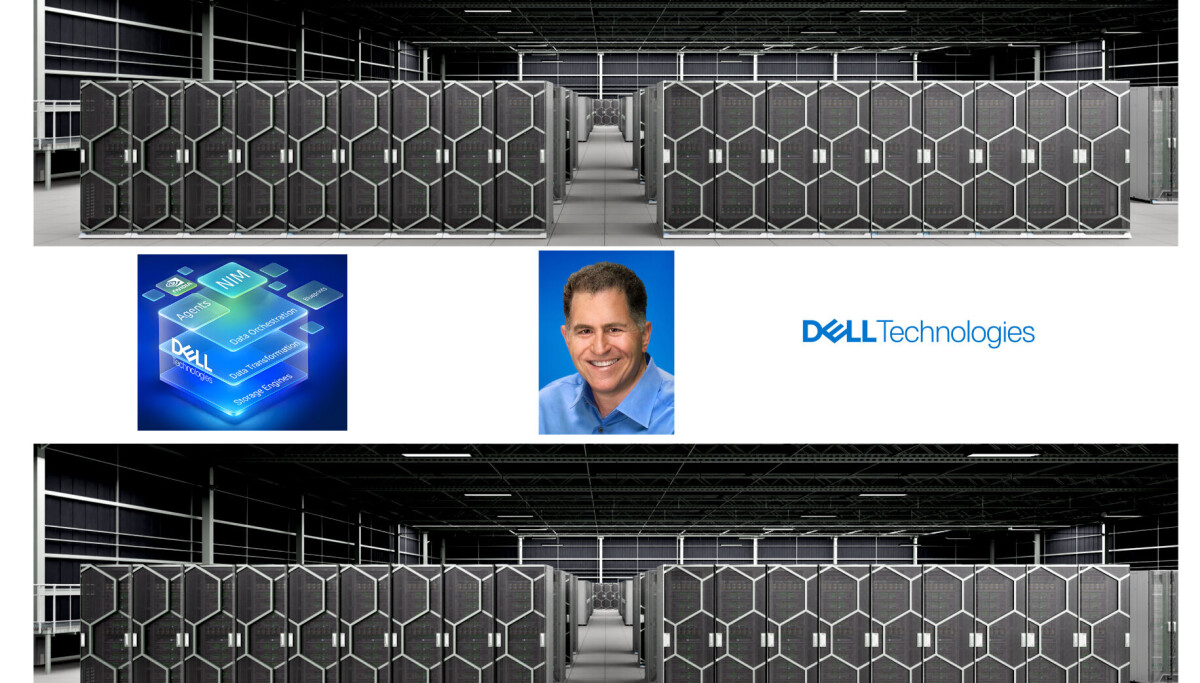
Dell unveiled a major AI Factory upgrade centered on faster storage, indexing and object storage, including the new ObjectScale X7700 with up to 45% more HDD capacity than the ECS 5000 generation and support for 245 TB SSDs. The AI Data Platform now combines PowerScale, Lightning and ObjectScale with Nvidia-powered analytics, while the Palantir partnership brings Foundry and AIP on-premises for enterprise AI workflows. Most of the new capabilities roll out between Q2 2026 and 1H 2027, making this a strategically positive product refresh rather than an immediate financial catalyst.
The economic center of gravity here is shifting from model training to enterprise inference and data plumbing. That matters because the scarce resource is no longer raw GPU demand alone; it is governed, low-latency access to messy unstructured data that keeps AI agents productive and defensible inside the firewall. Dell is effectively trying to become the toll collector on the “AI operating layer,” where storage, search, orchestration, and rack integration create stickier budget capture than compute-only vendors typically enjoy.
Second-order, this is a margin mix story as much as a growth story. If Dell can attach higher-value storage/software to AI server wins, the incremental dollar pool should be less cyclical than the broader hardware cycle and more resilient when hyperscaler capex slows. The risk is that the promise of differentiated storage architecture gets commoditized by bundled stacks from larger platform vendors; in that case, Dell still wins units but not enough gross margin expansion to justify multiple re-rating.
For Palantir, the collaboration broadens distribution but also introduces execution risk: on-prem enterprise AI is a slower sales motion than cloud-native AI, and the value proposition only converts if customers trust the ontology layer as a control point for business workflows. The market may be underestimating how long enterprise rollout cycles can stretch, which makes the near-term earnings impact likely more narrative than financial. Nvidia benefits indirectly from ecosystem validation, but the bigger implication is that Blackwell/Vera demand is being pulled forward by infrastructure refreshes tied to data movement, not just model training.
The contrarian take is that consensus may be overpaying for the AI infrastructure stack if everyone assumes every launch becomes a durable platform standard. A delayed availability timeline into 2026-2027 creates room for competitors and in-house enterprise engineering teams to close the gap, so the upside is real but back-end loaded. Near-term trading should focus on relative strength and order-flow confirmation, not on extrapolating product headlines into immediate revenue step-ups.
AI-powered research, real-time alerts, and portfolio analytics for institutional investors.
Request DemoOverall Sentiment
strongly positive
Sentiment Score
0.72
Ticker Sentiment
