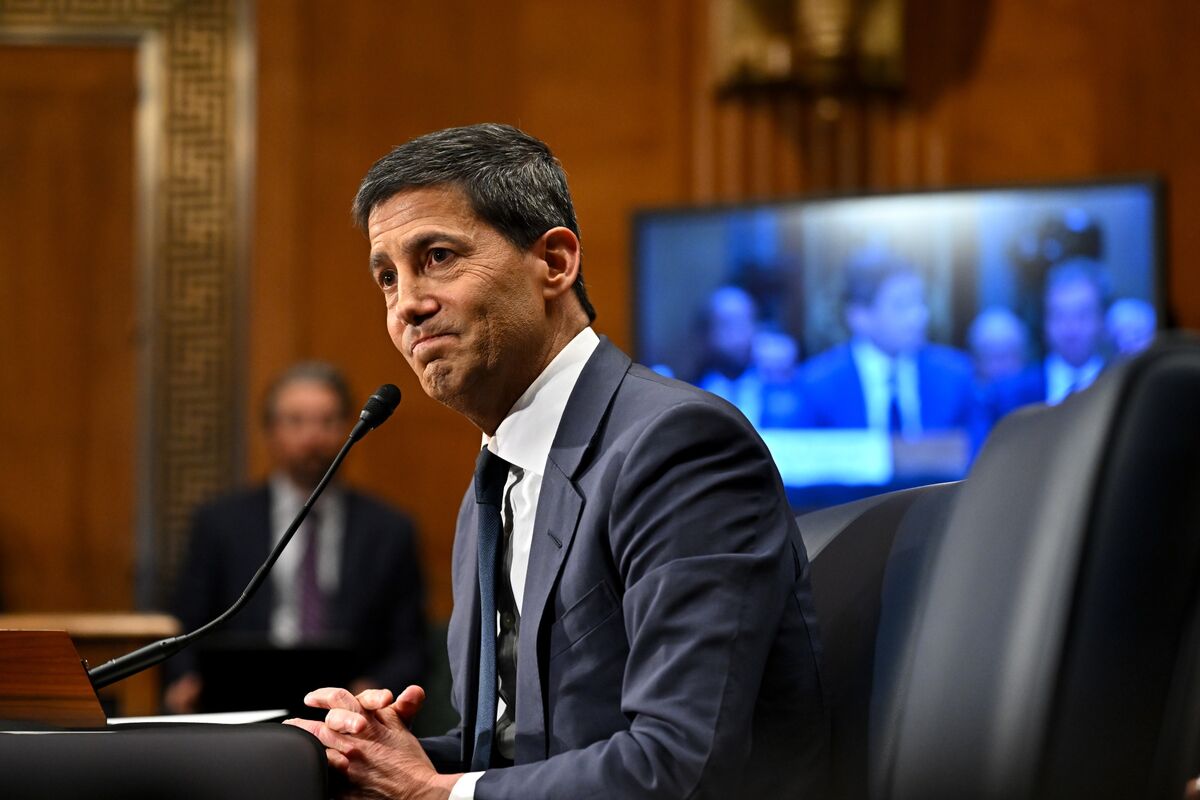
Kevin Warsh’s first Fed meeting as chair could quickly force a high-profile dissent if he is pressured by the White House to cut rates immediately while other policymakers remain skeptical. The article highlights a governance and policy conflict at the Federal Reserve, with potential implications for the path of U.S. interest rates and market expectations. This is market-relevant because it centers on the leadership and direction of monetary policy at the Fed.
The market’s first-order read is straightforward: if the new chair is perceived as politically constrained, the front end can cheapen even without a change in the policy path. The more important second-order effect is volatility in the expected reaction function, which tends to steepen curves and widen rate-sensitivity dispersion across sectors; banks and insurers can benefit from a higher-for-longer term structure even if the policy rate is eventually cut later than the market wants. The bigger risk is governance credibility, not just the level of rates. A chair forced into public dissent early in the tenure can signal a Fed that is internally divided and externally responsive to political pressure, which raises term premium and can leak into FX and gold over a multi-month horizon. That is usually bearish for long-duration equities, but it is not uniformly bearish for risk assets: if dissent is interpreted as the first step toward a slower easing cycle, cyclicals and small caps can underperform while quality/value and financials hold up better. The contrarian view is that the market may be overestimating the odds of a dramatic policy rupture. A dissenter at the Fed often matters less than the median dots and the chair’s communication cadence; if the chair preserves institutional discipline, the market could quickly fade the headline risk. The real tell will be whether front-end yields stop falling on dovish rhetoric and whether inflation expectations re-anchor higher over the next 1-3 months. This is a governance-and-expectations trade, not a clean macro regime shift. The highest-probability setup is a temporary spike in rates volatility and a modest bear-steepening, with the strongest dislocations in rate-sensitive growth and the strongest relative support in banks, insurers, and energy if the dollar firms.
AI-powered research, real-time alerts, and portfolio analytics for institutional investors.
Request DemoOverall Sentiment
neutral
Sentiment Score
-0.10
