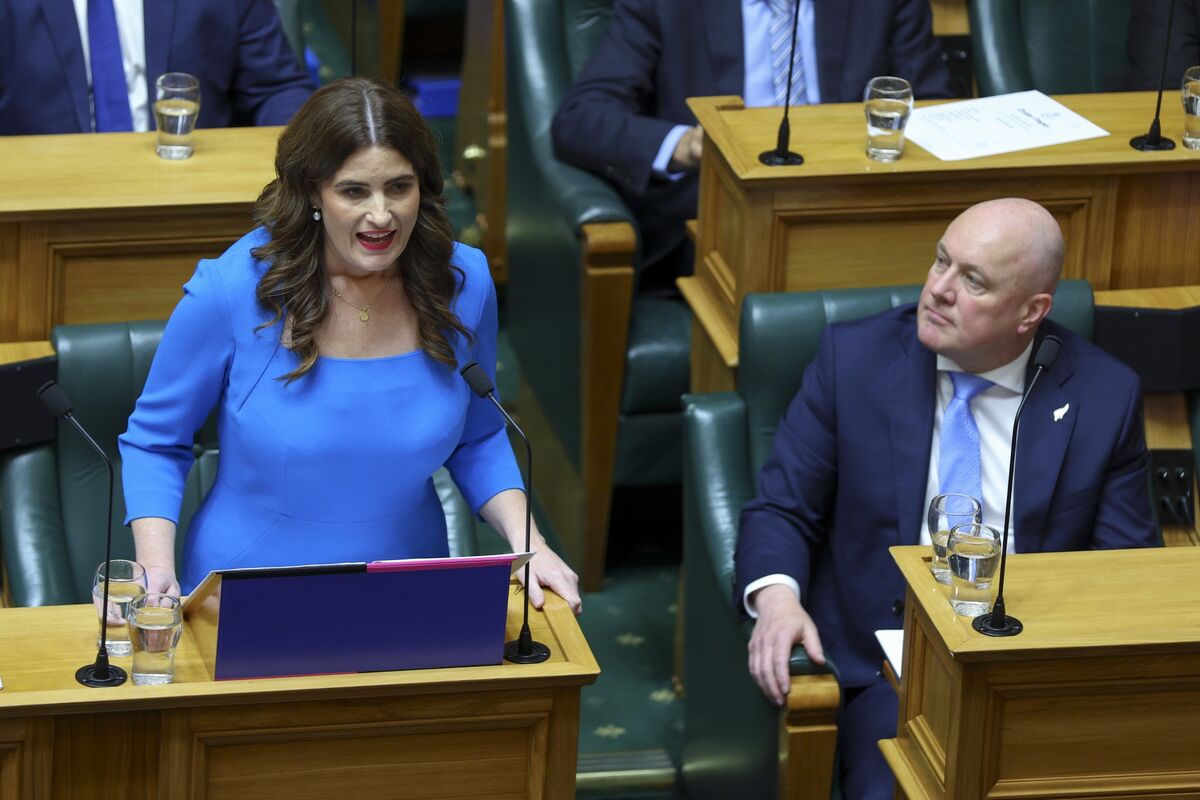
New Zealand's economy contracted by an unexpected 0.9% in the second quarter, three times more than economists and the central bank had forecast, significantly challenging the economic stewardship of Prime Minister Christopher Luxon and Finance Minister Nicola Willis, who is now facing calls for resignation despite Luxon's expressed confidence.
New Zealand's economy has demonstrated significant weakness, contracting by 0.9% in the second quarter, a slump three times larger than consensus forecasts from both economists and the central bank. This substantial negative surprise undermines previous economic assessments and suggests a more rapid deterioration in economic conditions than was priced into the market. The data has immediate political ramifications, placing the economic stewardship of Prime Minister Christopher Luxon and Finance Minister Nicola Willis under intense scrutiny and prompting calls for the latter's resignation. The government's need to publicly manage this political fallout, coupled with the severity of the economic miss, introduces a high degree of uncertainty regarding near-term fiscal and potentially monetary policy responses, as the central bank's own forecasting has been proven unreliable.
AI-powered research, real-time alerts, and portfolio analytics for institutional investors.
Request DemoOverall Sentiment
strongly negative
Sentiment Score
-0.75
