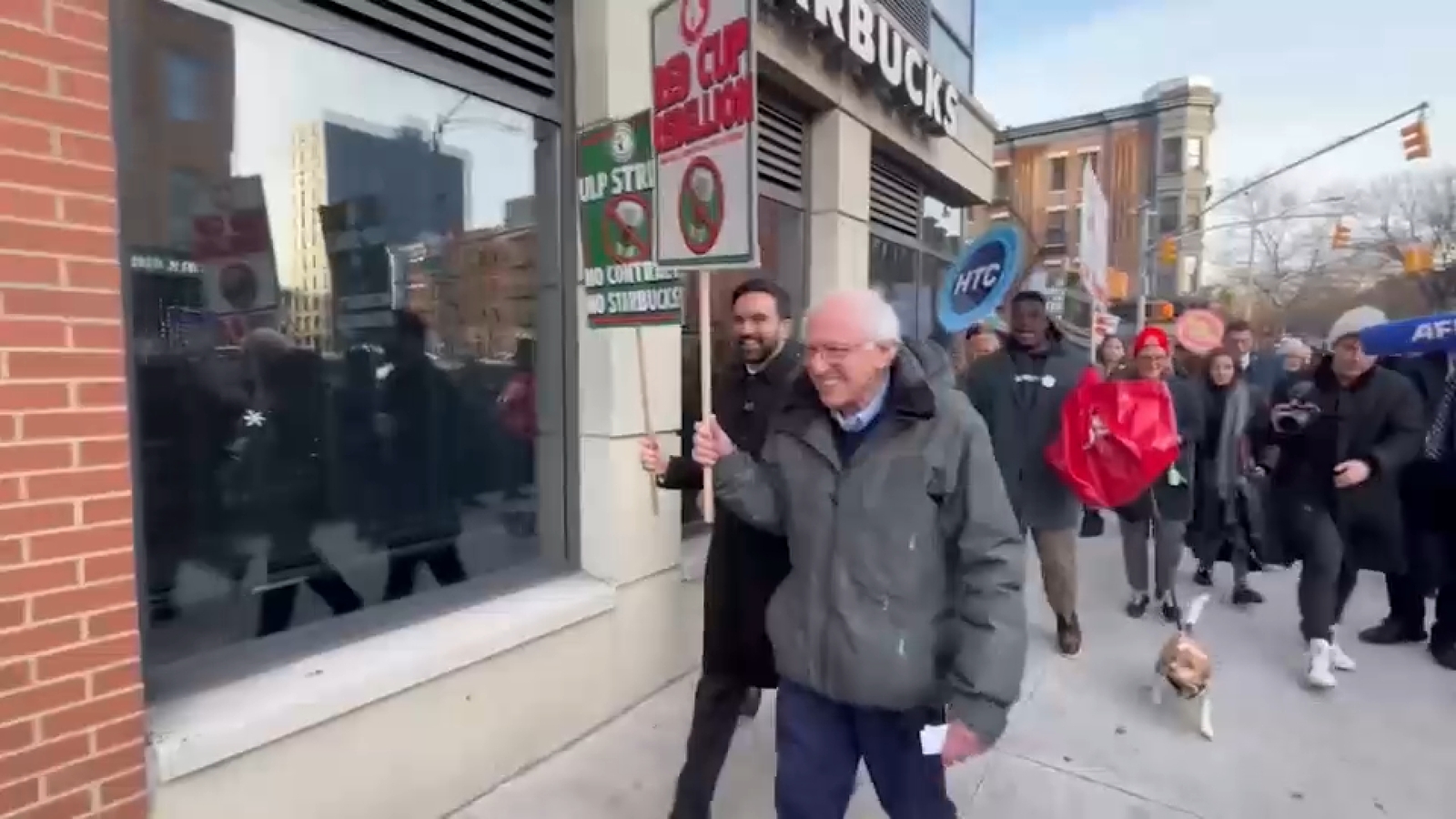
Mayor-elect Zohran Mamdani, joined by Senator Bernie Sanders, marched with striking Starbucks workers in Brooklyn as employees press for $18/hour wages, steadier hours and predictable schedules; Starbucks says several dozen of its roughly 10,000 U.S. stores have been impacted and contends total compensation including benefits is closer to $30/hour. The company reached a settlement with New York City over illegal scheduling practices and announced changes including larger rosters, improved schedules and upgraded scheduling tools, signaling modest near-term costs and operational adjustments but limited systemic financial exposure for investors.
Market structure: The immediate winners are labor/union organizations and lower-priced competitors that can market price/value (e.g., MCD, YUM) while the direct loser is SBUX where margin pressure from $18+/hr wage demands and scheduling constraints can compress store-level margins by an estimated 100–250bps if rolled out nationwide over 12–24 months. Competitive dynamics favor scale players with simpler labor models; Starbucks’ pricing power and loyalty program blunt some risk, but the risk of accelerated wage pass-through (3–6% price increases) would reduce discretionary visits and frequency, pressuring same-store sales growth by a few percentage points in stressed scenarios.
Risk assessment: Tail risks include broad unionization (>20% of U.S. stores) triggering multi-year contracts, multi-city coordinated strikes, or large regulatory fines — each could shave 3–7% off SBUX EPS over 2 years. Near-term (days–weeks) risk is localized store disruptions and PR hits; medium (3–12 months) is negotiation-driven concessions and settlements; long-term (1–3 years) is structural wage inflation and recurring scheduling regulation. Hidden dependencies: franchise vs company-store mix, loyalty program monetization, and commodity (arabica) price swings that could offset or amplify margin moves.
Trade implications: Tactical direct play is asymmetric hedging: buy SBUX 3–6 month put spreads (7–12% OTM) sized to 0.5–1.0% of portfolio to cap downside; pair trade long MCD 1–2% vs short SBUX 1% to express relative resilience. Rotate 2–4% from consumer discretionary into consumer staples (KO) and select payroll/HR vendors (ADP, PAYX) that benefit from scheduling regulation spend. Use CDS or short-dated equity puts if implied volatility cheap; add or unwind positions around union-election/counts and quarterly earnings (next 1–3 reporting cycles).
Contrarian angle: Consensus may overstate permanent demand loss — Starbucks can recapture margin via pricing, menu engineering, and loyalty-driven mix shifts; historical parallels (retail labor disputes) show short-term share loss often reverts within 6–12 months. The market may be underpricing a scenario where improved scheduling raises retention and reduces churn, offsetting 30–50% of labor cost increases. Action should therefore be sized modestly and calibrated to labor-event triggers (union wins, NY regulatory rulings).
AI-powered research, real-time alerts, and portfolio analytics for institutional investors.
Request DemoOverall Sentiment
mildly negative
Sentiment Score
-0.25
Ticker Sentiment
