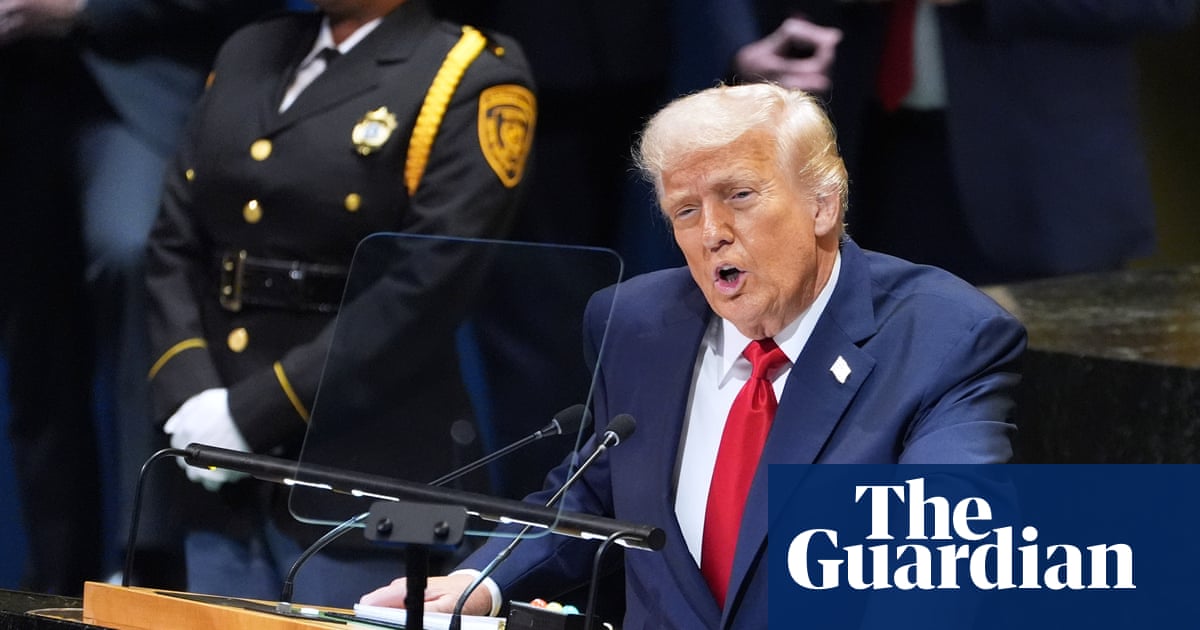
Donald Trump utilized his UN General Assembly address to vehemently criticize globalism, advocating for closed borders and traditional energy sources while accusing the UN of funding a 'globalist migration agenda.' He proposed tariffs on Russia to end the Ukraine war, contingent on European cessation of Russian energy imports, and condemned green energy initiatives for harming developed nations. This rhetoric signals potential shifts in U.S. foreign policy, energy strategy, and international cooperation, carrying significant implications for geopolitical stability, energy markets, and global trade.
Donald Trump's address to the United Nations General Assembly articulated a significant potential pivot in U.S. policy, championing nationalism while assailing globalism, a stance underscored by a high market impact score of 0.85 and a strongly negative sentiment reading (-0.7). The speech outlined a confrontational foreign and economic agenda, centered on three key pillars. First, on geopolitics and trade, he proposed leveraging heavy tariffs on Russia to end the Ukraine war, contingent upon European allies ceasing Russian energy imports—a condition that introduces substantial uncertainty, given stated opposition from countries like Hungary. This position signals a risk of increased transatlantic friction. Second, on energy policy, Trump directly attacked green energy initiatives as detrimental to developed nations and advocated for a return to "traditional energy sources," indicating a potential policy reversal that would create headwinds for the renewable sector and tailwinds for fossil fuels. Third, his call for closed borders and an end to the "globalist migration agenda" reinforces a protectionist, anti-globalization framework that could disrupt international labor and trade dynamics. The overall rhetoric challenges the stability of existing international alliances and institutions, flagging a future of heightened policy volatility and trade disruption.
AI-powered research, real-time alerts, and portfolio analytics for institutional investors.
Overall Sentiment
strongly negative
Sentiment Score
-0.70
Ticker Sentiment
