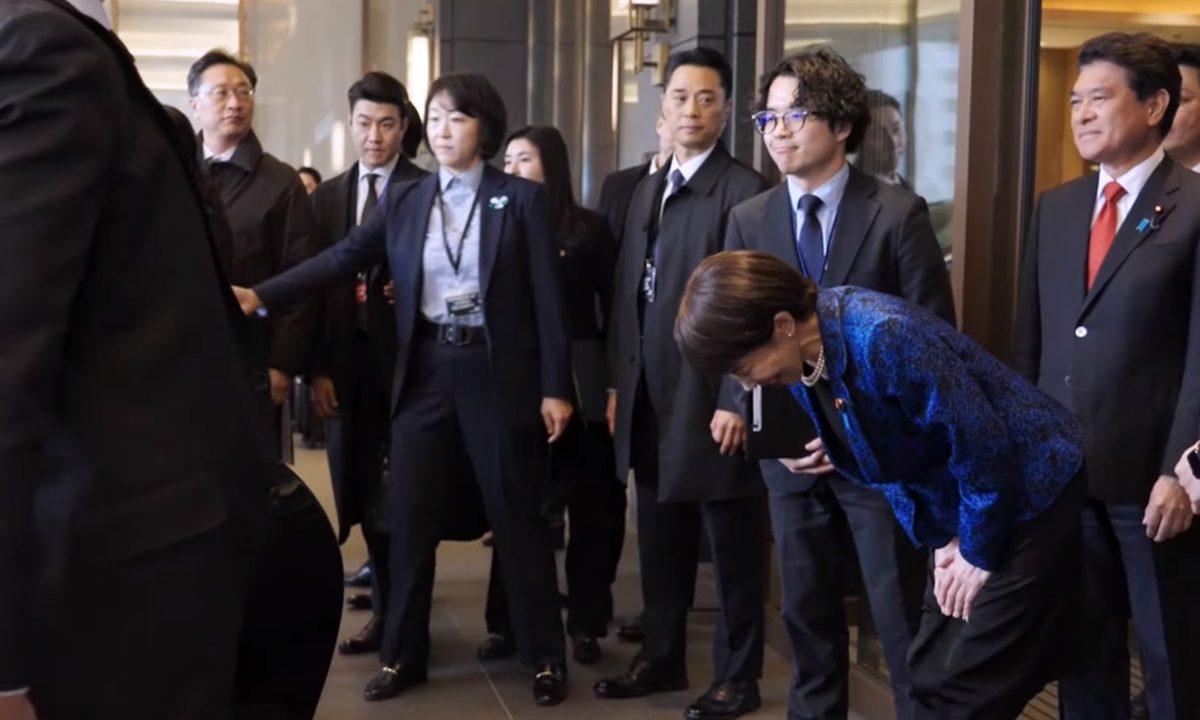
At a summit in Nara, Japanese Prime Minister Sanae Takaichi and South Korean President Lee Jae-myung affirmed bilateral cooperation, leader-level "shuttle diplomacy," and coordinated action through a Japan–South Korea–US trilateral framework while agreeing to advance talks on economic security and DNA analysis of 183 wartime remains. Chinese commentators highlighted a rhetorical "temperature gap": Japan pushing to downplay historical burdens and deepen strategic/economic collaboration, and South Korea emphasizing management of structural risks tied to history and territory—Lee noted 60 years since normalization. For investors, the meeting preserves a baseline of security and economic coordination but underscores fragile mutual trust and limits to deep strategic alignment, implying persistent geopolitical risk without an immediate market-moving breakthrough.
Market structure: The summit signals incremental security coordination without deep strategic alignment — winners are defense exporters and supply-chain resiliency plays (U.S./Japanese primes, semiconductor equipment makers) while tourism, consumer brands exposed to Korea-Japan public sentiment, and China-dependent Korean exporters face idiosyncratic reputational risk. Expect modest reallocation of government procurement (5–15% incremental tender activity over 12–24 months toward defense and resilience projects) rather than immediate large-scale trilateral procurement; pricing power shifts to global primes and capex-intensive suppliers rather than to integrated Korea-Japan conglomerates.
Risk assessment: Tail risks include a low-probability (<5% next 12 months) kinetic spillover around Taiwan or a diplomatic rupture triggered by historical/territorial flashpoints that would cause abrupt FX moves (JPY +5–10% safe-haven, KRW -5–10%) and commodity shocks (copper/palladium +10–25%). Near-term (days–weeks) expect sentiment-driven FX and import-export volatility; medium-term (3–12 months) watch procurement pipelines and export-control policies; long-term (2–5 years) anticipate gradual onshoring/reshoring lifting semiconductor-equipment demand by +10–20% versus baseline.
Trade implications: Tactical idea set: favor aerospace & defense primes with export flexibility (LMT, RTX) and semiconductor equipment makers (AMAT, LRCX) for 6–18 month holdings; buy JPY call/JPY-krw cross hedges for 3–6 months to capture asymmetric safe-haven moves. Avoid broad Japan-Korea bilateral integration bets (short domestic Japan-only contractors with weak export channels) and underweight Korea ETFs (EWY) vs Japan ETF (EWJ) only if Korea-China trade signals deteriorate by >3% QoQ.
Contrarian angles: The market may overprice rapid trilateral military integration — Seoul’s stated “management” posture implies cooperation will be episodic, not structural, so defense-equipment winners are selective, not universal. Historical parallels (post-2019 Korea-Japan cycles) show 6–18 month reversion patterns; edge by preferring U.S. primes and global semiconductor-equipment vendors over politically exposed Japanese contractors, and size positions to <3% NAV until procurement contracts are awarded or export-control policy changes are confirmed.
AI-powered research, real-time alerts, and portfolio analytics for institutional investors.
Request DemoOverall Sentiment
mildly negative
Sentiment Score
-0.25
