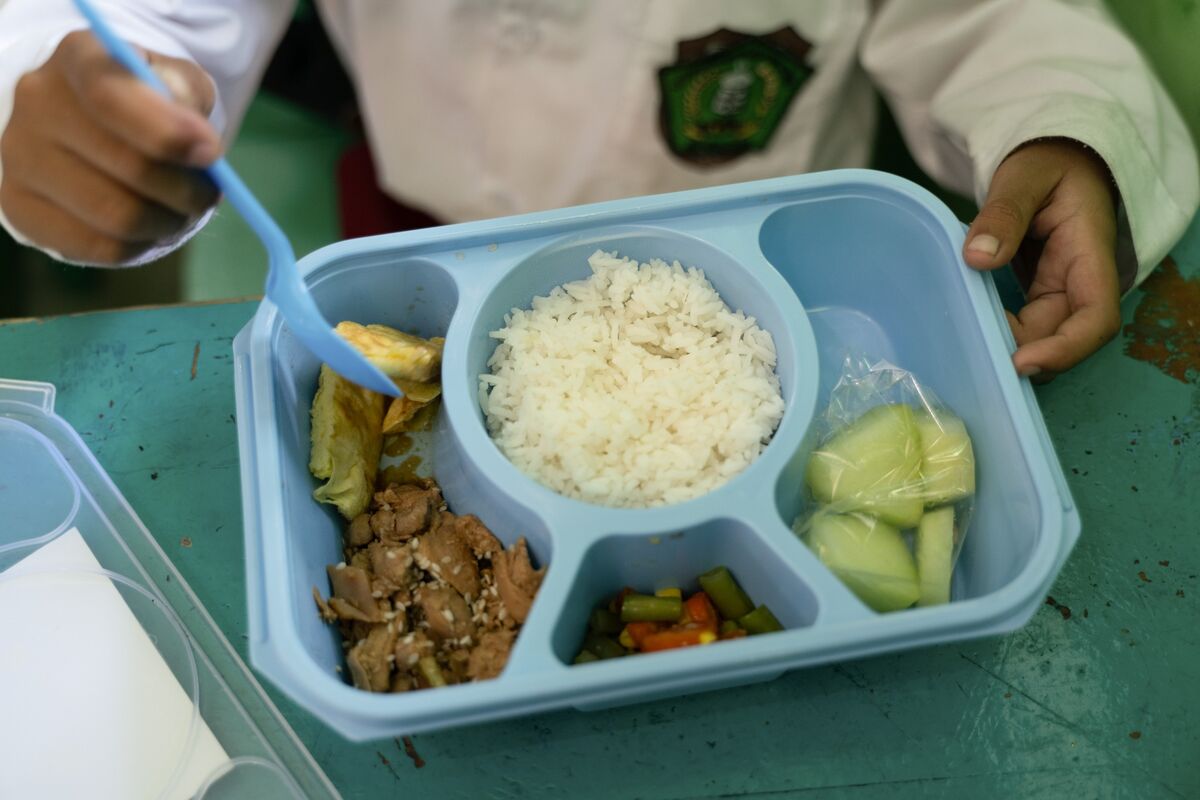
Indonesia has trimmed its projected spending on the national free meals program for next year to 350 trillion rupiah ($21.4 billion), a 22% reduction from earlier plans, primarily due to revised lower ingredient cost estimates. While this adjustment offers modest relief from fiscal pressures, the program, targeting 83 million people, is still expected to be the world's second-most expensive, underscoring the significant ongoing expenditure under President Prabowo Subianto's administration despite the cost optimization.
Indonesia has revised its planned expenditure for the national free meals program down to 350 trillion rupiah ($21.4 billion) for the upcoming year, a 22% reduction from earlier projections. This downward revision is attributed to a one-third decrease in estimated ingredient costs, providing modest relief from fiscal pressures on President Prabowo Subianto's administration. Despite this reduction, the program's scale remains immense, targeting 83 million people and potentially ranking as the world's second-most expensive free meals initiative. This development highlights a critical balancing act for the government: delivering on ambitious, large-scale campaign promises while managing fiscal discipline. The market's moderately positive sentiment reflects an acknowledgment of this cost optimization, but the program's overall substantial budget commitment continues to be a key variable for investors monitoring Indonesia's fiscal health.
AI-powered research, real-time alerts, and portfolio analytics for institutional investors.
Request DemoOverall Sentiment
moderately positive
Sentiment Score
0.35
