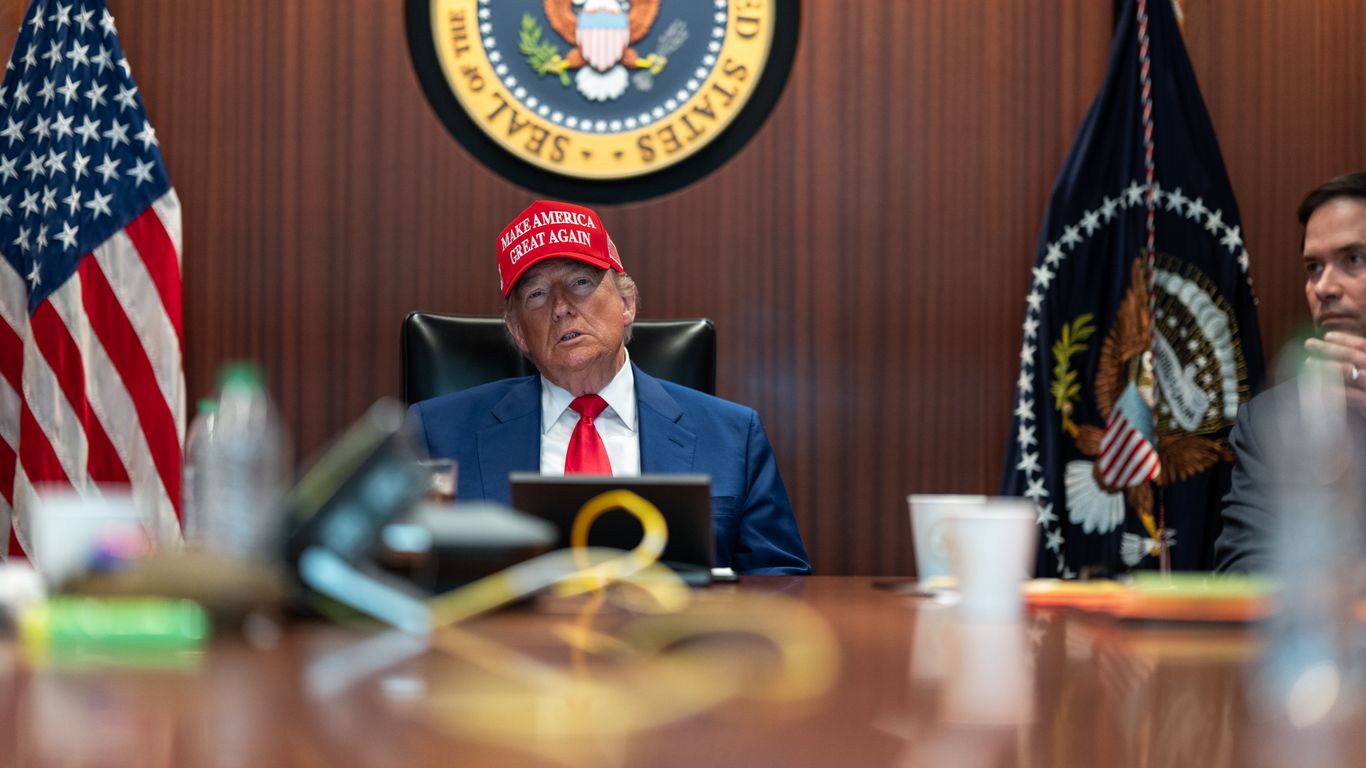
President Trump announced an imminent 12-hour ceasefire between Iran and Israel, mediated by Qatar and the U.S., signaling an end to hostilities following Iran's recent attack on a U.S. base in Qatar. This development significantly impacts ongoing congressional efforts to limit presidential war powers, with lead Republican proponents of a war powers resolution now reconsidering their push. However, key Democrats, including Rep. Greg Meeks, are still pursuing resolutions to assert congressional authority over military actions, aiming to direct the removal of U.S. forces from hostilities against Iran, underscoring continued legislative intent to check executive power despite the de-escalation.
An announced 12-hour ceasefire between Iran and Israel, reportedly mediated by the U.S. and Qatar, signals a potential de-escalation of immediate military hostilities in the region. This development follows a message from Iran to the White House indicating no further strikes would occur after its recent attack on a U.S. base. The primary impact of this ceasefire is political, as it directly threatens a bipartisan congressional initiative to pass a war powers resolution limiting the President's unilateral military authority. The lead Republican on the resolution, Rep. Thomas Massie, has indicated he will not advance the measure if the ceasefire holds, effectively dissolving its bipartisan support. However, senior Democrats, including Reps. Khanna and Meeks, are still pushing for a vote, arguing it is necessary to reassert congressional authority regardless of the immediate conflict status. The situation remains fluid, characterized by the ceasefire's short duration and the persistent legislative maneuvering in Washington, which is reflected in the mixed sentiment and low market impact signals.
AI-powered research, real-time alerts, and portfolio analytics for institutional investors.
Request DemoOverall Sentiment
mixed
Sentiment Score
0.10
