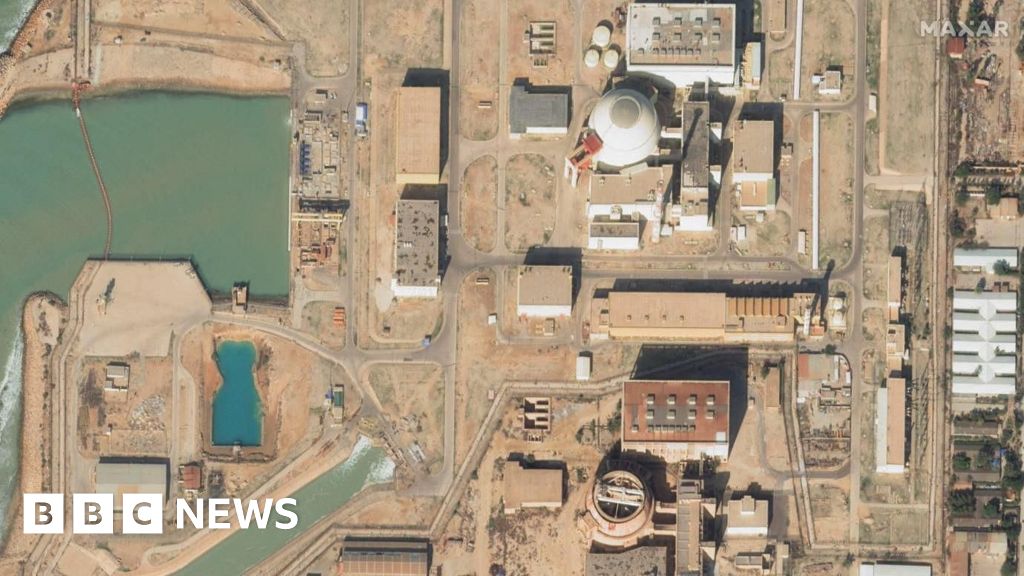
Fourth reported attack on Iran's Bushehr nuclear plant; one plant employee killed and Rosatom began evacuating 198 remaining staff, while the IAEA expressed 'deep concern' though no radiation rise was reported. Separately, Iran says petrochemical sites were hit (five injured) and over 30 universities struck since the war began, raising escalation and infrastructure risk. This elevates regional sovereign and energy risk premia and could prompt short-term risk-off positioning and upward pressure on oil/energy-related assets.
The market impulse from continued strikes on strategic energy and industrial infrastructure is primarily an increase in an energy–logistics risk premium rather than an immediate supply shock; if disruptions or insurance-driven rerouting persist >2 weeks, seaborne crude flows could effectively tighten by a material fraction (low hundreds of kb/d equivalent), which historically lifts Brent $8–$15 within 1–4 weeks before physical supply responses kick in. Separately, evacuation of foreign technical staff at complex facilities raises the probability of operational outages that are lumpy and asymmetric: a single prolonged outage in refining or petrochemical processing in the Gulf has outsized margin effects for feedstock exporters and for regional fertilizer/polymer spreads over quarters.
Second-order winners are firms that can flexibly re-route capacity or capture margin in a higher-price environment — US shale producers and global merchant refiners with spare capacity — while losers include regional shipping, cargo-dependent manufacturing, and banks with short-duration sovereign exposures to Gulf counterparties; expect emerging-market FX and local-currency debt flows to experience episodic outflows over weeks to months as risk-on allocations are pulled. Defense contractors and specialty reinsurers are likely to see order and pricing momentum, but both face timing lags (contracts and rate renewal cycles), so returns will be realized over 3–12 months rather than instantly.
Tail risks skew heavily left: a major nuclear accident or a durable closure of the Strait of Hormuz would create non-linear commodity and insurance shocks that invalidate many short-dated assumptions — assign ~5–15% probability to such tail scenarios in the next 3 months depending on escalation. A rapid diplomatic de-escalation or credible international protection of shipping lanes can unwind most of the price and risk-premium moves within 2–6 weeks, so active trade timing and explicit time-stop rules are essential.
AI-powered research, real-time alerts, and portfolio analytics for institutional investors.
Request DemoOverall Sentiment
strongly negative
Sentiment Score
-0.80
