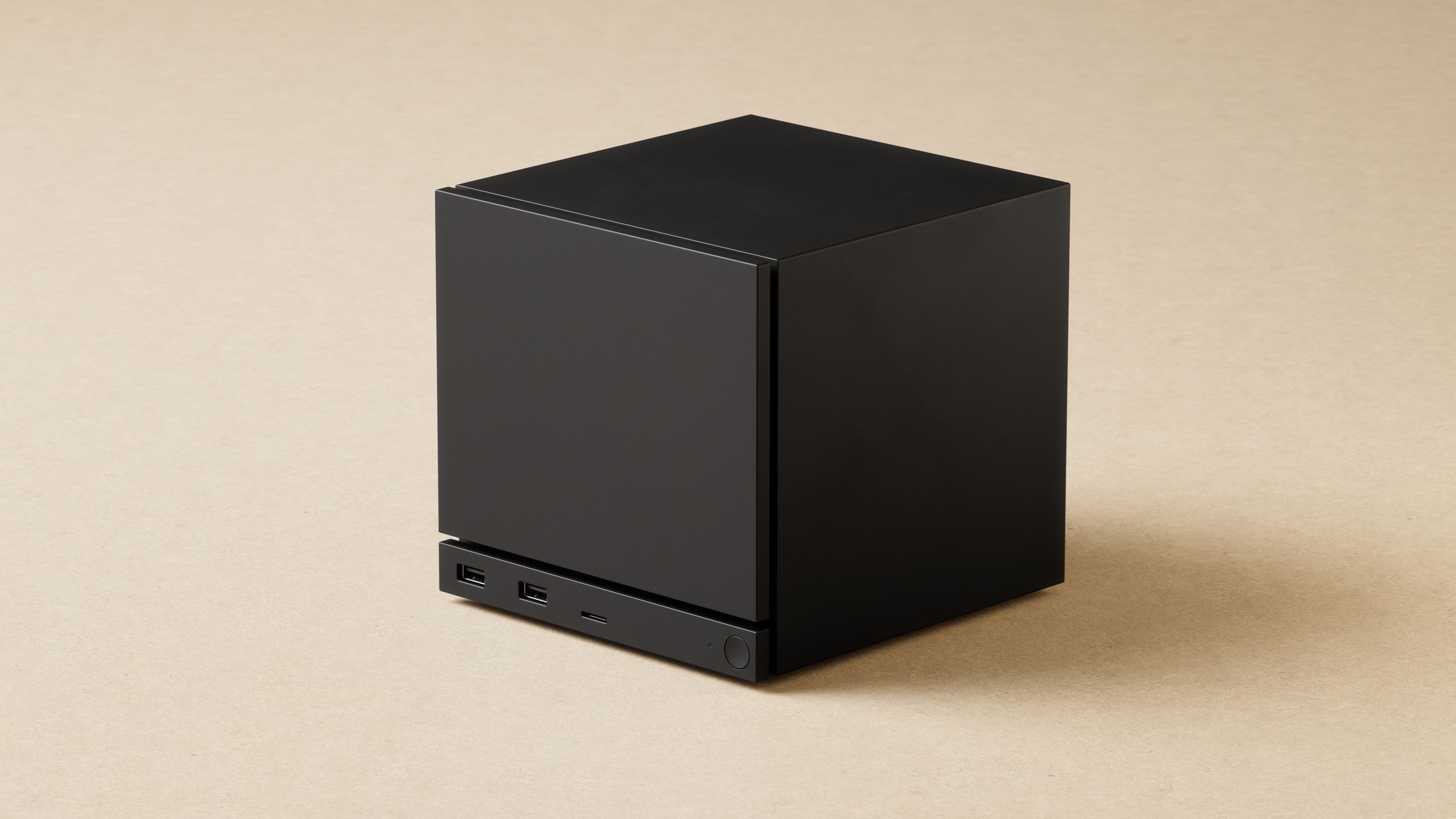
A Czech retailer’s website source code reportedly exposed unlisted prices for Valve’s upcoming Steam Machine—19,826 CZK (~$950) for a 512GB model and 22,306 CZK (~$1,070) for a 2TB model—though a suspected 17% retailer markup could imply closer-to-market prices of roughly $814 and $916. The leak, if accurate, would position the Steam Machine above current premium consoles (PS5 Pro/Xbox Series X variants sub-$800) and underscores broader industry-wide price pressure driven by semiconductor and RAM shortages—partly attributed to surging AI demand—raising expectations that Valve’s launch pricing may be elevated when the product ships (no release date announced).
Market structure: A higher-than-expected Steam Machine price (>~$800) shifts it from mainstream console competition into premium PC/gaming-PC territory, benefiting DRAM and GPU suppliers (Micron MU, Samsung SSNLF, SK Hynix 000660.KS, Nvidia NVDA) and authorized retailers that capture reseller markups (e.g., AMZN sellers). Incumbent console makers (SONY, MSFT) face limited downside if Valve’s SKU mix is premium — they keep mass-market share at $499–$649. If Valve sells direct at lower MSRP, third-party arbitrage will compress reseller margins and transfer demand back to Valve’s ecosystem.
Risk assessment: Key tail risks include a faster-than-expected RAM supply recovery (resolution into H2 2027 reduces component-driven pricing power), export-control shocks between US/China disrupting GPU/DRAM flows, or the leak proving false — each could flip sentiment rapidly. Time horizons: immediate (days) — pricing rumor-driven volatility in AMZN/retail listings; short-term (weeks–months) — DRAM ASP reports and supplier earnings; long-term (12–36 months) — Valve ecosystem adoption and game-sale revenue dynamics. Hidden dependencies: Valve’s final MSRP, supply agreements with memory suppliers, and OEM channel mix are the decisive variables.
Trade implications: Tactical longs: establish 2–4% portfolio positions in MU and NVDA (6–12 month horizon) to capture DRAM/GPU pricing tailwinds; use MU 6-month call spreads (buy 1x ATM, sell 1x 30% OTM) to limit cost. Pair trade: long MU (2%) / short AMZN (0.5–1%) small hedge if reseller margins widen post-announcement; rotate away from consumer discretionary into semiconductors (SMH). Entry: scale in on pullbacks or DRAM ASP prints; add incrementally if DRAM prices rise >10% QoQ.
Contrarian angles: The market may overstate damage to console incumbents — a premium Valve SKU could expand PC gaming spend and Steam storefront gross revenue per user, benefiting publishers and payment processors rather than hardware incumbents. Historical parallel: Steam Deck scarcity led to reseller arbitrage and eventual stabilizing after Valve direct-sales controls — expect similar pattern and a 3–6 month arbitrage window. Monitor DRAM contract-price moves (+10–15% QoQ) and Valve’s official MSRP announcement as triggers that materially change positioning.
AI-powered research, real-time alerts, and portfolio analytics for institutional investors.
Request DemoOverall Sentiment
moderately negative
Sentiment Score
-0.35
Ticker Sentiment
