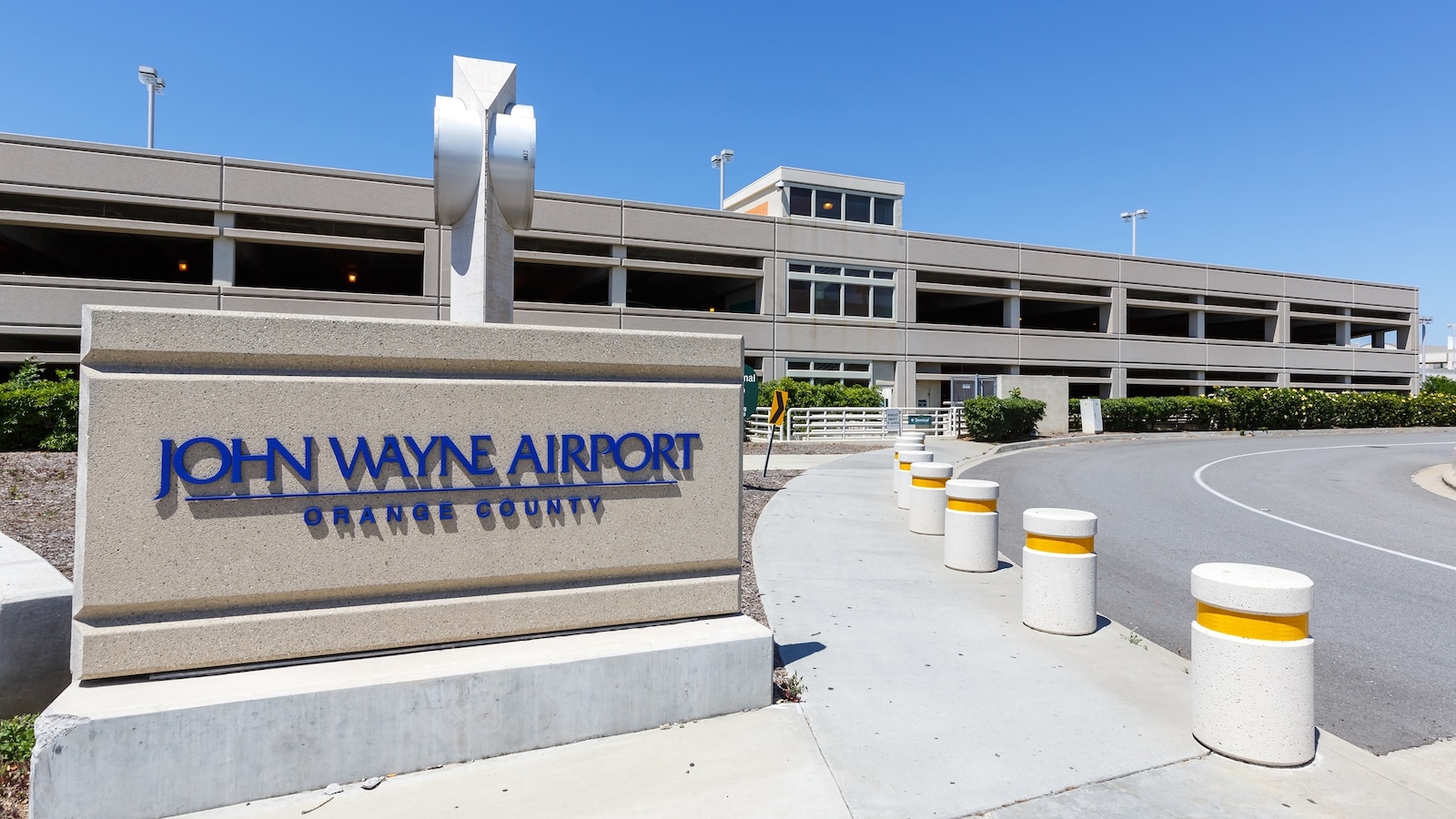
A military Sikorsky Black Hawk crossed in front of a United Airlines Boeing 737 on final approach to John Wayne Airport; radar shows the aircraft were separated by 525 feet vertically and ~1,422 ft laterally, and the flight with 168 people on board landed safely. The FAA is investigating and reviewing whether a new measure suspending visual separation between airplanes and helicopters was applied; the NTSB is aware. This raises modest operational and regulatory risk for airlines and helicopter operations near busy airports and could prompt tighter ATC procedures in affected airspace.
This incident magnifies a nascent friction point between visual-flight operations and busy commercial arrival streams that will have measurable operational and cost effects beyond the headline scare. If the FAA broadens the suspension of visual separation (already targeted to busy helicopter corridors) to more airports, expect targeted capacity dilution: conservative modeling suggests throughput at affected single-runway metro airports could fall 1–3% during peak periods as controllers vector for radar separation, with outsized schedule fragility for carriers that rely on tight banked turns and quick turnarounds.
Second-order winners are carriers and hubs with larger fleet flexibility and spare aircraft liquidity: larger network operators can absorb incremental delay-induced block-hours with fewer cancellations, while thin-margin regional feeders and highly banked schedules will see the worst P&L hit. Equipment and service providers focused on collision-avoidance tech, ADS-B/radar upgrades, and pilot training stand to see multi-year demand if regulators push hardware and procedure mandates—this is an infrastructure capex story that evolves over 6–24 months, not a one-off PR event.
Tail risk is non-linear: a high-fatality incident or NTSB finding of systemic ATC failures could force immediate nationwide procedural changes and a multi-week capacity shock; conversely, a narrowly tailored policy that limits new rules to known high-crossing corridors would mostly localize pain. Watch catalysts on a 0–90 day cadence (FAA/NTSB updates, airport-level implementation memos) and a 6–18 month cadence for budget proposals and CAPEX programs tied to radar/ADS-B upgrades or controller staffing increases.
AI-powered research, real-time alerts, and portfolio analytics for institutional investors.
Request DemoOverall Sentiment
mildly negative
Sentiment Score
-0.15
Ticker Sentiment
