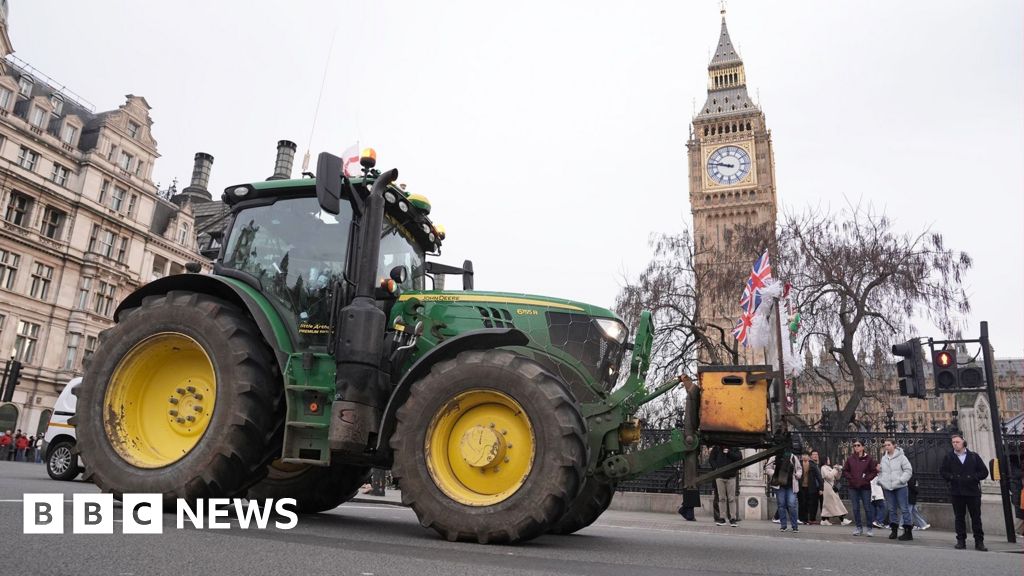
The UK government has softened a planned reversal of 100% inheritance tax relief on agricultural assets, raising the taxable threshold from £1.0m to £2.5m (effectively allowing a married couple to pass up to £5.0m tax-free) and applying a 50% relief to assets above the threshold; the original measure would have taxed inherited farm assets above £1.0m at 20% from April 2026 and was projected to raise about £520m annually by 2029. The change cuts the number of estates expected to pay additional inheritance tax in 2026/27 from roughly 2,000 to about 1,100 and follows sustained farmer protests and political pushback, signalling a politically driven policy retreat with limited direct market impact.
Market structure: The climbdown (threshold rising to £2.5m and spousal aggregation to £5m) materially reduces forced farmland supply versus the original plan — estates expected to pay fall from ~2,000 to ~1,100 — which supports UK and global farmland price floors and downstream equipment and input demand. Winners: private family farms, farmland owners/REITs and suppliers (seed, fertiliser, machinery). Losers: short-term government receipts (the £520m by 2029 estimate will be materially lower) and tax-advice arbitrageurs. Cross-asset: modest negative impulse to gilts (higher deficit vs original plan) and slightly positive for ag-commodity pro-cyclicals (fertiliser, softs) over quarters.
Risk assessment: Tail risks include a reversal to the original £1m threshold or broader asset-taxation that triggers land sell-offs (low probability but high impact for rural valuations). Immediate (days): muted market move; short-term (weeks–months): political headlines could drive UK small-cap volatility and GBP moves ±1–2%; long-term (quarters–years): structural demand from corporates and pension funds for farmland remains intact. Hidden dependencies: spousal aggregation and machinery valuation mean many small farms still cross thresholds despite the concession. Catalysts: next Budget, backbench rebellions, OBR scoring or large estate sales announcements.
Trade implications: Buy exposure to farmland equity proxies (Gladstone Land LAND, Farmland Partners FPI) and agricultural machinery (DE, AGCO) on 6–18 month horizons; favour call-spread option structures to cap premium. Consider long fertiliser names (MOS, CF) for 3–9 months if spring planting price signals firm. On fixed income, avoid levering into longer-dated gilt duration; a modest 0.5–1 year underweight duration position is prudent while political U-turn risk remains.
Contrarian angles: Consensus focuses on UK domestic politics; missing is that global institutional demand for farmland (pensions, sovereigns) will offset UK-policy shocks — creating an underpriced tailwind for listed farmland REITs. The market may under-appreciate the positive read-through to equipment OEMs if capex plans accelerate; reaction is likely underdone. Historical parallel: past UK tax U-turns produced transient volatility but persistent real-asset bid; unintended consequence: tighter credit for small farms if banks reprice rural lending, creating selective credit plays.
AI-powered research, real-time alerts, and portfolio analytics for institutional investors.
Request DemoOverall Sentiment
neutral
Sentiment Score
0.12
