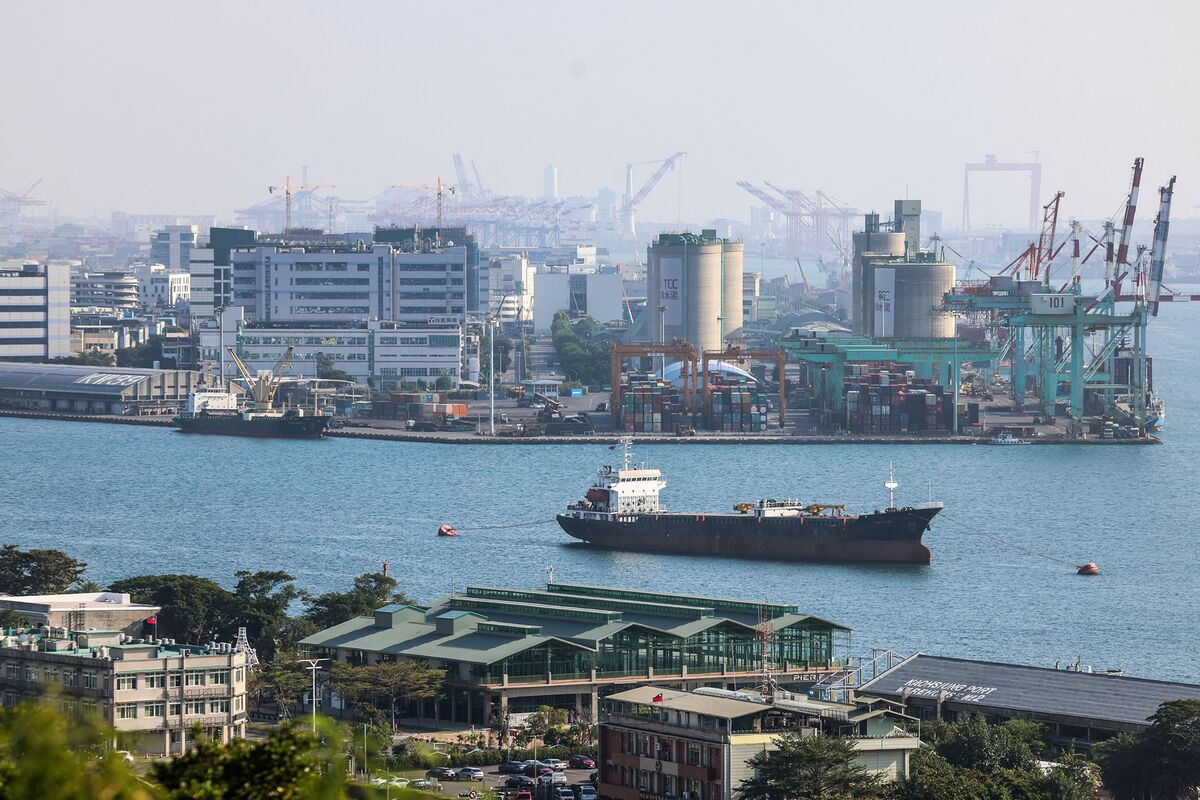
Taiwan held tabletop military drills simulating a Chinese maritime quarantine, including forced customs declarations and possible inspection or detention of vessels. The scenario targets Taiwan’s port access and maritime transport rather than a full blockade, underscoring elevated geopolitical and logistics risk in the Taiwan Strait. The news is materially negative for regional shipping and defense risk sentiment, with potential spillovers across supply chains.
This is a classic gray-zone escalation that matters less for headline risk than for friction. A maritime quarantine is more disruptive than a one-off missile drill because it attacks the reliability premium embedded in Taiwan-linked shipping, insurance, and just-in-time industrial supply chains; the market usually underprices how quickly port uncertainty propagates into vessel-routing decisions, freight rates, and working-capital swings for shippers and importers. The first-order winners are not defense primes so much as entities that monetize uncertainty: marine insurers, rerouting beneficiaries, and non-China transshipment hubs in Northeast and Southeast Asia. The losers are Taiwan-exposed industrials with lean inventories, contract manufacturers dependent on container cadence, and any carrier with concentrated exposure to cross-strait lanes; even a short-lived inspection regime can create a weeks-long bottleneck because ships reprice not on actual interdiction but on the probability of detention. The key risk catalyst is whether this remains rehearsal or becomes a repeated pattern that forces commercial actors to build a permanent geopolitical risk premium into Taiwan trade. If repeated over months, even without shots fired, it could steadily divert cargo to alternate Asian ports and raise costs for electronics, machine tools, and specialty components; the second-order effect is inflationary for upstream logistics but disinflationary for Taiwan export volumes and margins. A de-escalation signal would require explicit multilateral shipping guarantees or visible large-scale convoy support, otherwise the market should assume a higher base rate of disruption. Contrarian take: the immediate equity read-through is likely too narrow if investors focus only on Taiwan-listed names. The broader trade is that every incremental “law enforcement” action normalizes a new operating regime where commercial shipping discounts political risk faster than sovereign risk, and that is a slow-burn negative for Taiwan’s role in regional supply chains even absent a blockade. The setup favors buying protection on transport/logistics stress rather than outright chasing defense beta.
AI-powered research, real-time alerts, and portfolio analytics for institutional investors.
Request DemoOverall Sentiment
moderately negative
Sentiment Score
-0.35
