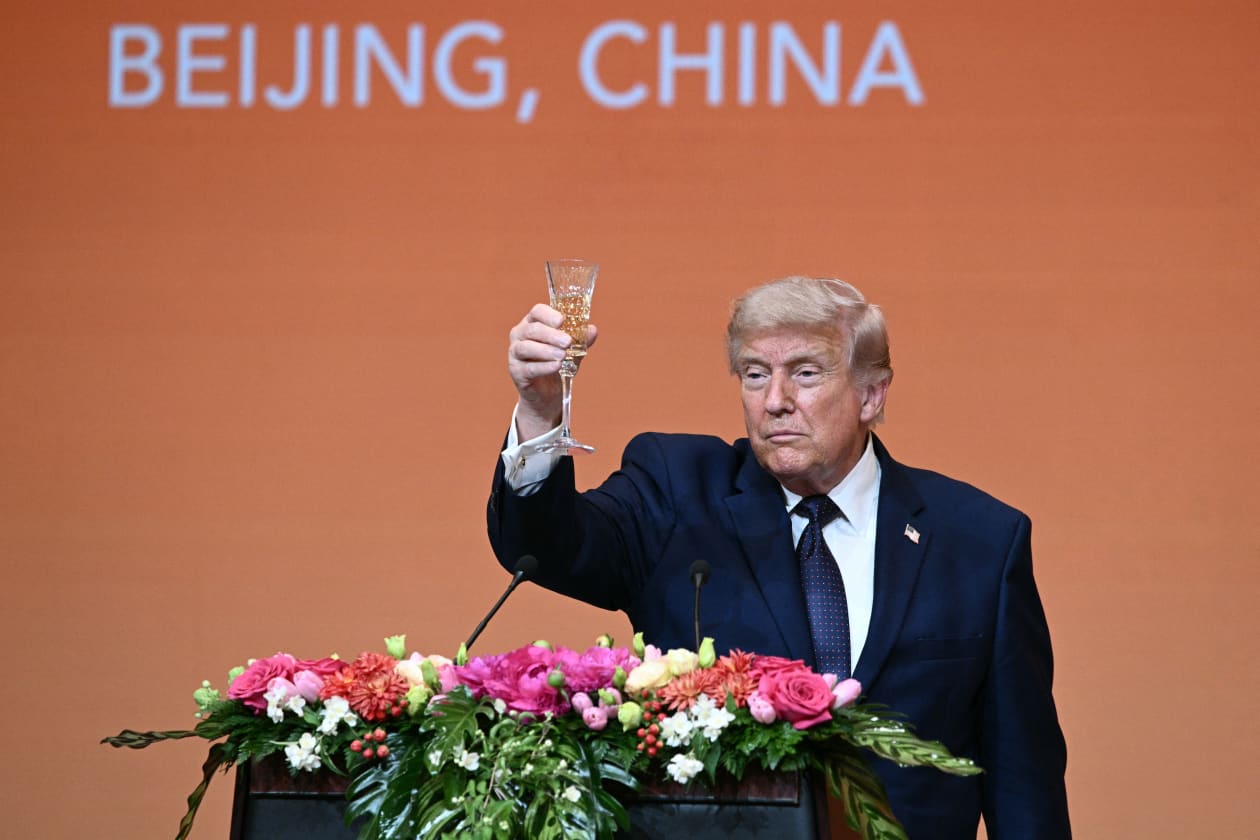
President Donald Trump disclosed purchases of at least $1 million each in Boeing and Nvidia shares, with each transaction reported in a $1 million to $5 million range. The filing, covering more than 3,000 transactions, is notable because the companies may benefit from his China trip and related business opportunities. The disclosure is largely factual and could modestly influence sentiment in the affected names, but it does not change fundamentals.
The market is likely to read this as a political signaling event more than a fundamental one, but the second-order effect matters: discretionary government-related demand can act as a near-term sentiment catalyst for both names, especially where order momentum depends on headline confidence and procurement visibility. For BA, even a modest incremental expectation of China-linked commercial activity can tighten the spread between “survival” valuation and a true recovery multiple; for NVDA, the issue is less immediate revenue impact and more that geopolitical optics can temporarily soften export-control overhang by reframing the name as strategically indispensable rather than merely cyclical. The bigger beneficiary may be the industrial/AI ecosystem around each company. Any perception that Boeing gets diplomatic tailwind can spill into suppliers, MRO providers, and aerospace logistics names, because the market tends to reprice the whole supply chain when booking visibility improves. For Nvidia, the real second-order trade is in adjacent compute infrastructure and networking, where investors may extrapolate that China demand remains durable enough to support a broader AI capex cycle even if direct China shipments remain policy-constrained. The contrarian risk is that this is a short-duration headline with limited fundamental follow-through. If the trip produces no tangible commercial commitments or if export restrictions tighten again, the move can reverse quickly over days to weeks, especially in NVDA where positioning is already crowded and the stock is sensitive to any sign that China demand is being overstated. BA has more room for multiple expansion because expectations are lower, but execution risk remains high: one weak delivery or safety headline can swamp any political narrative within a month. The cleanest expression is not outright longs on the names alone, but a relative-value approach that captures the policy premium while limiting idiosyncratic blowup risk. BA should outperform other lagging aerospace names if the trip converts into bookings, while NVDA’s upside is more tied to sustained AI capex and less to this specific catalyst, making it vulnerable to mean reversion if the market fades the headline. The setup looks better for a tactical trade into event windows than a medium-term thesis unless there is follow-through on contracts or formal policy easing.
AI-powered research, real-time alerts, and portfolio analytics for institutional investors.
Request DemoOverall Sentiment
neutral
Sentiment Score
0.10
Ticker Sentiment
