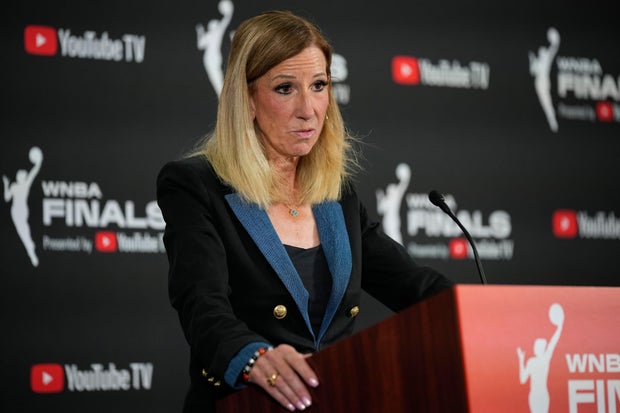
WNBA and the players' union reached an agreement in principle on a new CBA that would roughly quadruple player salaries versus last season, tie pay to a meaningful revenue share, push average compensation above $500,000 and create the potential for multi-million-dollar (million+) contracts. A formal term sheet is expected in days and must be voted on by players and the Board; lawyers will finalize details ahead of a targeted May 8 season opener (training camps Apr 19) and an expansion draft for Toronto and Portland. The deal is transformational for the league, likely boosting commercial value for broadcasters, sponsors and franchise economics, supported by record season-to-date attendance (~2.5M).
A structurally higher cost base for teams will force owners to prioritize revenue capture over cost cutting: expect accelerated pushes into local ticketing, group sales, premium hospitality, and direct-to-consumer merchandising. If teams cannot grow top line by a mid-teens percentage range within 12–24 months, owner IRRs will compress meaningfully and some smaller-market franchises will need to reallocate capital toward marketing and facility upgrades rather than roster investment. The real, second-order beneficiaries are consumer-facing brands and local/premium distribution assets rather than global media conglomerates. Apparel and lifestyle brands that can translate visibility into repeat purchases (Lululemon, Nike) and team/venue owners with control of local hospitality and sponsorship inventory (Madison Square Garden Sports) should see higher unit economics per fan; streaming platforms gain optionality on incremental ad inventory, but rights monetization will lag because contract cycles and linear bundle economics are sticky. Key near-term tail risks are binary and governance-driven: any procedural hiccup in ratification or delayed implementation of new economics creates volatility in free agency and sponsorship sales over the coming 3 months. Over 6–18 months watch sponsor commitment pacing, attendance elasticity to price increases, and media-rights repricing—if sponsor demand softens in a macro slowdown the upside compresses rapidly, reversing early rerates in related equities.
AI-powered research, real-time alerts, and portfolio analytics for institutional investors.
Request DemoOverall Sentiment
strongly positive
Sentiment Score
0.80
