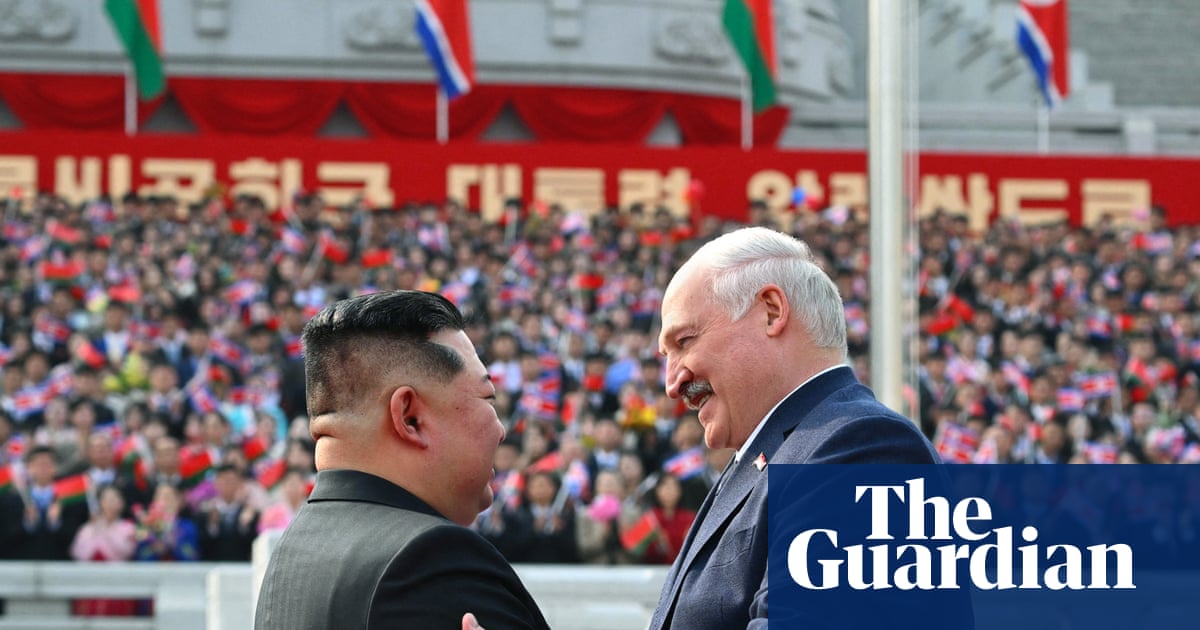
North Korea and Belarus signed a 'friendship and cooperation' treaty during Lukashenko's visit to Pyongyang, deepening ties within a China-Russia-backed 'multipolar' alignment. The article notes ~2,000 North Korean soldiers killed fighting for Russia and ongoing military, financial and supply support between Moscow and Pyongyang, with both states under Western sanctions. Belarus and North Korea plan cooperation across agriculture, information and trade (currently modest, potential growth in pharmaceuticals and food), increasing geopolitical risk and potential sanction-related frictions that could pressure risk assets and affect defense- and sanctions-sensitive sectors.
This treaty is less a one-off political theater and more a formalization of a small but asymmetric ecosystem for sanctions circumvention that will evolve over months to years. Expect incremental growth in bilateral civil trade lines (pharma, food, machinery) explicitly structured to carry dual-use components and create plausible commercial cover for military logistics; that mechanism favors intermediaries (third-country trading houses, niche shipping operators, specialized insurers) rather than state-owned giants.
Financially, the most material transmission is through risk premia: greater perceived tail risk for European and South Korean trade routes, and a higher implied probability of targeted secondary sanctions. That will raise costs for EM trade finance and niche commodity flows (fertilizers/potash, specialty chemicals) on a 3–18 month horizon, with bank counterparties and trade credit insurers seeing widening spreads before sovereign-level action occurs.
Operationally, we should watch for expanded cooperation in cyber, intelligence-sharing, and training that will increase frequency and sophistication of covert revenue streams (digital asset laundering, ship-to-ship transfers). Near-term market moves will be driven by headlines and sanctions announcements (days–weeks), while the structural credit and supply-chain effects play out over quarters to years; reversal could come from major diplomatic realignments or an effective multilateral enforcement campaign that raises the cost of intermediating trade above benefit levels.
AI-powered research, real-time alerts, and portfolio analytics for institutional investors.
Request DemoOverall Sentiment
mildly negative
Sentiment Score
-0.25
