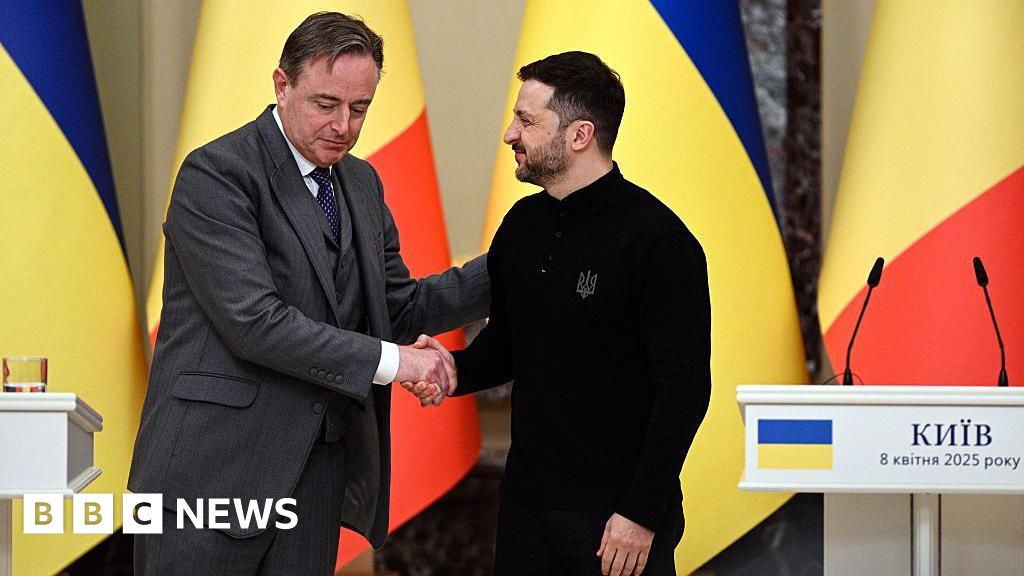
EU leaders are debating a Commission proposal to loan roughly €90bn of about €210bn in Russian assets frozen in the EU to Ukraine over two years, covering roughly two-thirds of Kyiv's estimated €137bn funding need for 2026-27. The plan faces significant political and legal hurdles — Belgium and Hungary oppose using Euroclear-held funds, Russia has sued Euroclear, and Fitch placed Euroclear on negative watch — meaning approval will require a substantial member-state majority and could materially affect Euroclear, sovereign guarantees and EU legal/market risk.
Market structure: Using €90bn of frozen Russian assets to fund Ukraine (vs €210bn frozen total) favors defence suppliers, European energy exporters and FX/commodity safe-havens while hurting custodians (Euroclear) and any Belgian/Eurozone banks with legal or operational exposure. Expect a rotation: +10–30% re-rating potential for frontline defence names over 6–12 months if EU funding is approved; conversely Euroclear/clearing-related valuation multiples face immediate downward pressure and a potential one-off hit to perceived custody safety.
Risk assessment: Tail risks include a Moscow court ordering repatriation (forcing a legal/operational scramble), Russian energy retaliation (Nord Stream-like cut) and an EU political stalemate driven by Hungary/Belgium — each could spike Euro sovereign CDS by 50–150bp in weeks. Immediate (0–14 days) volatility hinges on the summit vote and any Belgian court/ratings actions; medium-term (3–12 months) risk is persistent spread dispersion across peripherals vs core; long-term (1–3 years) is structural rise in European defence spending and higher collateral costs for custody.
Trade implications: Direct plays: long select defence names and energy producers, hedge via short positions in exposed European custodians/large universal banks; buy EURUSD downside protection and add gold as tail-hedge. Use option structures (call spreads on defence, put spreads on EURUSD) to control capital; allocate 1–3% portfolio per idea with re-evaluation at 30/90/180 days.
Contrarian angles: Consensus focuses on legal risk and Euro downside but underestimates that using frozen assets reduces sovereign issuance needs (credit-positive if structured as loans), and that guarantees from other member-states can blunt Belgium litigation exposure. Historical parallel: post-2014 defence re-rating was gradual; this episode could be faster but also reversible if Hungary vetoes or courts rule against transfer, creating buy-on-dip opportunities in quality defence and energy names.
AI-powered research, real-time alerts, and portfolio analytics for institutional investors.
Request DemoOverall Sentiment
moderately negative
Sentiment Score
-0.25
