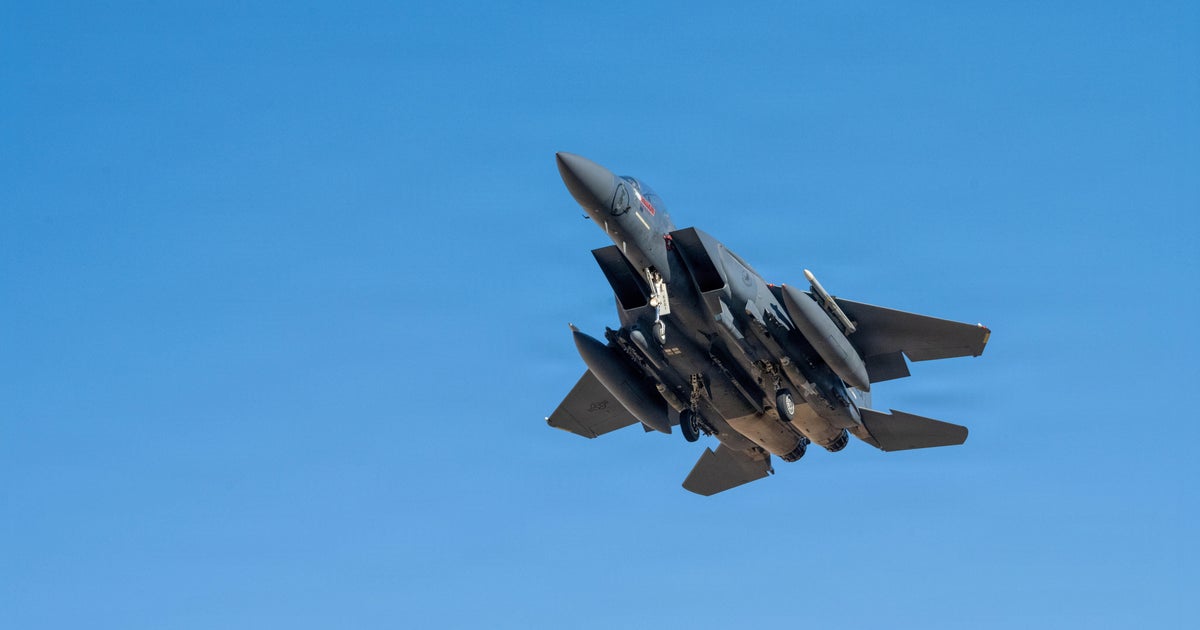
A U.S. F-15E was shot down over Iran; one crew member was rescued and a second remains missing while U.S. search-and-rescue operations continue and Iran claims responsibility. Iranian state media circulated images of U.S. C-130 and Black Hawk aircraft searching and urged civilians to shoot at U.S. aircraft and capture pilots, increasing escalation risk. The incident follows prior U.S. losses (at least 16 MQ-9 drones and three F-15s lost over Kuwait earlier) and is likely to prompt near-term risk-off flows, upward pressure on oil and safe-haven assets, and defensive positioning in defense-related securities.
The recent kinetic escalation in the Gulf creates an immediate risk premium that will show up first in energy, insurance, regional FX and freight markets over the next 48–72 hours. Expect crude to incorporate a $3–8/bbl shock premium intraday on route disruption and war-risk insurance prints; if shipping lanes or exports are constrained for multiple weeks this premium can step up another $5–15/bbl on top of that, propagating into jet fuel and refinery margins within one month.
Defense primes face a two‑headed demand shock: near term surge in consumables (munitions, spares, ISR time-on-station) that converts to accelerated backlog recognition within 3–9 months, and a longer multi-year shift back toward force structure and sensor procurement that supports multi-year revenue visibility. However, backlog conversion is bottlenecked by avionics semiconductors, composite fabricators and specialty machining capacity—suppliers of those inputs will see order acceleration and margin expansion before primes do.
Logistics and insurance secondary effects are underpriced: war‑risk premiums for tankers/air charters can double in weeks, pushing freight‑linked equities and LNG cargo economics into structural stress and rerouting costs that hit Europe/Asia gas spreads within one quarter. Financial markets will also price a safe‑haven bid to US duration and USD; EM credits and regional currencies are the most immediate losers and lead indicators for equity weakness.
Catalysts that would reverse the trade are fast diplomatic de‑escalation or decisive kinetic outcomes that restore deterrence—both can unwind risk premia inside days to weeks. The consensus tends to buy defense primes outright; the smarter play is to separate short‑term consumables exposure from long lead‑time platform bets and actively hedge directional energy/flight‑path risk.
AI-powered research, real-time alerts, and portfolio analytics for institutional investors.
Request DemoOverall Sentiment
strongly negative
Sentiment Score
-0.60
