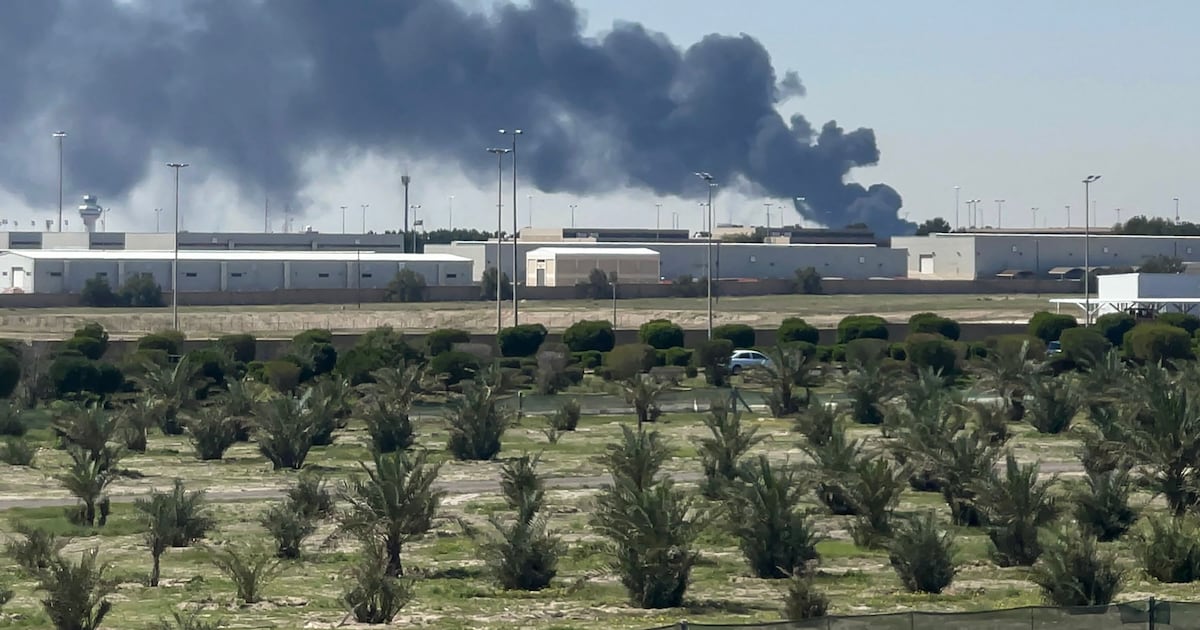
A drone strike hit Kuwait's Mina Al Ahmadi refinery (refining capacity ~450,000–466,000 bpd), causing fires that were contained with no injuries; a key Kuwaiti power and desalination plant also sustained 'material' damage. Iran-linked strikes across the Gulf totalled 6,293 between Feb 28 and Apr 2 (UAE 2,514; Kuwait 973; Saudi 870; Bahrain 617; Qatar 303; Oman 28), heightening regional security and oil-supply risks and creating upward pressure on energy markets.
This sequence of targeted attacks is amplifying a risk premium in product markets rather than creating a pure, immediate crude shortfall — think diesel/jet cracks and physical delivery frictions more than a permanent loss of 1m+ bpd of crude supply. With key export-linked refinery and terminal capacity concentrated and highly integrated into storage/export hubs, even intermittent outages compress available middle distillates regionally and force cargo reshuffling (longer sailings, more ship-to-ship transfers), which raises freight & insurance costs and eats into refinery margins elsewhere within weeks.
Second-order winners are market participants with optionality and storage — trading houses and tank storage owners capture calendar-spread dislocations as refineries buy backfills; banks and broker dealers that finance storage/forward buys will earn elevated fees. Over 3–12 months, sovereigns and operators will accelerate security spend and harden logistics (redundant pipelines, protected berths), structurally lifting capex for EPC and defense-security vendors but compressing downstream petrochemical margins via higher logistics/OPEX.
Tail risks skew to episodic escalation: a successful strike on an export berth or large storage pool would create 30–90 day acute shocks to regional product availability; conversely, a diplomatic de-escalation or rapid augmentation of spare export capacity (re-routing via other GCC terminals or SPR releases) could normalise prices in 60–120 days. The market is therefore best traded through convex instruments and relative-value pairs that capture product scarcity and insurance/freight repricing while limiting pure directional oil exposure.
AI-powered research, real-time alerts, and portfolio analytics for institutional investors.
Request DemoOverall Sentiment
strongly negative
Sentiment Score
-0.60
